Get Full Government Meeting Transcripts, Videos, & Alerts Forever!
Get email alerts on the State Budget Fy25 topic
No spam. Unsubscribe anytime.
Senate Appropriations reallocates funds in FY 2025 amended budget to boost Hurricane Helene relief
Summary
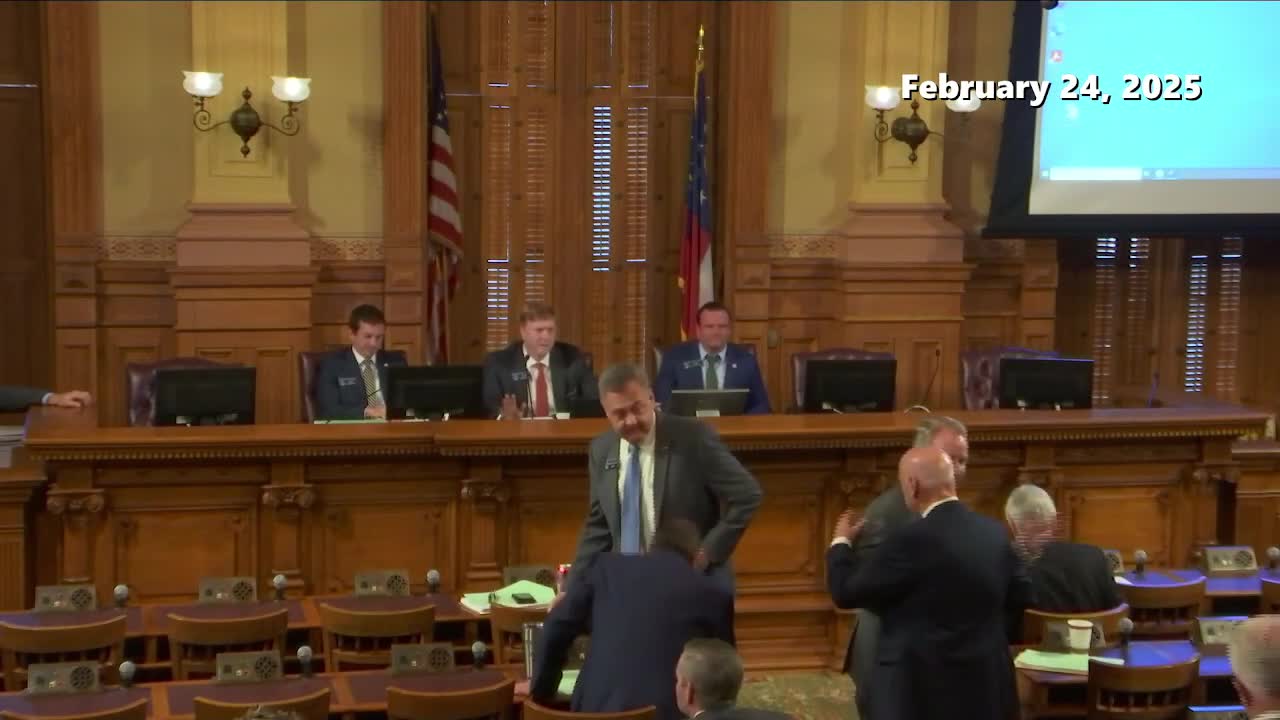
The Georgia Senate Appropriations Committee on Feb. 24 advanced the FY 2025 amended budget (House Bill 67), reallocating funds to provide targeted storm relief after 2024 storms, increase corrections staffing pay, and fund infrastructure and health priorities; the committee approved the package unanimously.
The Georgia State Senate Appropriations Committee voted unanimously Feb. 24 to advance the committee’s recommendations on the state’s FY 2025 amended budget, House Bill 67, shifting existing appropriations to create new storm-relief funding and other targeted investments.
The move follows major 2024 storms that committee members said changed spending priorities. Committee leaders described a mix of reductions, line-item “combing” and reallocated adds intended to fund debris cleanup, agricultural and timber relief, local government FEMA matches and other needs without adding a new tax or bond authorization.
Why it matters: Committee members said the state must provide immediate aid to communities in South and East Georgia affected by the storms, shore up public safety and corrections staffing, and preserve infrastructure funding while finding savings in other programs.
Key provisions and reallocations
- Storm relief and cleanup: The committee budget adds roughly $125 million described as storm relief, including $50 million targeted to agriculture and timber relief and an $82 million line item for state and local debris cleanup. The committee combined a $32 million estimate from the governor’s office with an additional $50 million to reach the $82 million cleanup total.
- Direct aid for households: The budget adds $25 million for households and property owners who do not qualify for the agricultural, timber or local-government programs but still face storm damage and insurance delays.
- Hospital and health grants: The committee narrowed a House proposal to fund a hospital provider fee for all Georgia hospitals and instead provided one-time grants targeted to hospitals inside the federal major-disaster declaration area, reducing the proposed universal funding (the sponsor characterized the original number as about $35 million and the committee’s targeted version at about $14 million).
- Public health and clinics: A $100,000 one-time allocation was added for affected federally qualified health centers in the disaster area. The budget also shifts previously proposed higher education medical workforce funding (the House had a $3 million add for PCOM) so that Colquitt Regional Medical Center receives $1.5 million and other residency-recruitment investments total a little over $20 million for areas south of State Route 540.
- Local infrastructure and water: The committee agreed with House funding for southeast Georgia water infrastructure and earmarked a larger pool ($250 million referenced; committee language split this to $65 million for special initiatives and $200 million to be directed elsewhere statewide). The Local Road Assistance Program (LARP) received an added $15 million in lieu of putting the money in LMIG to avoid a required 10% local match.
- Nonprofits and downtown recovery: The committee increased the 1Georgia Authority allocation to $25 million (the House had $10 million) to provide grants to nonprofit organizations rebuilding after the storm and recapitalized the Downtown Development Revolving Loan Fund with $3 million.
- Corrections and veterans care: The committee reduced the governor’s request for four new pre-cast correctional units to three, and added roughly $20 million more for prison salaries than the governor’s initial request (the chair said additional salary funding could be adjusted later in amendment or conference). The budget also adds $2 million to stand up a subacute therapy unit at the state veterans nursing home in Milledgeville.
- Other agency adjustments: The committee described multiple “combing” actions (reductions of vacant positions and delays) across agencies including the Prosecuting Attorneys’ Council (about $2.1 million reallocated), Georgia Technology Authority line consolidations, Department of Natural Resources (a $1.5 million add for adaptive playground equipment), and truing up higher-education and scholarship line items to actual need.
FEMA match and cleanup timing
Committee members emphasized federal cleanup timelines: the federal public-assistance schedule for the storms was described as a 120-day cleanup window that expired Feb. 3; committee members said the governor committed to covering state and local portions of cleanup for an additional 30–60 days. Committee leaders said the 25% state/local FEMA match obligation and the limited federal cleanup window made additional state funding necessary.
Questions and concerns
Several senators asked about the corrections additions and whether the reduced number of new correctional units (three versus the governor’s requested four) leaves the state vulnerable to federal oversight; committee leaders said they prioritized storm relief and infrastructure in choosing the mix of funds but acknowledged corrections remains a pressing issue. Senator Sims expressed concerns about the size of investments in addiction and corrections versus educational and health programs.
Committee action and next steps
A procedural motion recorded near the meeting’s end was made by Senator Robertson and seconded by Senator Walker; the motion passed unanimously. The chair said committee staff will continue work on the line items and that some salary and construction amounts might be adjusted later in amendment or conference negotiations.
Senator Robertson said, “I appreciate all the hard work you and your team have done on this budget,” during the discussion.
The committee’s approval advances the committee version of House Bill 67 toward the next stages of the legislative process for consideration by the full Senate and any subsequent conference with the House.