Get Full Government Meeting Transcripts, Videos, & Alerts Forever!
Get email alerts on the Legislation topic
No spam. Unsubscribe anytime.
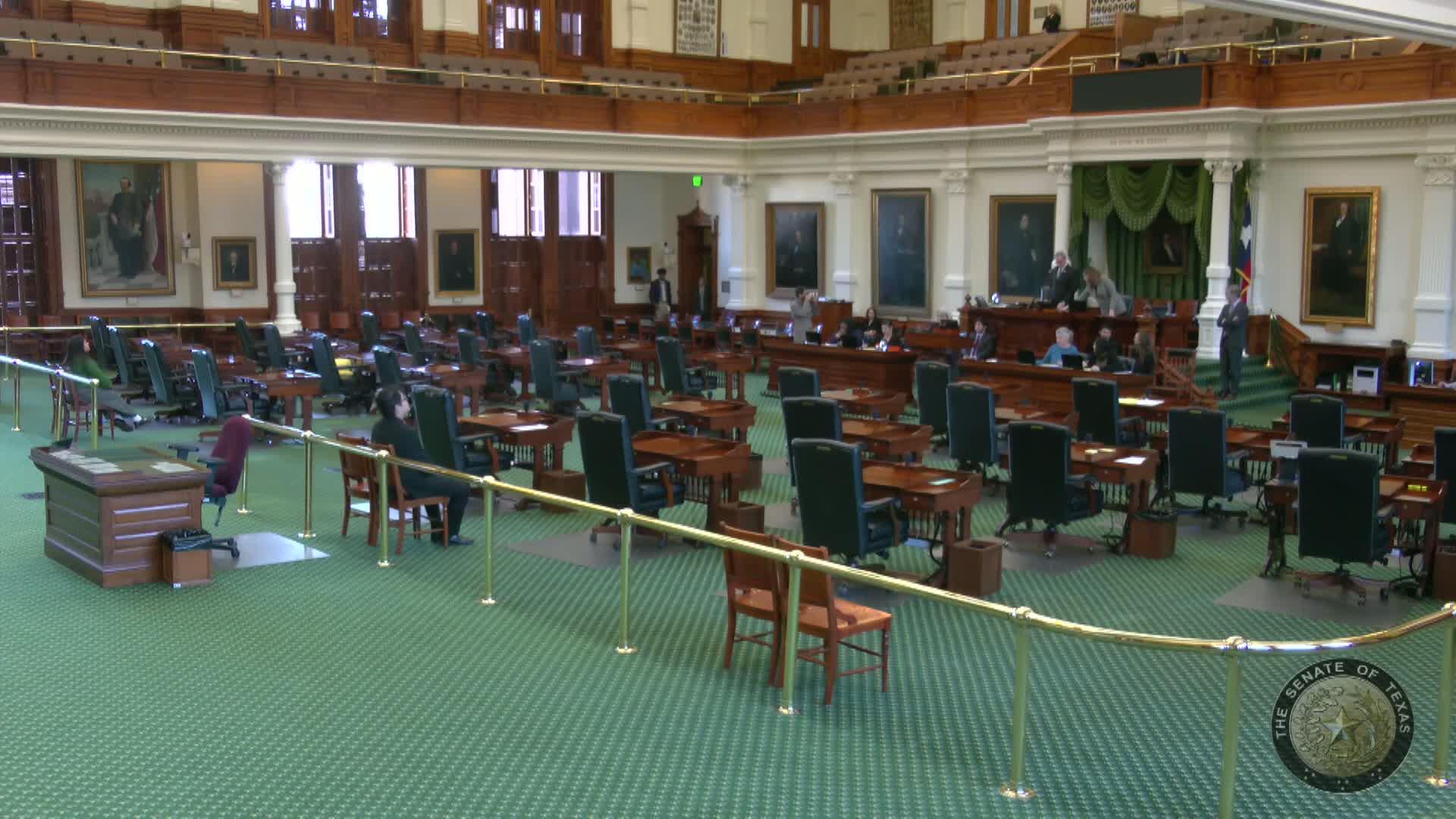
Texas Senate reads dozens of bills on first reading, refers measures to committees
Summary
The Texas Senate opened a brief session to read a long list of bills and resolutions on first reading and referred each measure to a standing committee; the transcript records bill titles, primary sponsors and committee referrals but no debate or votes.
The Texas Senate convened and read dozens of bills and resolutions on first reading, then referred each measure to a standing committee, the presiding officer said. The secretary read the bill and resolution titles aloud and announced committee references but the transcript records no debate, amendments or recorded votes.
Many measures announced cover a wide range of policy areas, including regulation of consumable hemp products (Senate Bill 3, Perry; referred to State Affairs), creation of a Dementia Prevention and Research Institute of Texas (Senate Bill 5, Huffman; referred to Finance), parental rights in education (Senate Bill 12, Creighton; referred to Education K–16), and several finance, transportation, criminal justice and health-and-human-services items. The list also included a set of 1,000-series bills (for example, Senate Bill 1001 by Blanco on constitutional transfers to Finance and Senate Bill 1002 by Blanco on a county employee family leave pool to Local Government).
Nut graf: The session was procedural: the Senate placed bills on first reading and referred them to committees for further consideration. The transcript provides each bill's short title, primary sponsor and the committee name in most entries but does not include bill text, committee substitutes, debate, or floor votes; where the transcript omits details, those specifics are not specified.
Notable examples from the reading (titles and committee referrals as announced in the transcript): Senate Bill 3 (Perry) — regulation of consumable hemp products and hemp-derived cannabinoids (State Affairs); Senate Bill 5 (Huffman) — creation of the Dementia Prevention and Research Institute of Texas (Finance); Senate Bill 1003 (Blanco) — compensation for distributed renewable generation owners outside of ERCOT (Business and Commerce); Senate Bill 1039 (Hughes) — school uniform allotment under the foundation school program (Education K–16); Senate Bill 1044 (Parker) — newborn screening for Duchenne muscular dystrophy (Health and Human Services); Senate Bill 1105 (Parker) — establishment of the Texas Advanced Nuclear Energy Authority (Business and Commerce). Several other items announced would affect local government finance, election procedures, criminal-justice definitions, transportation permits and natural-resources permitting.
The transcript also lists Senate joint resolutions proposing constitutional amendments (for example, SJR 3 by Huffman to establish the Dementia Prevention and Research Institute of Texas and SJR 48 by Blanco proposing a Texas severance tax revenue fund) and Senate concurrent resolutions designating ceremonial observances. The announcements included references to agencies and programs (for example, Texas Department of Transportation and the Railroad Commission of Texas) where applicable to a bill's subject.
The record contains no motions to adopt, no roll-call votes on the bills read for first reading, and no committee action taken during the floor reading. The only formal closing action recorded in the transcript is a presiding-officer statement that, "Pursuant to a motion previously adopted, the Senate stands adjourned until 11 a.m., Tuesday, Feb. 20," (time and date as announced in the transcript). Additional details about bill text, fiscal notes, committee calendars or future floor action are not specified in the transcript.
Ending: Because the meeting was a procedural first-reading session, further consideration of the listed bills will occur in the committees to which they were referred; the transcript does not record subsequent action or scheduling for those committees.