Get Full Government Meeting Transcripts, Videos, & Alerts Forever!
Get email alerts on the Statutory Construction topic
No spam. Unsubscribe anytime.
Media coalition objects as committee considers bill to remove legislative intent language from code
Summary
HB394, a bill that removes or converts statutory "intent" language from Utah code, drew opposition from the Utah Media Coalition at a Feb. 24 committee hearing and was left in committee after a 4-1 procedural vote.
House Bill 394, a proposal to remove or convert statutory "intent" language and, where appropriate, make intent language operative, prompted public concern from the Utah Media Coalition during a Feb. 24 committee hearing.
Representative Tuscher, the sponsor, described the bill as intended to "remove" statutory intent language where it is unnecessary and, where appropriate, convert intent language into operative code: "This is a fairly simple bill... it just goes through the code to remove any statutory intent. If there's a need for statutory intent, our practice is to spread that across the journals, but it shouldn't be in the code."
Michael Judd testified for the Utah Media Coalition in opposition. Judd warned that the bill, as drafted, was inconsistent in its treatment of intent language and could "cross out" provisions that the legislature historically used to explain why a law exists. He identified the second provision of the Government Records Access and Management Act (GRAMA) — cited in testimony as Title 63G, Chapter 2 (63G-2-102) — as an example: "It takes a big red pen and it crosses that out," Judd said, referring to provisions recognizing public access and balancing confidentiality protections.
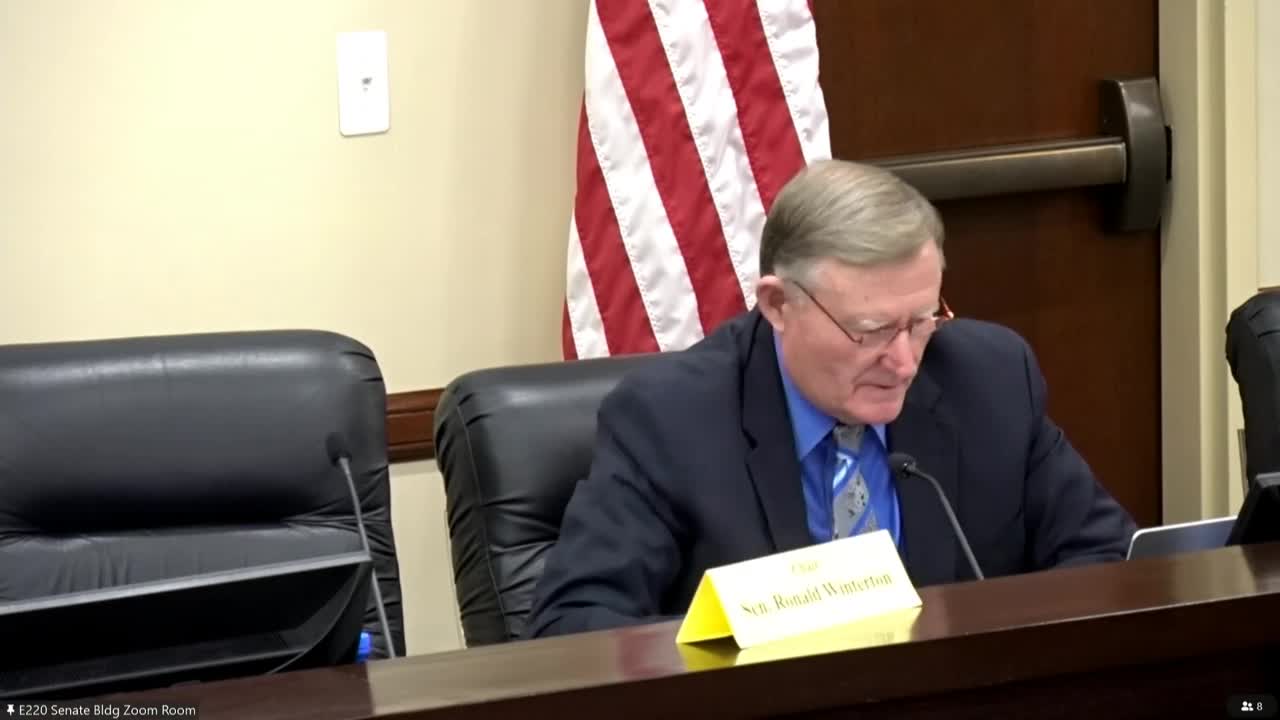
The sponsor said drafters reviewed affected provisions and either converted intent language into operative provisions when appropriate or removed intent where existing operative code provided the same direction. After extended discussion, Senator Bluhen (committee member) said he was "pretty uncomfortable voting this out" and moved a substitute motion to "move the agenda." The substitute motion passed 4 to 1; the chair said the bill "will stay in the committee and have the opportunity to come back." The committee instructed the sponsor to continue discussions with the media coalition and the senate sponsor.
The committee did not advance HB394 to the full Senate; instead, the motion to move the agenda passed and the bill remains in committee for further work between the sponsor and interested stakeholders.