Get Full Government Meeting Transcripts, Videos, & Alerts Forever!
Get email alerts on the Trust Lands topic
No spam. Unsubscribe anytime.
Committee keeps Land Trust Advocacy Office, advances SITLA audit fixes in HB 483
Summary
The House Natural Resources, Environment and Agriculture Committee on Feb. 24 adopted third substitute language to HB 483, keeping the Land Trust Advocacy Office in place while ordering audit-driven changes to School and Institutional Trust Lands Administration (SITLA) reporting, valuation cadence and trespass enforcement.
SALT LAKE CITY — The House Natural Resources, Environment and Agriculture Committee on Monday advanced House Bill 483, adopting third-substitute language that retains the Land Trust Advocacy Office while enacting several audit-driven reforms to the School and Institutional Trust Lands Administration (SITLA).
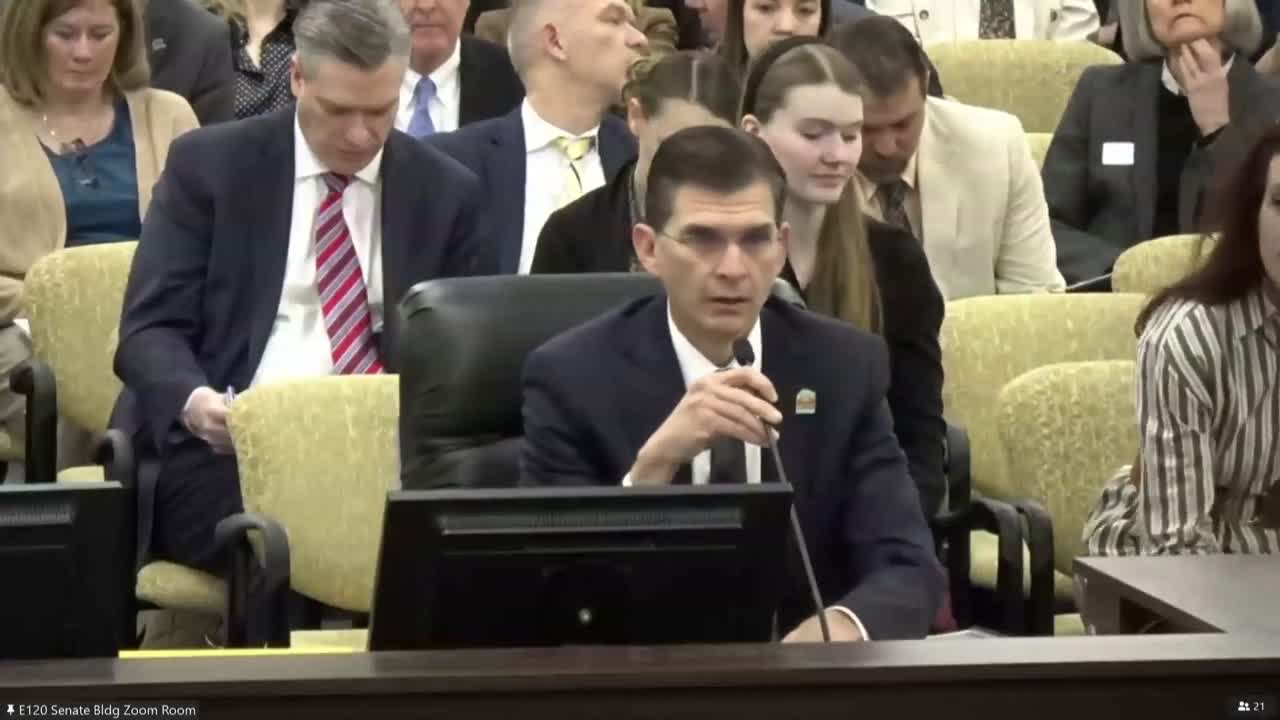
The committee voted to adopt third substitute HB 483 after hearing a detailed presentation from Representative Walter, the bill sponsor, and testimony from SITLA Director Michelle McConkie and multiple beneficiaries and education representatives.
The bill responds to two audits released Aug. 20, 2024, that recommended improving controls, accountability and proactive management at SITLA and the broader trust-system entities. Under the approved substitute, SITLA will participate in an annual audit under the supervision of the state auditor and will move to a multi-year cadence for estimating the value of land holdings used for financial reporting.
"The first provision is that the bill requires the school and institutional trust lands administration to participate in an annual audit under the supervision of the auditor," Representative Walter told the committee. He said SITLA would have flexibility about how that audit is performed, including retaining outside auditors if the state auditor chooses to do so.
The substitute also directs SITLA to shift from parcel-by-parcel annual valuation to an approach that revalues parcels on a roughly five-year rotation, a change the sponsor said mirrors practices used elsewhere in state financial processes. In addition, the bill includes a narrowly defined provision allowing long-term surface leaseholders a right to match a sale at fair market value should the director elect to sell a parcel.
Director Michelle McConkie told the committee the substitute also clarifies statutory language on prohibited uses and trespass enforcement. "It does not actually change any uses, that are allowed. It's just clarifying the language and trying to make that cleaner so that our law enforcement's hands aren't tied," McConkie said, describing difficulties the agency has had when long-term unauthorized occupancies or abuse of trust lands occur.
Public testimony at the committee hearing emphasized retaining the Land Trust Advocacy Office while the ongoing legislative study group completes its work. Mara Hammer, vice chair of the Utah PTA legislative advocacy committee, said keeping the advocacy office protects beneficiary interests: "Without the land trust protection and advocacy office looking out for the beneficiaries, there is less protection on the trust, which means less money for our students."
State Treasurer Marlo Oakes, who chairs the investment office of the trust system (SITFO), urged caution about dissolving the advocacy office midstream. "Eliminating the advocacy office at this juncture would be premature, undermine the progress of our ongoing study and remove crucial protections for trust beneficiaries," Oakes said.
Several education officials and local superintendents told the committee the advocacy office has been an important, cost-neutral resource for beneficiaries; Cade Douglas, superintendent of Sevier School District, said trust-land revenue has grown from roughly $10 per student to more than $150 per student since reforms in prior decades.
Representative Watkins moved adoption of the third substitute and to pass HB 483 with a favorable recommendation. The committee approved the substitute and forwarded the bill to the floor with a favorable recommendation.
The bill makes a mix of procedural and substantive changes: it institutes annual supervised audits for SITLA, authorizes a five-year rolling valuation cycle for land holdings for reporting purposes, clarifies trespass enforcement to enable action against long-term squatting or abusive uses, and provides limited sale-matching rights for long-term leaseholders. It leaves the Land Trust Advocacy Office in place while the study group finishes its review.
Representative Chu declared a potential conflict of interest on the record, saying her family holds grazing leases with SITLA. Committee members discussed enforcement mechanics and confirmed SITLA currently relies on county law enforcement and two contract law-enforcement officers provided via the attorney general's office to patrol roughly 3.5 million acres the agency administers.
Why it matters: SITLA manages significant land and revenue that benefit public schools and other state beneficiaries. The substitute aims to respond to auditor recommendations while preserving beneficiary advocacy and continuing a stakeholder study to evaluate longer-term governance changes.
The committee did not adopt any additional policy changes to the advocacy office and kept the study group process intact; sponsors and stakeholders said the substitute balances near-term controls and oversight improvements with the ongoing legislative review.
Votes at the committee level were recorded as the committee adopted third substitute language and passed HB 483 with a favorable recommendation to the floor.
Looking ahead, the bill will go to the full House for further floor action where sponsors and stakeholder groups said they plan to continue engaging with the larger legislative process.