Get Full Government Meeting Transcripts, Videos, & Alerts Forever!
Get email alerts on the Digital Privacy topic
No spam. Unsubscribe anytime.
Committee adopts limits on reverse‑keyword search warrants for nonviolent crimes, keeps judicial review for violent felonies
Summary
The committee adopted the second substitute to HB 273, which places an outright ban on reverse‑keyword searches for most investigations while allowing a judicially reviewed process for certain violent felonies, mirroring prior geofence-warrant compromise language.
The committee considered legislation placing guardrails on reverse‑keyword search warrants, a digital investigative technique that asks a provider for records of users who searched a specified term.
Nut graf: Sponsors said the compromise seeks to protect Fourth Amendment interests by banning broad reverse‑keyword searches in routine cases while preserving a narrowly tailored, court‑reviewed process for violent felonies where investigators lack other investigative leads.
A committee member summarized the legal tension: reverse‑keyword searches raise particularity concerns under the Fourth Amendment because they may target a search term without an identified person, place or item to seize. Supporters pointed to cases in other states—most prominently a Colorado arson‑homicide case—where search queries led investigators to suspects; opponents and civil‑liberty advocates elsewhere have warned about fishing expeditions.
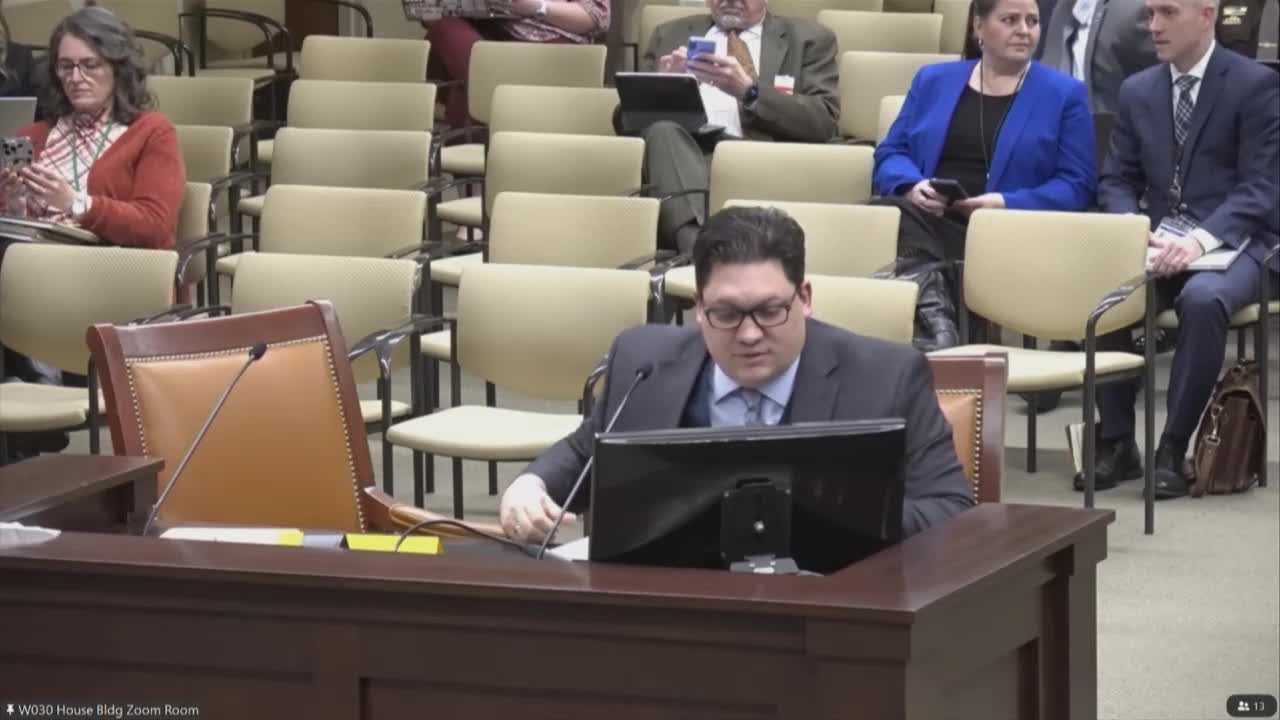
Nate Mudder, chair of a law‑enforcement legislative committee, told members that state high courts in Colorado and Pennsylvania upheld some reverse‑keyword warrants where courts found searches were reasonably particular and constrained. He said the bill’s guardrails would require narrow terms, timeframes and anonymization steps to minimize privacy invasion.
Representative Ballard moved adoption of the second substitute and later moved passage to the floor with a favorable recommendation; the committee adopted the substitute and passed the bill by voice vote.
Ending: The substitute restricts uses outside violent‑felony investigations and advances the bill to the House floor.