Get Full Government Meeting Transcripts, Videos, & Alerts Forever!
Get email alerts on the Public Facilities Districts topic
No spam. Unsubscribe anytime.
House panel hears bill to let public facilities districts form around parts of counties
Summary
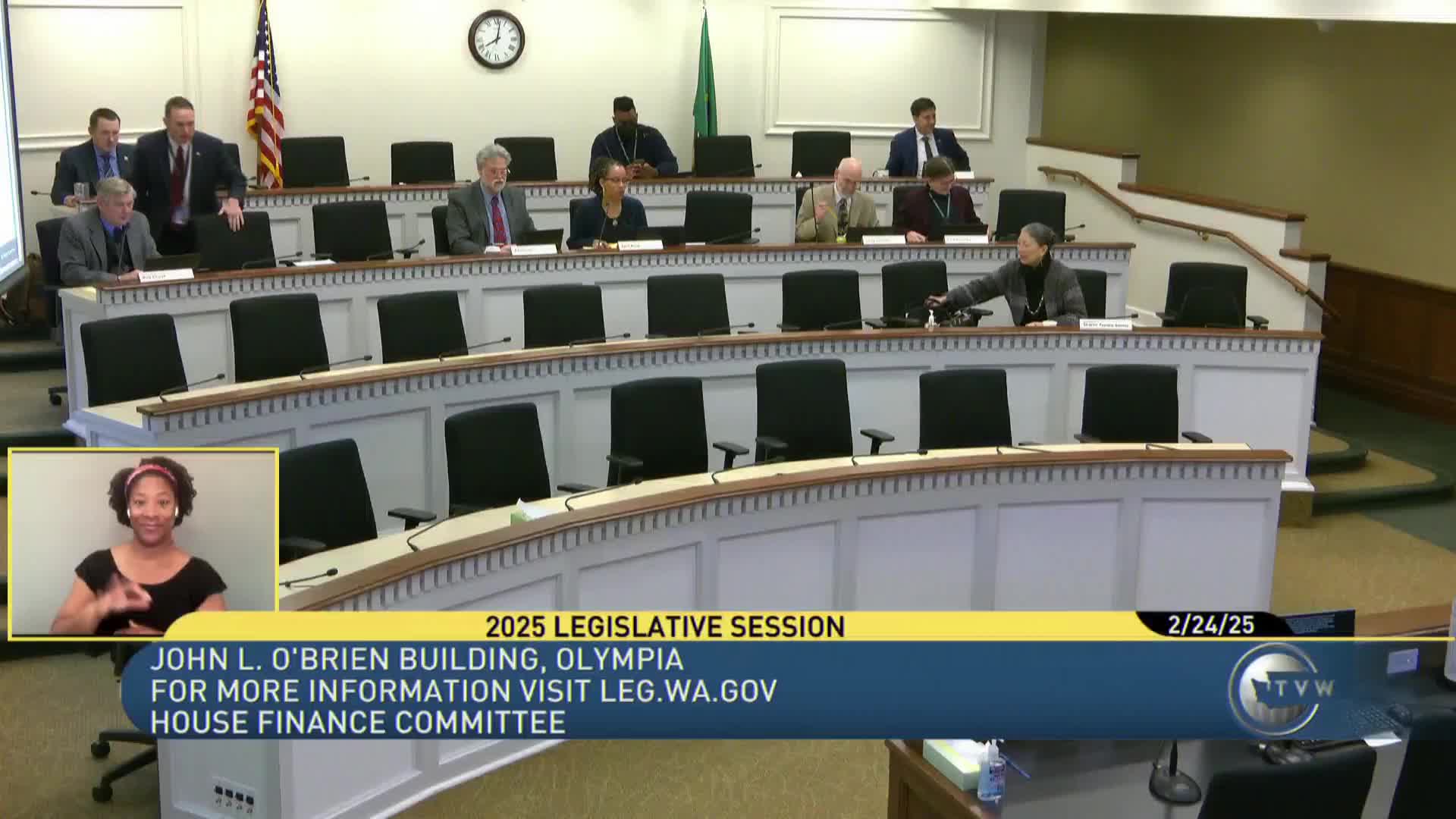
Substitute House Bill 1037, which would change how public facilities districts may be formed and governed, drew support from rural leaders and caution from the Department of Revenue at the House Finance Committee on Feb. 24.
Substitute House Bill 1037, which would change how public facilities districts may be formed and governed, drew support from rural leaders and caution from the Department of Revenue at the House Finance Committee on Feb. 24. The bill would allow a public facilities district (PFD) to include less than all of an unincorporated part of a county by making the district boundary coextensive with selected school district boundaries and involved cities or towns. It also requires such districts to have a board of at least seven members and sets who must serve as an ex officio district treasurer when counties participate.
The bill’s prime sponsor, Representative Tom Dennen, said the measure grew from constituent work in Upper Kittitas County. “They have great community support,” Dennen said, “so we began this program,” he told the committee, describing local plans for a recreation center that would serve youth and seniors.
Committee staff described the policy details and fiscal implications. Michelle Rusk, staff to the Local Government Committee, told members that PFDs are municipal corporations that can “acquire, construct, finance, and operate one or more regional centers” and that the proposed change would allow district boundaries to be formed using school district lines within counties involved. Staff also explained governance and the requirement that a participating county treasurer of the county with the largest portion of the district serve as ex officio treasurer unless the board designates another qualified official.
Local supporters told the committee the change would allow smaller communities to assemble the revenue streams—such as sales and lodging taxes—that make indoor recreation and wellness centers financially possible. Josh Weese of Ellensburg said the city lost its major indoor facility to arson in 2022 and that a targeted sales tax enabled by a PFD “would very much meet the needs of the community.” County and community leaders from Upper Kittitas County testified they need a way to create a district that excludes parts of a county that do not want to participate.
The Department of Revenue cautioned that adding school-district-based boundaries for sales-tax-type administration increases complexity. Steve Ewing said allowing PFDs along school-district lines would require significant new GIS mapping and programming and raise compliance costs for businesses and the department; staff estimated one-time DOR costs for system updates in its fiscal note request.
Committee members and supporters asked for technical amendments and continued work with stakeholders and DOR. The committee suspended the hearing to allow further amendment discussions. No formal action was taken at the Feb. 24 hearing.