Get Full Government Meeting Transcripts, Videos, & Alerts Forever!
Get email alerts on the Legislation topic
No spam. Unsubscribe anytime.
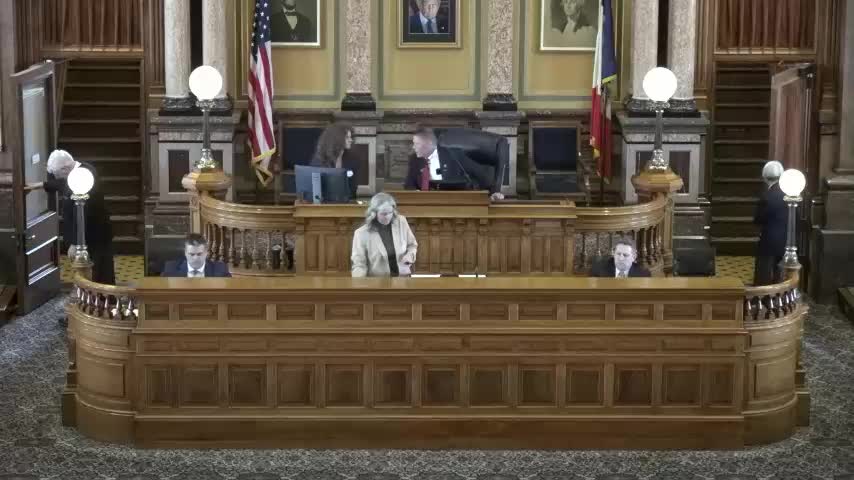
House of Representatives logs 30 first‑reading bills and refers measures to committees
Summary
During a session of the House of Representatives, members recorded first readings for 30 bills spanning education, taxation, criminal law, public contracting and natural resources and sent each to the committee named in the reading. The House approved the journal and recessed by voice vote.
The House of Representatives recorded first readings for 30 bills and referred each to the committee noted in the reading during a floor session. The measures, ranging from school funding and education policy to tax changes and criminal offenses, were read into the record with no extended floor debate and sent to committees for further consideration.
Why it matters: The readings place a suite of proposals into the formal legislative process. Committee referral starts the next step for hearings, amendments and votes; several bills touch core state policy areas — education, taxes, public safety and procurement — that could affect school districts, taxpayers and local governments if advanced.
Most prominent measures read into the record include education bills: House File 552, a bill to modify provisions related to chronic absenteeism and school engagement meetings and to add penalties; House File 553, authorizing use of district management levy revenue for employment or retention of school security personnel; House File 554, amending provisions related to school district library programs and requests to remove educational materials; and House File 555, changing notice requirements when a student becomes chronically absent. Each of these was read and referred to the Committee on Education as stated in the record.
On taxation and finance, the House read House File 566, a bill to modify individual income tax rates and provide tax credits for certain married couples filing jointly; House File 567, proposing exclusion of certain net capital gains from the calculation of Iowa net income; House File 568, proposing exclusion of interest income earned from banks and credit unions from Iowa net income; and House File 565, establishing a partial property tax exemption for certain residential properties sold in disaster areas. Those measures were referred to the Committee on Ways and Means or the committee named in the reading.
Public‑safety and criminal‑law proposals included House File 557 and House File 559 (bills addressing animal torture, abuse, neglect and related penalties), House File 561 (criminal offense of grooming), House File 572 (establishing a criminal offense for smuggling of persons), House File 573 (changes to involuntary commitment filing and custody procedures) and House File 570 (probation reforms including discharge and educational/workforce credits). The readings assigned each bill to the committee identified in the floor reading.
Several bills affect state operations and contracting: House File 564 (contracts for construction of public improvements), House File 563 (property assessment standards and related litigation), and House File 560 (language described as relating to rights of parents, guardians and minors, including activities related to gender transition procedures, referred to the judiciary committee in the reading).
Other measures read included bills on health‑insurer credentialing (House File 556), drivers’ privileges for minors (House File 574), higher education reporting and sanctions for certain nonimmigrant visa holders (House Files 575 and 576), tuition waiver proposals for top test scorers at regent institutions (House File 577), changes to consumer‑advocate office authority (House File 578), funding for programs for at‑risk and alternative students (House File 579), and House File 580 addressing selective timber harvesting on public lands. Each bill was placed with the committee named in its reading.
All readings on the floor were presented as first readings; the record specified when a bill was “ready for commitment” or “not ready for commitment” and in every case identified the committee to which the bill was referred. The floor gave no extended debate on the bills during the reading sequence.
Votes at a glance: The House approved the journal correction during the session (the chair announced, “Journal stands approved”). Later, Representative Weiszold moved that the House recess until adjournment of the House Judiciary Committee; the motion carried by voice vote (the chair announced the ayes had it) and the House recessed.
Less central floor items: the record also includes a Black History Month presentation recognized from the floor and several announcements (for example, a breakfast hosted by the Iowa Pork Producers Association). Those items were presented as remarks or announcements and did not change the status of bills on the calendar.
Next steps: Each bill will proceed to the committee listed in the reading for hearings, potential amendment and committee votes; the record provides the formal referral but contains no committee actions or final outcomes for these measures in this session's transcript.