Get Full Government Meeting Transcripts, Videos, & Alerts Forever!
Get email alerts on the Body Worn Cameras topic
No spam. Unsubscribe anytime.
Senate committee ups consequences for failing to follow body‑camera rules, adds university police to coverage
Summary
Senator Cervantes presented SB505 to extend body‑worn camera coverage to campus police and to change the legal consequence for failing to follow camera policies to a rebuttable presumption of intentional spoliation of evidence.
Senator Cervantes (sponsor) presented SB505 as a measure to ensure uniform use of body-worn cameras across law enforcement, including campus police at public universities, and to strengthen consequences when officers fail to follow their own camera policies. The sponsor said the bill seeks to address situations where university departments had concluded they were not covered under earlier language.
Carter Bundy of AFSCME and multiple police chiefs spoke in opposition to a proposed change from "may" to "shall" in the statute's language. Chief Troy Easter of the New Mexico State Police testified the change would "wrongly presume misconduct" in situations caused by technical failure or exigent circumstances. Jeremy Story, chief of the Las Cruces Police Department, told the committee officers sometimes cannot immediately activate cameras during life‑threatening calls, battery and download cycles limit continuous operation, and agencies already discipline officers when policy violations occur.
Members debated a sponsor-carried amendment to remove prior phrasing referencing "bad faith" and to replace it with a narrower, legally standard presumption. The committee adopted the amendment; the revised language reads in effect that a peace officer who fails to comply with required policies "shall be presumed to have engaged in intentional spoliation of evidence," a rebuttable presumption that allows officers to present evidence showing a legitimate reason for noncompliance.
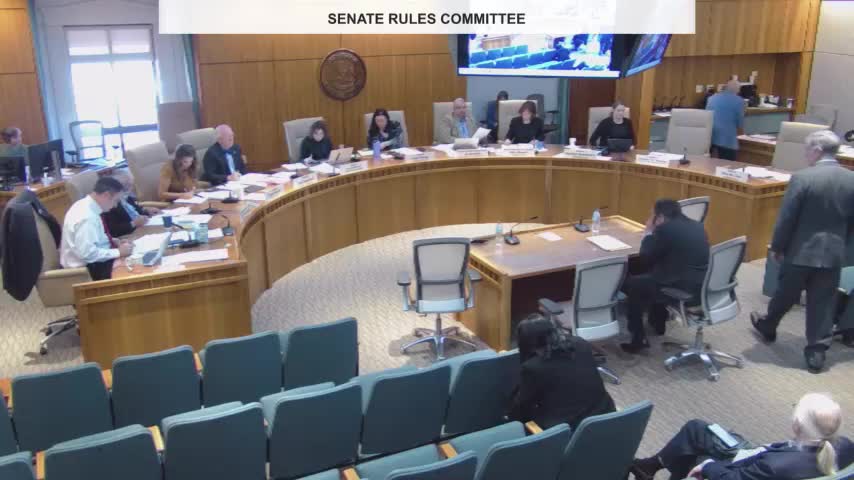
After further discussion and public testimony, the Senate committee recommended the bill do pass as amended. The roll call on the committee recommendation recorded five yes votes, four no votes and one excused member.
Supporters and opponents agreed on the value of body cameras but diverged on the legal consequence for failure to comply and whether the change would unfairly presume bad faith in emergent situations or technical failures. Judicial committee review is the next expected step for the bill.