Get Full Government Meeting Transcripts, Videos, & Alerts Forever!
Get email alerts on the Lobbyist Transparency topic
No spam. Unsubscribe anytime.
Senate committee advances bill to tighten lobbyist reporting, lowers reporting threshold to $50
Summary
A Senate committee advanced SB248 to expand disclosure under the Lobbyist Reporting Act by defining “person,” lowering the reporting threshold from $100 to $50 and adding fields such as payee, date and beneficial client; the amendment was adopted and the bill received a do-pass recommendation.
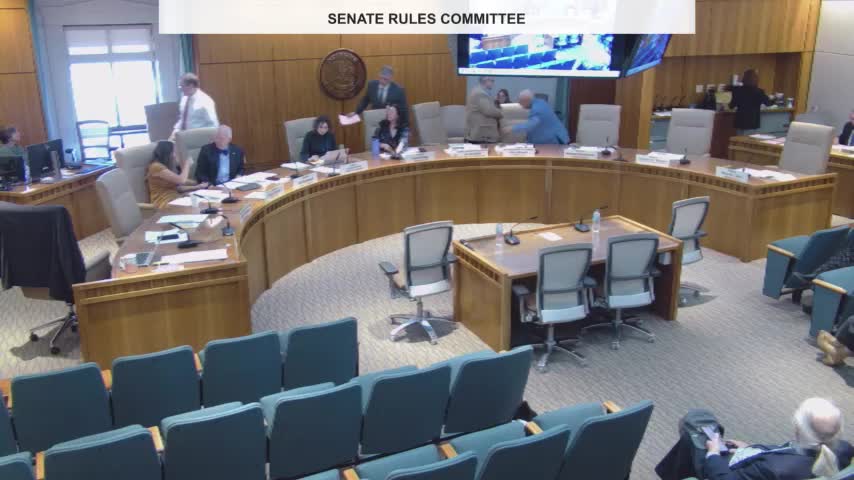
Senator Figueroa introduced Senate Bill 248 on lobbyist reporting, saying the measure would add clarity to the Lobbyist Reporting Act and bring New Mexico closer to neighboring states on disclosure standards.
The bill, as amended, narrows some definitions and requires more detailed reporting of lobbyist expenditures. "Transparency is a foundation of public trust," the sponsor said. Supporters told the committee the changes are modest but would give the public a clearer picture of who is paying lobbyists and "for what exactly." Mason Graham of Common Cause New Mexico said the group was in "strong support of SB 248," calling it a "common sense measure" that would give voters more insight into lobbyist activities. Judy Williams of the League of Women Voters of New Mexico said the league "supports SB 248" for similar transparency reasons.
The amendment the committee adopted primarily (1) replaced the separate terms "individual" and "organization" with the defined legal term "person," and (2) tightened language in the bill's definition of the subject matter to make the scope less hypothetical. Committee staff explained a key substantive change: the bill lowers the reporting trigger from $100 to $50 and requires additional fields on reports, including the date of an expenditure, the payee (for example, a restaurant), the beneficiary of the expenditure and the contractual and beneficial client up the chain of payment.
Senator Townsend questioned whether the change to "person" would create confusion and asked about timing and aggregation of reporting when a lobbyist working under a firm may be acting on behalf of a beneficial client. Committee counsel and staff clarified that "person" is a defined term in the existing law and that the bill does not change the reporting calendar: lobbyist filings remain due midyear (May, covering Jan. 15–May 1), a fall report (due October covering May–Oct. 1) and an annual report (due Jan. 15 covering Oct.–Dec. and any omitted activity). The secretary of state's office enforces reporting compliance; staff said the office typically contacts filers to secure late reports and may impose fines or other penalties for intentional or habitual noncompliance (penalty amounts were discussed in testimony but are governed by existing law and are not changed by SB248).
After debate, the committee voted to give the bill a do-pass recommendation as amended. The transcript roll call recorded eight yes votes and two excusals on the committee recommendation.
The bill now moves to the Judiciary committee for further consideration.