Get Full Government Meeting Transcripts, Videos, & Alerts Forever!
Get email alerts on the Illegal Motorcycle Runs topic
No spam. Unsubscribe anytime.
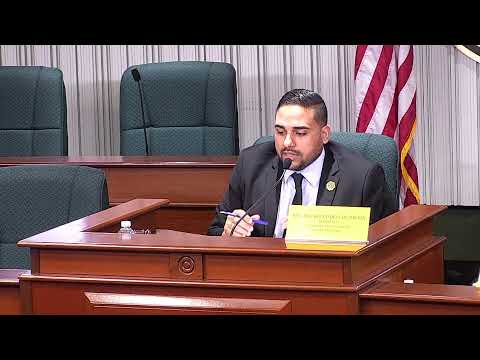
Puerto Rico House panel hears advocates, riders and ACA on illegal motorcycle runs and safety gaps
Summary
A House Transportation and Infrastructure committee hearing on House Resolution 85 gathered riders’ groups, a Harley-Davidson representative, a stunt performer and the Administration for Compensation for Automobile Accidents to weigh enforcement, registration, licensing and insurance coverage for illegal motorcycle runs.
The House Transportation and Infrastructure Committee held a public hearing Feb. 18 on House Resolution 85 ordering an investigation into illegal motorcycle runs and dangerous motorcycle maneuvers on Puerto Rico’s public roads.
The hearing brought three panelists working with or in the motorcycle community and a lawyer from the Administración de Compensación por Accidentes de Automóviles (ACA). Committee members pressed agencies for data and documentary evidence and ordered follow-up information from the Department of Transportation and Public Works (DTOP).
The resolution that opened the session directed the committee to “investigate illegal reckless driving practices in motorcycle runs ... to assess associated dangers, accident statistics, the effectiveness of current sanctions and the feasibility of new legislative measures to strengthen road safety and enforcement,” the committee chair said when reading the measure into the record.
Luz Zenaida Casillas, who identified herself as leader of the community group Procomunidad Biker, told lawmakers that the problem is partly administrative: many riders accumulate fines that never are collected. “Hay personas… que tienen diez mil, doce mil, quince mil dólares en multa,” she said, arguing there is no effective procedure to collect long-standing fines and suggesting statutory changes to allow collection and to hold dealerships accountable for sales of unregistered motorcycles.
Anthony Maimí Monger, who identified himself as a spokesperson for Harley‑Davidson Puerto Rico, described organized charity and private rides run with police coordination and suggested raising existing equipment-related penalties. “Estamos pidiendo que se aumente a trescientos” dollars for equipment violations such as helmets and gloves, he said, adding that better resourcing of licensing exam sites would help bring riders into compliance.
Katia Ayala, who said she works as a stunt ("stone") professional and is a member of SAG‑AFTRA, urged lawmakers to pair enforcement with alternatives: dedicated, certified practice spaces and stronger registration and confiscation processes. “La solución debe ser más integral,” Ayala said, calling for education, regulated practice venues and a functioning confiscation process so dangerous conduct is not simply driven underground.
ACA attorney Alberto Marini told the committee the ACA supports the investigation and described how the agency’s statutory exclusions affect coverage. He read the law’s exclusion that denies ACA benefits “a aquellas que al momento del accidente estuvieran conduciendo un vehículo de motor sin una licencia de conducir válida y vigente… o cuyo vehículo no tuviera una licencia de vehículo de motor y tablilla válida y vigente.” Marini also provided ACA statistics showing the agency handled 509 motorcycle-related claims in 2023 and 499 in 2024 and paid approximately $965,143.19 in 2023 and $1,072,287.31 in 2024 for medical-hospital services tied to motorcycle accidents.
Committee members pressed for agency follow-up. The chair said DTOP must supply, by the end of the day’s record, documentation about the $10 surcharge levied at registration since 2007 that was meant to fund eight training polygons and why those polygons and a seven-member oversight commission required by the 2007 statute were never created. Committee members also asked DTOP for records on vehicles and enforcement actions, and asked ACA for logs showing denials, recoupment efforts and other case-level data within five days.
Witnesses and members highlighted recurring themes: a large number of motorcycles registered with DTOP (committee staff cited 216,000), low proportions of riders holding the M‑endorsements required by regulation (witnesses and ACA cited roughly 15 percent with required endorsements), difficulty collecting unpaid fines, gaps in the confiscation process and lack of accessible, adequately staffed licensing and testing sites.
Several speakers urged a balanced approach combining enforcement, clearer statutory definitions of dangerous maneuvers (e.g., wheelies, burnouts, street racing), resources to certify volunteer “road guards,” and investment in safe, supervised practice locations. The chair said the committee will prepare an investigative report and work on a draft bill based on the hearing record.
The hearing did not include any committee votes; members and witnesses agreed to return documents and data to the committee record for follow-up.
The committee recessed and said it would continue the investigation and prepare draft legislation to address registration, enforcement, confiscation procedures and possible changes to fines and training requirements.