Get Full Government Meeting Transcripts, Videos, & Alerts Forever!
Get email alerts on the Infrastructure topic
No spam. Unsubscribe anytime.
Commissioners press staff for more detail after bids and engineering lift several Brown County road and bridge estimates
Summary
A lengthy agenda item reviewed multiple road and bridge projects (including a bridge replacement and a large reclamation of 270th Road). Commissioners questioned rising engineering and construction costs, requested follow-up with the state and contractors, and deferred final approvals pending additional information.
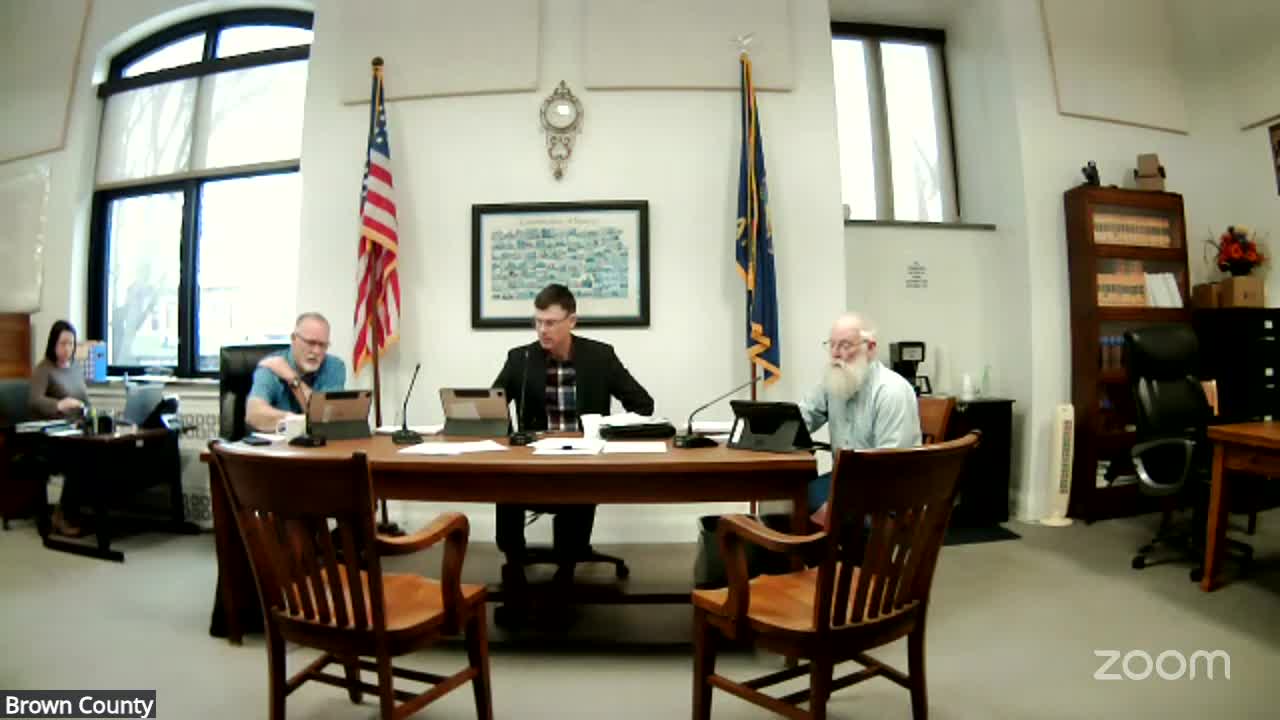
Brown County commissioners devoted substantial time on Feb. 10 to updates and debate over multiple road and bridge projects, probing why several estimates and paid engineering costs pushed project totals well above initial projections.
Commissioners discussed at least three major efforts: replacement of a small county bridge (initially estimated at roughly $250,000), a federally funded bridge project south of Fairview with state prepayments and unpaid construction obligations, and a large reclamation/overlay of 270th Road originally estimated in planning to be roughly $1.2–1.6 million depending on section and asphalt depth.
Commissioner (unnamed) summarized the concern: "What started out to be a $250,000 bridge is now a $415,000 bridge," noting historical‑society survey needs and additional geotechnical work that expanded engineering costs. Brady, the county engineer whose work and figures were cited repeatedly during the discussion, explained the process for state‑funded grants: preliminary engineering and required archeological and geotechnical surveys can add costs that the county must pay or prepay to meet program rules. "You have to accept it as is first, and then you have to put in a change order to reduce that," Brady said about the 270th Road bid; he added that some savings could be achieved as actual quantities are adjusted during change orders.
On 270th Road, the board considered an option to reduce asphalt from 3 inches (bid specification) to 2 inches to save cost. Brady and staff said that the contractor’s unit prices were in hand and, if the county awards the contract as bid, a subsequent change order could reduce asphalt quantity; Brady cautioned the exact dollar savings were not yet calculated. Commissioners pressed staff to ask the engineer and contractor for a menu of cost‑reduction scenarios and to check whether county crews could perform some alternates—ditch cleaning, gravel edge work or intersection base improvements—rather than contract them.
Several commissioners also raised a broader policy question: with grant funding available from state and federal sources, when should the county accept funds that require more stringent engineering and inspection mandates (and hence higher project administration costs) versus pursuing smaller, locally managed repairs? One commissioner said the county must avoid repeatedly spending escalating amounts without a firm long‑term plan.
Board actions on road items were procedural at the Feb. 10 meeting: staff and commissioners agreed to postpone final contract awards and to reconvene next week with requested analyses: (1) follow‑up calls with the state program manager (Michael Hegeman was named) about potential additional state support for detour work and inspection costs; (2) confirmation from bidders about how much costs would change if asphalt quantities are reduced; and (3) a report from road‑crew leadership on whether alternates could be done in‑house and at what cost.
Ending: Commissioners postponed final awards pending the above follow‑up. Staff was asked to present alternative scenarios that show the county cost if asphalt thickness is reduced, if alternates are performed by county crews, and what additional federal/state inspection costs would look like for federally funded bridge work.