Get Full Government Meeting Transcripts, Videos, & Alerts Forever!
Get email alerts on the Waste Management topic
No spam. Unsubscribe anytime.
Brown County officials weigh whether to continue household hazardous-waste service after steep disposal costs
Summary
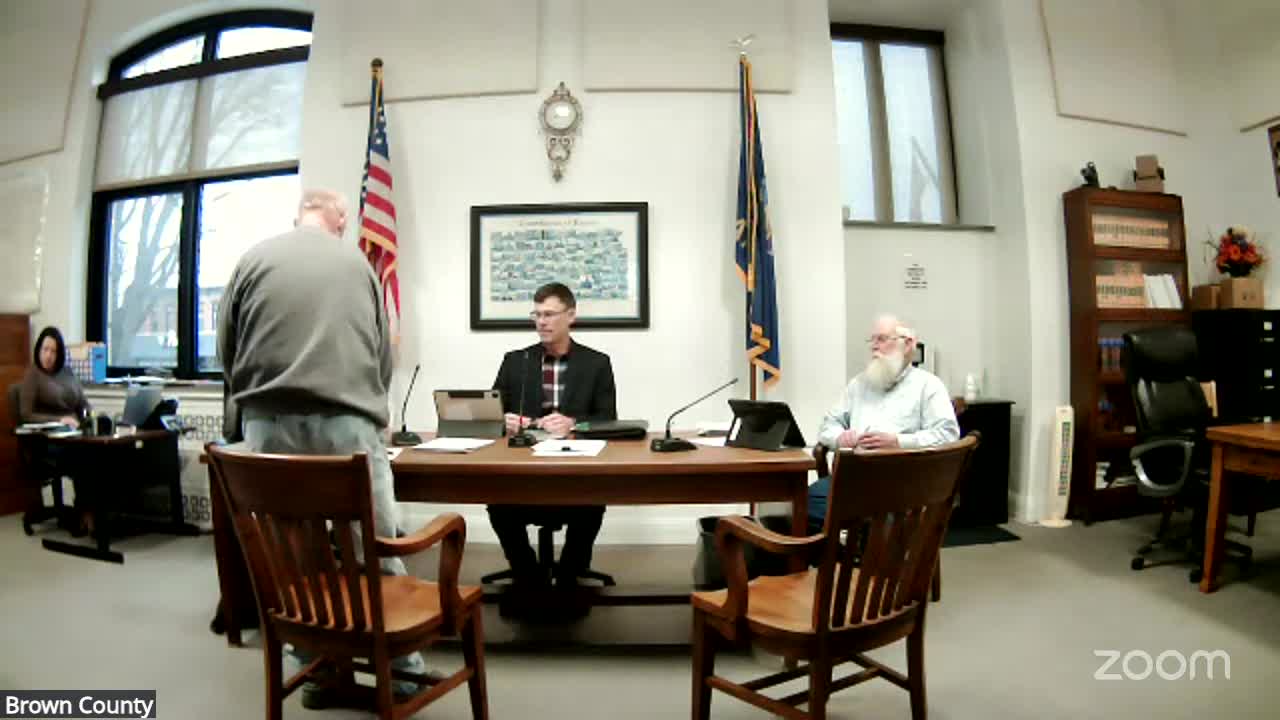
Brown County commissioners spent an extended portion of their meeting on Feb. 10 reviewing the county’s household hazardous-waste program after staff reported an unexpectedly high bill for recent material disposal and low fee revenue.
Brown County commissioners spent an extended portion of their meeting on Feb. 10 reviewing the county’s household hazardous-waste program after staff reported an unexpectedly high bill for recent material disposal and low fee revenue.
County staff member David told the board a small load he personally took to the regional contractor generated a disposal charge of $3,900, and the county brought in just $377 in direct gate receipts last year. “I talked to two officials at the Kansas Department of Health and Environment, and they both told me that we are not required to have a hazardous waste program,” David said, adding he is recommending the county consider stopping the program while researching alternatives.
The discussion focused on three practical and fiscal problems: (1) a standing contract the county maintains with Jackson County that charges a per‑resident annual fee (about $0.20 per county resident, roughly $1,850 at the time of the meeting) for membership in the regional arrangement; (2) separate charges billed when Jackson County’s contractor hauls Brown County material to its facility and then invoices Brown County again for third‑party disposal work; and (3) limited fee revenue collected at Brown County’s landfill. David said the county has been paying membership and handling costs while material has accumulated at the landfill, and that workers there had described long storage and a recent cleanup when Jackson County picked up materials.
Staff and commissioners discussed practical options: continuing the program as currently structured and accepting the county subsidy; restricting which items the county will accept; encouraging residents to use a private contractor or a neighboring county’s program; or terminating the county’s participation in the Jackson County contract. David said Jackson County and a contractor named Clean Harbors handle collection and processing for the region, and that Jackson County bills Brown County for disposal costs beyond the regional membership fee.
Commissioners asked staff to pursue specific follow‑up: (a) confirm whether the city of Robinson will finalize its pending claim (staff said Robinson expected to submit by the end of the day); (b) arrange a meeting with Jackson County officials to ask how their pickup/charging process works and whether the regional contract could be altered; and (c) contact local businesses that might provide take‑back or recycling options. David said he would invite Jackson County representatives to a meeting and reach out to a business in Sabetha that has previously used the regional service.
Several commissioners emphasized the county must avoid creating an unregulated disposal option for residents if it drops the program. “If we don’t have the program, then we’re going to do one of two plans: tie it to the trash, the field of the truck, or it’s going to go in our ditches,” one commissioner said. Staff and commissioners agreed to discuss the matter again at an upcoming meeting after the invited information arrives.
No formal motion to end the program was made on Feb. 10. The board’s direction was to gather further details from Jackson County, solicit local options and return with a recommendation.
Ending: The board did not vote on the program’s future; staff will convene follow‑up calls and a meeting with Jackson County and report back. Commissioners said they want to hear from local businesses and neighboring counties before making a policy decision.