Get Full Government Meeting Transcripts, Videos, & Alerts Forever!
Get email alerts on the Energy And Environment topic
No spam. Unsubscribe anytime.
Commission adopts solar ordinance limiting large arrays to industrial areas; supporters and opponents clash
Summary
Coweta County adopted a new solar energy ordinance (November draft) that restricts large utility arrays to industrial zones and caps project size; supporters said the change would allow review of potential county‑scale projects, opponents warned of environmental, visual and property‑value impacts.
The Coweta County Board of Commissioners on Jan. 23 adopted an ordinance governing solar energy systems and facilities, adopting the November 25 draft that had been in staff review since mid‑2024.
Under the adopted ordinance, large‑scale solar is restricted by zone and by size thresholds that the board discussed during public comment. The ordinance sets a maximum project size in acreage increments (the board clarified a 500‑acre maximum followed by 50‑acre increments for review), and limits where large solar can be sited, generally directing utility‑scale proposals toward industrially zoned land or to narrowly defined circumstances.
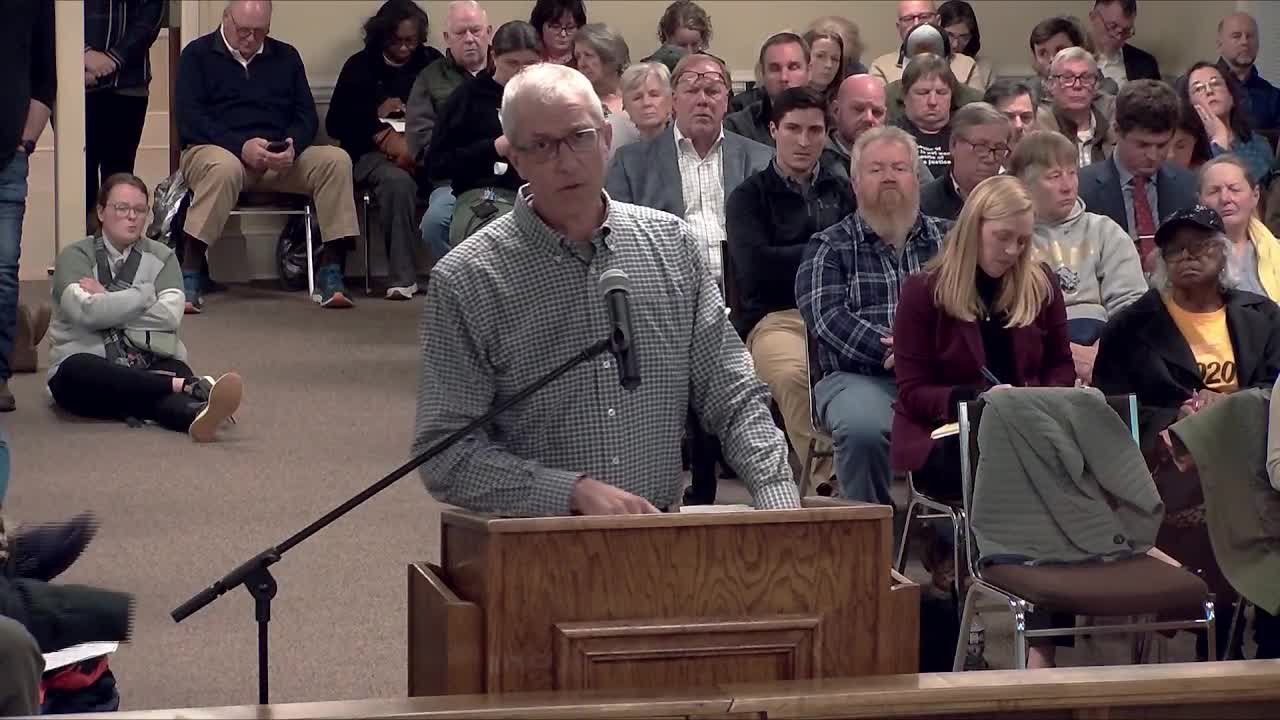
The vote followed several rounds of public input. Speakers in favor said limiting where arrays may sit would allow the county to evaluate potential benefits such as additional local renewable generation to serve proposed data centers and to protect residents from ad hoc installations. Braden Houston, a representative of OPD Energy, asked the board to allow individual projects to be considered on their merits rather than prohibiting them outright in large nonindustrial tracts; he said solar could help increase local supply and blunt future electric‑rate pressure if a large power user comes to the county.
Opponents raised environmental, aesthetic and property‑value concerns during a lengthy public comment period. Geologist Christopher Soltis warned of sediment and soil erosion, possible heavy‑metal mobilization and harm to wetlands and groundwater recharge areas. Several residents urged the board to preserve rural character and to keep large industrial‑scale uses in existing industrial park areas rather than farm or conservation land.
Commissioners framed the ordinance as a preemptive, regulatory framework that does not approve any specific solar installation. The board emphasized that any future project proposal would still require site‑specific review, rezoning as necessary, and compliance with the ordinance and county development standards. The adopted ordinance passed unanimously.
What happens next: The ordinance will be available on the county website; any solar developer seeking a utility‑scale project will need to submit an application, which will be judged under the new rules and normal rezoning or permit processes.