Get Full Government Meeting Transcripts, Videos, & Alerts Forever!
Get email alerts on the Criminal Appeals topic
No spam. Unsubscribe anytime.
Utah Court of Appeals hears challenge to Wall conviction over omitted jury instructions and alleged trial errors
Summary
Utah Court of Appeals judges heard argument Wednesday in State v. Wall (No. 20220835) on whether trial counsel provided ineffective assistance by failing to request an affirmative‑defense instruction on theft and a unanimity instruction on an obstruction count.
Utah Court of Appeals judges heard argument Wednesday in State v. Wall (No. 20220835) on whether trial counsel provided ineffective assistance by failing to request an affirmative‑defense instruction on theft and a unanimity instruction on an obstruction count.
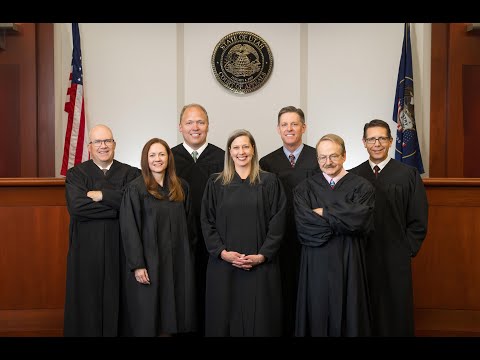
The question for the three‑judge panel — Judge Ryan Harris, Judge John Luthy and Judge Amy Oliver — was whether a reasonably competent attorney would have requested those instructions, and if so whether their omission caused prejudice to the defendant Martin Wall.
Appellate counsel for Wall argued the trial lawyer should have requested an instruction that would have allowed the jury to consider an affirmative defense to the aggravated burglary charge tied to an alleged honest belief about ownership of cell phones recovered after the incident. Counsel also contended the court should have instructed the jury to be unanimous about which act supported the single obstruction count, because the state presented evidence that Wall disposed of both cell phones and a gun.
Jeff Mann, appearing for the State of Utah, told the panel that the court and the jury viewed the evidence as overwhelmingly demonstrating Wall’s guilt. Mann recounted that, at sentencing, the trial court had said it was “absolutely convinced you went to that house with a gun,” and argued that a jury that convicted on multiple counts was unlikely to accept an alternative intent theory that would undermine those convictions.
Judges probed both sides. Judge Harris questioned whether a reasonable defense attorney might forgo an affirmative‑defense instruction as a strategic choice when the defense already was that the elements of theft were not met. Garland press‑points of contention addressed whether the hoverboard mentioned in the record could have supported theft or burglary theories and whether the jury’s reliance on phones versus the hoverboard changed the analysis. The panel also pressed whether disposal of the gun — which the defense said was discarded out of fear and to avoid possessing a weapon — could nevertheless be viewed by a jury as obstruction because the weapon had been used in a shooting.
Defense counsel argued the intent element separated lawful avoidance of possessing a firearm from the criminal intent required for obstruction. Counsel cited conflicting witness testimony about when and how items were taken, arguing that the record supported a credibility contest and that an affirmative‑defense instruction was not inconsistent with Wall’s trial testimony. The state countered that the totality of evidence — multiple witnesses identifying the gun and other corroborating facts — made it unlikely a jury would accept the defense’s intent explanations.
The panel allowed rebuttal arguments and asked whether certain closing‑argument references and recorded statements introduced at trial made a different outcome more or less likely. The bench concluded oral argument after questioning and said it would take the matter under advisement and issue a written opinion in due course.
The court recessed briefly and then continued with its next calendar item.
Ending: The Utah Court of Appeals took the case under advisement and did not rule from the bench; it said it would issue an opinion when ready.