Get Full Government Meeting Transcripts, Videos, & Alerts Forever!
Get email alerts on the Eminent Domain Property Valuation topic
No spam. Unsubscribe anytime.
Court of Appeals Hears Challenge Over Admission of 2016 Sale and Other Evidence in UDOT Taking Case
Summary
The Utah Court of Appeals heard arguments in UDOT v. Boggess Draper Company about whether the district court wrongly admitted evidence of a post‑valuation 2016 sale, excluded an offer letter, and misclassified benefits — issues the appellant says altered the trial outcome.
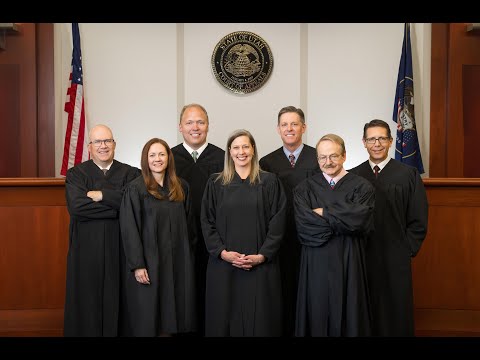
The Utah Court of Appeals on Oct. 12 heard arguments in UDOT v. Boggess Draper Company over several trial rulings in a takings and severance‑damages dispute that the appellant says require reversal or a new trial.
Robert Mansfield, counsel for appellant Boggess Draper Company LLC, told the panel that the district court committed four errors that cumulatively prejudiced his clients: admitting evidence and photographs of a February 2016 sale and later development of the remainder property, excluding the purchase‑price figure in a written offer from AG Spanos, treating certain post‑project value increases as “special” rather than “general” benefits, and permitting UDOT evidence about project influence. Mansfield said those rulings altered the jury’s view of severance damages.
“The district court erred in allowing evidence regarding the 02/2016 sale subsequent sale of the, subject property,” Mansfield said, arguing the prejudicial effect outweighed probative value given the governing valuation date. He noted the court‑established valuation date was February 2009 and said the market conditions in 2016 were materially different.
The argument focused on the interplay between relevance and prejudice. Mansfield argued that aerial photographs and post‑development imagery showing a “nice new shiny development” were especially damaging because the 2016 sale and improvements occurred years after the court’s valuation date, and his experts had no opportunity to analyze market changes that late‑arriving evidence would raise.
Stanford Purser, who argued for the Utah Department of Transportation, said admitting evidence of the sale and development was appropriate to test competing appraisals and common sense. “At bottom, the question is, would building a shiny brand new interchange a block or 2 away from a vacant commercial lot be viewed as valuable in the eye of somebody that wanted to buy a commercial property. Of course it would,” Purser said, arguing the evidence confirmed the state’s experts’ opinions about the site’s developability and value.
Mansfield pressed three facts used at trial: competing per‑square‑foot valuations (his expert Hansen’s before‑condition at about $13.50 per square foot, the AG Spanos letter at $12.52, and UDOT’s expert Cook at $8.75), the jury outcomes in two trials (the first jury awarded roughly $1,735,000 in severance damages; the second awarded $330,000 for the property taken and recorded no severance damages), and the appellants’ concern that photographs and post‑sale facts improperly shifted jurors’ focus from the February 2009 valuation date.
The parties also debated the legal distinction between special and general benefits. Mansfield cited treatises and cases arguing a distinction matters for offsetting severance damages; Purser and the state defended the trial court’s approach, saying the controlling standard under the statute commonly cited as “Section 5‑11” requires a fair‑market‑value inquiry that considers factors a willing buyer and a willing seller would consider. Purser told the panel the district court reconciled older precedent and put the ultimate weighing to the jury.
Mansfield additionally argued the trial court wrongly excluded the AG Spanos written offer price during redirect/redirect‑rebuttal; he said that the letter showed a contemporaneous transactional price (about $12.52 per square foot) that was not merely cumulative and would have tested expert adjustments for time. The court and counsel also discussed whether the letter was offered properly during redirect rather than in the case‑in‑chief and whether Rule 403 balancing permitted exclusion.
Counsel for both sides repeatedly noted the matter’s long appellate history: this appeal follows prior proceedings and a remand from the Utah Supreme Court that highlighted limits on categorical exclusion of post‑valuation evidence. Mansfield asked for guidance and reversal or remand for explicit trial‑court instructions; Purser said the state had used the evidence in the manner the Supreme Court described and that any remaining disputes go to weight, not admissibility.
The panel thanked counsel and said it would take the matter under advisement and issue a written opinion.
The arguments focused on evidentiary balancing (relevance vs. prejudice), the effect of market‑timing on fair‑market valuation, and the legal characterization of benefits for offsetting severance damages — issues that could affect whether the verdict or parts of the trial must be retried.