Get Full Government Meeting Transcripts, Videos, & Alerts Forever!
Get email alerts on the Civil Procedure Substitution topic
No spam. Unsubscribe anytime.
Appeals court hears challenge to substitution and damages in Lavender v. FCOI Preserve
Summary
In oral argument before the Utah Court of Appeals, attorneys disputed whether the district court properly substituted FCOI Preserve into litigation and whether the trial record supported the suit's special-damages and slander-of-title claims.
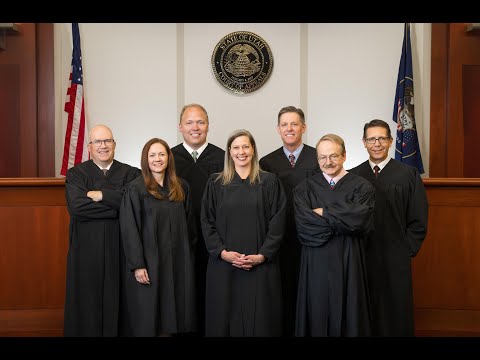
The Utah Court of Appeals heard arguments in Lavender v. FCOI Preserve over whether the district court properly substituted FCOI Preserve into long-running property litigation and whether the trial evidence and pleadings supported the jury's damages award.
At oral argument, counsel for Lavender and Meyer told the three-judge panel that "FCOI Preserve is not a party to this lawsuit" and that the trial court therefore "had no jurisdiction to enter a judgment in favor of FCOI Preserve and against Lavender and Meyer." That position, advanced by counsel Trent Waddupz, asks the appellate court to set aside rulings that permitted substitution and later amendments that added claims and damages tied to 31 lot transfers.
The heart of the dispute is procedural: whether the district court permissibly substituted FCOI Preserve for an earlier entity under the Utah rules and whether that substitution (and related amendments) exposed Lavender and Meyer to stale claims or an improperly framed cause of action. "Standing is jurisdictional," Judge Ryan Tenney told counsel during questioning, "but it doesn't seem to me that we have briefing on the standing doctrine as a standing doctrine." Tenney pressed counsel to identify where in the 10,000‑page record the specific preservation of the argument (Rule 17 v. Rule 25) was preserved for appeal.
Opposing counsel defended the substitution and the trial rulings. Nick Raich told the court the case presented ordinary motions reviewed for abuse of discretion and that the question before the panel was not a jurisdictional defect that could be raised for the first time on appeal. Brian Zimmerman, who appeared alongside Raich for FCOI Preserve, emphasized that the entities at issue conveyed lots by warranty deed and that the trial evidence tied the alleged reduced sale prices and damages to transfers made by FCOI Preserve.
Judges on the panel repeatedly returned the argument to two narrow but pivotal legal hooks: Rule 17 (real party in interest) and Rule 25 (substitution after transfer of interest). Counsel for Lavender told the court Rule 17 does not itself effect substitution and that the district court had improperly relied on both Rule 17 and Rule 25 when granting substitution. The court pressed whether Lavender had adequately preserved a distinct Rule 17 challenge below, given case law requiring appellants to attack every basis the trial court relied upon.
The panel also explored factual and evidentiary issues the parties tied to liability and damages. Counsel for Lavender argued the counterclaim and later amended pleadings failed to name individual purchasers for the asserted special damages and that the slander-of-title claim depended on proof tied to only 10 of 31 lots. The appellant argued the complaint lacked the specificity required by the procedural rules and Pleading/Discovery provisions, while appellees said discovery later supplied buyer identities and that proof of reduced values could legitimately be presented through aggregated or summary testimony.
Appeal-related motions and rulings discussed at argument include the district court's order granting substitution of parties (order cited substitution under Rule 25 and Rule 17), earlier motions to dismiss and for leave to amend, and a trial ruling that produced a judgment in favor of the substituted plaintiff. Counsel for both sides told the court they had filed and litigated multiple motions below (motions to dismiss, motions for summary judgment, directed verdict motions) that all bore on the substitution and damages disputes.
The panel reserved decision after roughly 10 minutes of argument for the appellant, extended by judge questioning. No ruling was issued from the bench; the court said the matter would be taken under advisement. The appeal will require the panel to decide whether the substitution order was preserved below, whether Rule 17 or Rule 25 controls substitution here, and whether the pleadings and proof sufficed to support the trial judgment on special damages and the slander-of-title claim.
Votes at a glance: No final appellate decision was announced. The instant appeal challenges: - District court order granting motion to substitute FCOI Preserve for Fortress Opportunities LP (challenged by Lavender/Meyer as procedurally defective). - Various district-court rulings allowing amended pleadings and denying motions to dismiss or for directed verdict tied to pleading sufficiency and damages.