Get Full Government Meeting Transcripts, Videos, & Alerts Forever!
Get email alerts on the Land Use Outdoor Advertising topic
No spam. Unsubscribe anytime.
Court of Appeals hears dispute over compensation for relocated billboard in ROA General v. Salt Lake City
Summary
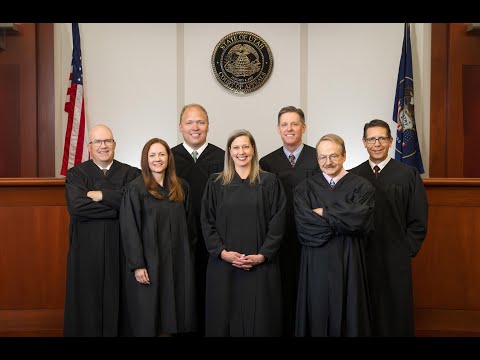
The Utah Court of Appeals heard oral argument in ROA General v. Salt Lake City (case number 2020Three-eight38) before Judges John Luthy, Ryan Harris and Amy Oliver on whether a billboard owner is entitled to compensation under state law when relocating a billboard that the owner had already dismantled.
The Utah Court of Appeals heard oral argument in ROA General v. Salt Lake City (case number 2020Three-eight38) before Judges John Luthy, Ryan Harris and Amy Oliver on whether a billboard owner is entitled to compensation under state law when relocating a billboard that the owner had already dismantled.
The question at the center of the argument is how to read statutory provisions referenced by counsel as "section 5‑11" and "section 5‑13" of the relevant municipal/Outdoor Advertising statutory scheme and whether the word "existing" in the spacing and relocation provisions requires a billboard to be physically on-site when a relocation request is made. Salt Lake City argued the owner is not entitled to compensation here; ROA General argued the city’s handling of competing applications and its prior statements make compensation appropriate.
Why this matters: the court’s construction will affect how municipalities handle billboard relocation requests and when they must pay just compensation. The case also raises procedural and equity issues about whether the city may change litigation positions after making statements in prior administrative and appellate proceedings.
Salt Lake City’s position
Samantha Slough, counsel for Salt Lake City Corporation, told the panel the city’s reading is that the statute does not require payment when the statutory prerequisites are not met and that the city has multiple defenses to compensation. Slough said the present case is the third action arising from Reagan/ROA General’s attempt to relocate a billboard it demolished in 2014 after a private landowner ended the lease. "The first time this case was before this court, this court decided that the city was permitted to bring defenses to this claim for compensation," Slough told the judges. She argued two threshold questions: whether Reagan (ROA General) qualifies for compensation under the statute and whether the city waived defenses; her answer to both was "no."
On statutory interpretation, Slough urged the court to read the text to avoid what she described as absurd results if "existing" were held to modify a pending application rather than an on‑site, existing sign. She walked the court through what she described as two plausible readings of the spacing language in the Outdoor Advertising provisions and urged the panel to apply doctrines of construction that avoid absurd consequences. Slough also emphasized procedural issues from the prior litigation, arguing summary‑judgment posture and the contents of the appellate record limit what defenses the city must litigate anew.
ROA General’s position
Lachelle Shaw, counsel for ROA General (also described in the record as the party formerly known as Reagan/Outdoor Media), told the court the city ‘‘is in a predicament it created.’’ Shaw said the city received two relocation applications that would place signs in essentially the same location and chose to approve the competing applicant ("corner property") rather than deny both, a choice Shaw said triggered the need for compensation to ROA. "The choice the city was presented with in that moment was not hypothetical," Shaw said, urging the court that the text’s use of the word "existing" must be read in context and that the city’s consistent litigation statements and administrative representations should be dispositive on estoppel and waiver questions.
Shaw also disputed the city’s contention that an owner must have a physical billboard standing at the time of the relocation request. She pointed to the statutory abandonment provisions and related definitions that, she said, show the legislature contemplated factual rather than per se temporal limits on compensation claims.
Procedural and estoppel issues
Both sides spent substantial time addressing the prior history: the parties agree this is the third lawsuit arising from the same underlying facts and that the Utah Supreme Court and lower tribunals previously reviewed related rulings. Counsel debated whether statements by city staff and briefs in earlier proceedings that the city "would pay compensation" if certain conditions applied now preclude the city from asserting alternative defenses on remand. The city’s counsel urged the panel to treat those earlier statements as not dispositive and argued the record and procedural history (including the timing of summary‑judgment activity and declarations) mean estoppel doctrines do not bar defenses. ROA’s counsel argued the city repeatedly represented it would evaluate requests under section 5‑13 and that it cannot reverse course years later.
Other factual points and record items
- Counsel for Salt Lake City and ROA disputed whether the October/September application submitted by ROA was a Title 72 application, a section 5‑11 request, or both, and whether the city’s application form creates overlap. The city’s counsel said the forms and statutory elements differ; ROA’s counsel said the city treated the filings as related throughout the proceedings. - The record, as discussed at argument, contains letters the city sent (one referenced as a December 4 letter and another as a December 18 letter), a later letter the parties referenced as sent on "September 15" (as part of the administrative file), and an administrative appeal decision the parties said was decided August 15, 2015. Counsel differed on whether those communications preserved or altered rights under section 5‑13. - Abandonment: the parties discussed statutory abandonment presumptions — e.g., discontinuance of use for at least 12 months or demolition of the structure — and disputed whether those statutory provisions mean a physical structure must remain in place to claim relocation compensation.
What the court asked
Judges on the panel pressed both sides on statutory text, the application of the absurd‑results canon, relation‑back analogies (for amended pleadings in court practice), and whether the prior appeals resolved estoppel issues or simply required further factual development. Several judges noted the city might have had alternative administrative choices (for example, denying one competing application rather than granting the other) and asked why the city chose the path it did.
Next steps
The three‑judge panel recessed at the close of argument and said it will issue a written opinion. No decision was announced from the bench.
Ending
The court concluded oral argument after roughly an hour of discussion. The judges said they would issue a written opinion when ready.