Get Full Government Meeting Transcripts, Videos, & Alerts Forever!
Get email alerts on the Land Use Access topic
No spam. Unsubscribe anytime.
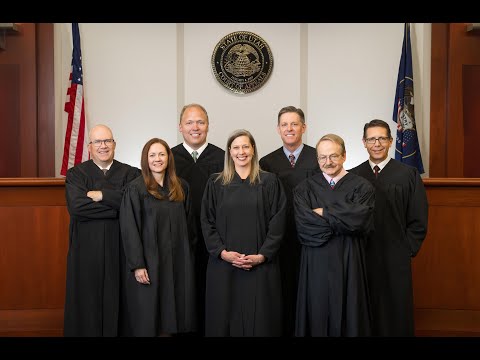
Utah Court of Appeals hears land-use dispute over North Logan road access
Summary
The Utah Court of Appeals heard oral argument Tuesday in Rafts Investments v. North Logan City over whether a North Logan City ordinance requires an improperly subdivided lot to connect to roads that conform to the city's design standards.
The Utah Court of Appeals heard oral argument Tuesday in Rafts Investments v. North Logan City over whether a North Logan City ordinance requires an improperly subdivided lot to connect to roads that conform to the city's design standards.
The case concerns an application to build on an "improper lot" on 2500 North; the applicant argues the ordinance's subsection C should be read to assess only conditions on the lot itself and, under the land-use statute cited in briefing, any ambiguous land-use regulation must be construed in favor of the property owner. Counsel for North Logan countered that subsection C, read with related sections and the city's design standards, requires compliance with broader development and access rules.
Caroline Olson, counsel for RAPS Investments, told the court: "Under LODMAP, a land use regulation that does not plainly restrict a land use application must be construed in favor of the property owner." Olson argued the city had shifted legal theories at different stages of the case and that the ordinance's grammar and internal references show subsection C focuses on improvements "on the lot itself." She asked the court to affirm the district court on that ground or to resolve the case on that alternative basis.
Seth Tate, counsel for North Logan City, responded that the district court correctly read subsection C to require compliance with the city's design standards and other development regulations. "Subpart C is pretty clear," Tate said, adding the design standards in the record describe rural roads that "can service up to 25 residents" and that measurements in the planning record showed the road in question ranged from about 13 feet at its narrowest to 19 feet at its widest.
A recurring factual dispute before the court is whether the access and roadway improvements the city contends are necessary would require extensive work, including potential property takings and substantial construction. Olson noted a $10,000 improvement figure in briefing applied to a fire access connecting 2500 North to a neighboring development and said the total cost to upgrade the entire length of 2500 North was "substantially more costly" and not specified in the record. Tate told the court that widening would likely require eminent domain and "substantial cost," including compensation to landowners and construction costs.
Judges pressed both sides on statutory construction and the practical consequences of each reading. One panel member observed that an interpretation leaving infrastructure gaps could seem "absurd" in some factual scenarios; Olson replied the absurdity doctrine is an "as‑applied" inquiry and the city had not shown the ordinance's application here would be absurd on the record. Tate emphasized the city's concern about future development and modern safety standards, arguing that allowing approval without road improvements would ignore those objectives.
Counsel also debated the role of deference and which bodies the cited land-use statutes bind; Olson urged the court to defer to the plain-language construction in favor of the applicant, while Tate argued certain procedural provisions governing hearing officers and land-use authorities do not compel a judicial construction in the same way.
The court took no immediate decision and, after closing argument, the panel said the case would be "deemed submitted" for decision by the court. The panel indicated it would issue an opinion in due course.
The transcript contains multiple spellings and references to the property owner and ordinance sections; the court record should be consulted for authoritative citations and the final opinion for the court's binding interpretation.