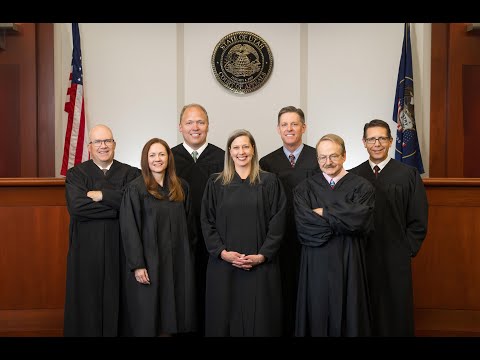
Appeals court questions evidence of conspiracy and agency in investor defendants' claims
Loading...
Summary
Counsel for investor defendants told the Utah Court of Appeals that the trial judge properly required clear-and-convincing evidence for a civil-conspiracy finding and that testimony did not show a "meeting of the minds" to breach noncompetition covenants.
The Utah Court of Appeals also heard argument over whether investor defendants Cammie Lynn and Brett Hadley, among others, were properly found liable for civil conspiracy to induce breaches of noncompetition agreements.
Bridal Frazier, counsel for the investor defendants, told the three-judge panel that the trial court correctly applied a heightened standard for the conspiracy claims and made credibility findings the appellate court should respect. "One of the elements ... is that there has to be a meeting of the minds for an unlawful purpose," Frazier said, arguing that testimony did not show the investor defendants had knowledge of or agreement about the noncompetition covenants and that at least some defendants denied ever seeing the agreements.
Frazier and other defense counsel also argued that modern agency analysis no longer hinges on strict time-and-space tests. Counsel cited state law the parties debated during argument, saying Utah precedent had moved away from a narrow Birkner-era focus on whether conduct occurred in the employer's physical office or hours, and suggested courts instead consider whether the conduct was undertaken for the employer's benefit.
Patrick Burd told the court that the trial judge had been called on to weigh competing credibility claims and had made findings: in some cases the judge found a defendant credible, in others he did not. Burd emphasized the trial court's lengthy findings of fact and conclusions of law and said the judge had considered factors including testimony about the defendants' roles, documentation, and the surrounding factual context.
The panel questioned whether the appellate court should view the arguments differently because some defendants did not participate in the appeal and because parts of the underlying judgment had been satisfied years ago. Burd told the court the underlying monetary judgment had been satisfied two years earlier; counsel also noted the separate attorney-fee award was assessed only against one defendant, Ms. Knight, under contractual provisions.
Why it matters: The appeals court's ruling could narrow or affirm the circumstances under which outside investors or contractors can be held liable for inducing breaches of employment restrictions and could clarify whether courts should apply a heightened evidentiary standard for conspiratorial liability when some defendants do not appear on appeal.
Supporting details: At argument Frazier emphasized that the investor defendants had limited or conflicting knowledge of the employment agreements at issue and that the judge applied the clear-and-convincing standard for civil conspiracy. Counsel for the defendants asked the court to affirm dismissals as to those defendants where the judge had found insufficient evidence of knowledge or a meeting of the minds. The transcript also shows the parties debated Utah precedent labeled in argument as cases including Birkner-related authority, Weizen/Wiesen, and Burton v. Chen in the context of agency tests.
Outcome at argument: The appellate panel took the arguments and said it would issue a decision after consideration. No oral ruling resolving the conspiracy or agency issues was issued at argument.