Get Full Government Meeting Transcripts, Videos, & Alerts Forever!
Get email alerts on the Damages Expert Testimony topic
No spam. Unsubscribe anytime.
Appeals court probes expert dispute over lost-profits calculations in Sunrise Home Health case
Summary
At oral argument before the Utah Court of Appeals, Sunrise Home Health and Hospice challenged the trial court's lost-profits award, arguing the judge relied on unsupported reductions from the defendants' expert rather than the plaintiffs' patient-specific data.
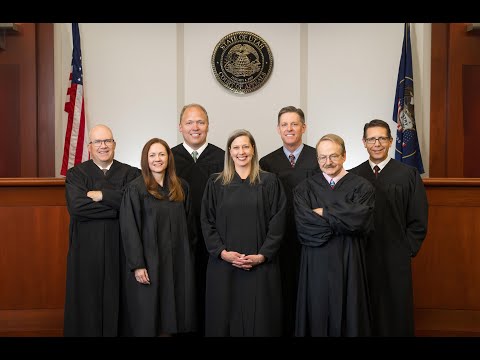
The Utah Court of Appeals heard oral argument in Sunrise Home Health and Hospice v. Nye over whether the trial court correctly calculated lost-profits damages after a bench trial.
Taylor Webb, counsel for appellant Sunrise Home Health and Hospice, told the three-judge panel -- Judge Oliver (presiding), Judge Orme and Judge Mortensen -- that the damages award should rest on a specific set of patients and on the actual post-breach survival and service records for those patients rather than on generalized industry assumptions. "This is about a specific set of patients," Webb said, arguing that plaintiff expert Rasmussen used the trial record as a starting point and that defendant expert Curtis merely applied reductions to Rasmussen's numbers rather than using different base data.
The dispute centers on three categories of reductions Curtis applied, including a 180-day horizon Curtis described in his report. Webb told the court that the 180-day figure was not supported by the record for these patients and that Curtis' reliance on an assertion attributed to Ms. Nye was insufficient where the trial evidence showed the patients were long-term home-health recipients. Webb emphasized that several trial witnesses, including Sunrise owner Matt Baker and testimony attributed to Nye, described the patients as chronic, long-term care recipients rather than hospice patients.
Defense counsel disputed the notion that Curtis's work should have been excluded. Patrick Burd (appearing for the Ohana and attorney defendants) and Bridal Frazier (appearing for investor defendants) told the court that once an expert is admitted, competing expert opinions are for the fact-finder to weigh. "This is a weighing of the evidence appeal," Burd said, arguing the trial judge considered credibility, accounting records, the lost Humana contract and other mitigating factors when reducing Rasmussen's numbers.
Judges pressed counsel on two recurring issues: (1) whether the challenged reductions were a matter of admissibility under the rule cited in the briefing (identified in argument as Rule 702) or instead a question of weight and credibility, and (2) whether Sunrise had preserved its objections below. Webb pointed the panel to the trial record and post-trial filings (she cited multiple transcript and record entries during argument) and to the proposed findings submitted in lieu of closing arguments; she told the court those items preserved the issue. Burd countered that the trial court had ample opportunity to weigh reopened testimony and that the appellate standard should be highly deferential absent clear error.
Both sides agreed the experts shared the same base data and that the practical dispute was whether Curtis's reductions were supported by the record. Webb told the court that Curtis "starts with Rasmussen's numbers and makes the very reductions that we are now arguing" and that many of those reductions "are not supported or are contradicted by the evidence that is in the record beyond his report." Burd and Frazier said the judge's weighing of competing expert testimony and other credibility findings justified the reductions the trial court adopted.
The panel also questioned whether different standards should apply on appeal because one defendant (Ms. Nye) did not participate in the appeal while others did. Webb urged the court to consider that Nye's absence could justify closer scrutiny of the liability foundation from which joint and several liability flowed; defense counsel argued that defendants who appear deserve the stricter standard of review.
The court heard extended discussion about preservation of the specific lost-profits argument (Webb cited proposed findings and portions of the trial transcript where the experts testified) and about the legal standard that governs appellate review of a trial court's damage calculations. The judges repeatedly framed the matter as whether the trial court committed clear error in crediting the reductions and whether the court had adequate record support to do so.
After argument, the court announced it would take the case under advisement and issue a ruling later. "We will take it under advisement and issue a ruling as soon as we are able to do so," Judge Oliver said before adjourning oral argument.
Why it matters: The panel's decision will affect how appellate courts treat competing expert calculations of lost profits that start with the same dataset but differ in the assumptions or reductions applied. If the appeals court finds the trial court relied on reductions unsupported in the record, it could change how damages are proved and preserved in similar home-health and long-term-care contract disputes.
Supporting details and record references: During argument Webb cited multiple record locations (including a historical days-in-service exhibit identified during argument as record 4606 and trial transcript ranges where Curtis and Rasmussen testified) to show the patients had long records of service with Sunrise. Counsel discussed a disputed counting of patients (references in briefing and argument to 4, 5, 6 and 9 potentially excluded or included patients) and whether Curtis amended his report midtrial to include an additional patient. The parties also discussed the trial court's 49-page findings of fact and conclusions of law, which defense counsel referenced when describing the judge's credibility determinations and adjustments to Rasmussen's calculations.
Quotes in context: All direct quotations in this article are attributed to participants who spoke on the record during oral argument: Taylor Webb (appellant counsel), Patrick Burd (defense counsel), Bridal Frazier (investor-defendants counsel), and the panel (Judge Oliver, Judge Mortensen). The transcript shows Webb saying, "This is about a specific set of patients," and arguing that Curtis "starts with Rasmussen's numbers and makes the very reductions that we are now arguing." Burd described the dispute as "a weighing of the evidence appeal." The court took argument and indicated it would issue a decision later.
Next steps: The appeals court will circulate an opinion and judgment in due course; the oral-argument record does not include a decision timetable.