Get Full Government Meeting Transcripts, Videos, & Alerts Forever!
Get email alerts on the Technology In Education topic
No spam. Unsubscribe anytime.
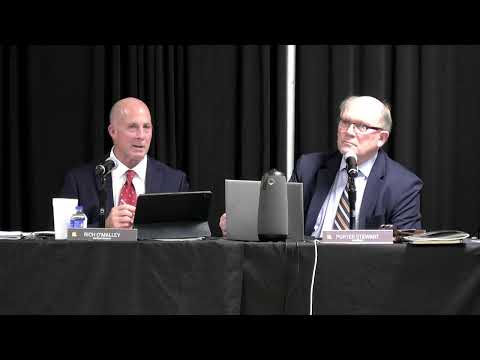
Superintendent outlines Spark AI cohort, pilot uses and planned investments for district
Summary
Superintendent Dr. O'Malley described Spark AI, a 23-member district cohort developing AI guidelines and pilots; he previewed instructional uses, professional development and a planned investment in AI platforms before school-year end.
Superintendent Dr. O'Malley told the board that Florence School District 1 has formed Spark AI, a cohort of 23 district employees — including central office staff, principals, technology personnel, teachers, STEM and arts staff and media specialists — to develop guidelines and oversee pilot uses of artificial intelligence in instruction and operations.
Dr. O'Malley said the cohort is evaluating instructional AI platforms, piloting applications and providing professional development. The district plans to make a “substantial investment” in AI tools before the end of the school year, he said, and to pilot uses that include: curriculum-mapped lesson generation (a teacher uploaded state standards and used AI to produce lesson plans and worksheets); pathway-navigation tools that present course sequences for career interests (an Advantage Academy staffer built a tool to map pathways for careers like plumbing); music- and media-creation tools; automated drafting for routine communications; and real-time language translation for classrooms using classroom audio-amplification systems.
Dr. O'Malley emphasized that the district's AI policy and the Spark AI guidelines aim to keep some uses in closed instructional platforms that do not post student data to the public internet. He said the district already offered staff professional-development sessions in January, had cohort members attend a national AI summit in Florida, and intends to pilot instructional tutoring systems similar to commercial tutoring platforms. He acknowledged concerns about student misuse and cheating but described AI as an instructional efficiency tool that can free teacher time for higher-value instruction.
Board members asked questions about parent education, coding, analytics and detection of student AI use; Dr. O'Malley said parent education will be part of implementation and that analytics can be used to identify students needing targeted help. He said some proposed AI tools focus on in-platform instructional supports rather than open-web generative models to protect data and reliability.