Get Full Government Meeting Transcripts, Videos, & Alerts Forever!
Get email alerts on the Embalmers Funeral Directors Budget topic
No spam. Unsubscribe anytime.
Board of Embalmers and Funeral Directors seeks funding to support licensing, inspections and consumer programs
Summary
The executive director of Ohio’s Board of Embalmers and Funeral Directors presented a biennial budget request and described licensing activity, the preneed recovery fund and an indigent burial and cremation reimbursement program.
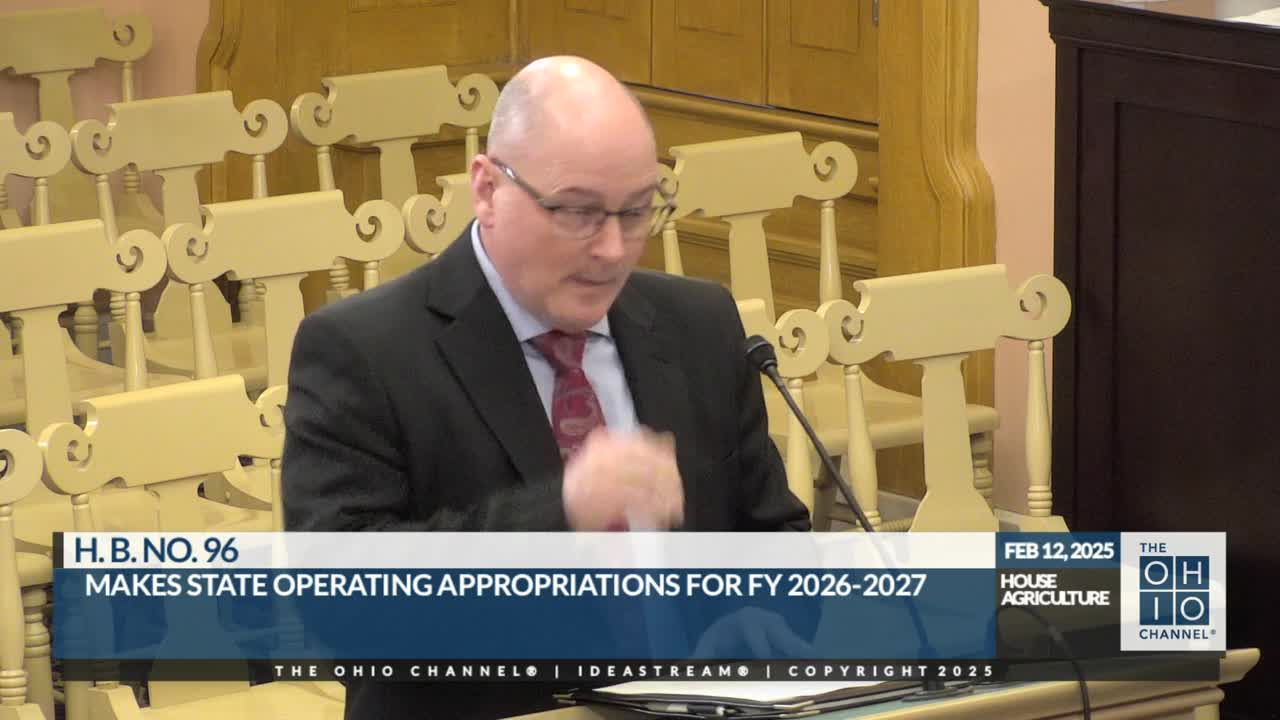
Jared Williams, executive director of the Ohio Board of Embalmers and Funeral Directors, told the House Agriculture Committee the board requests $1,406,000 for fiscal year 2026 and $1,463,000 for fiscal year 2027 as part of its biennial budget proposal.
Williams said the board issues nine types of licenses and permits covering embalmers, funeral directors, apprenticeships, crematory operators and facility permits, and that approximately 6,700 active licenses are currently issued in Ohio. He said the board is staffed by eight employees, including three facility inspectors and one auditor who work in the field.
The executive director described two consumer-facing programs overseen by the board: the preneed recovery fund, created after investigations uncovered misappropriation of preneed funds, which has paid $193,991.96 in reimbursements to consumers to date; and the indigent burial and cremation support program, which reimburses local governments for burials or cremations of indigent deceased individuals and is supported by General Revenue Fund appropriations. Williams said the board requested $250,000 for each fiscal year to continue indigent burial and cremation support.
Committee members asked why some line items fell in the governor’s proposed budget; Williams replied that past years’ spending had been below appropriation levels, so the request aligns with expected needs. Members also discussed enforcement capacity: the board has three inspectors to oversee roughly 1,300 funeral homes and said the volume and speed of reported concerns has increased partly because of technology and faster dissemination of allegations.
Williams said payroll and board compensation are expected to account for the majority of the request and that supplies and maintenance funds support IT costs, the e-license system and fleet management. He closed by asking for continued support of the board’s mission.