Get Full Government Meeting Transcripts, Videos, & Alerts Forever!
Get email alerts on the Avian Flu topic
No spam. Unsubscribe anytime.
Ohio poultry industry urges more lab funding, vaccines as HPAI devastates flocks
Summary
Ohio Poultry Association testimony to the House Agriculture Committee described more than 12 million birds lost in West Central Ohio and asked for expanded funding for the state animal-disease laboratory, federal indemnity support, and vaccine development as steps to help restock flocks and protect public and animal health.
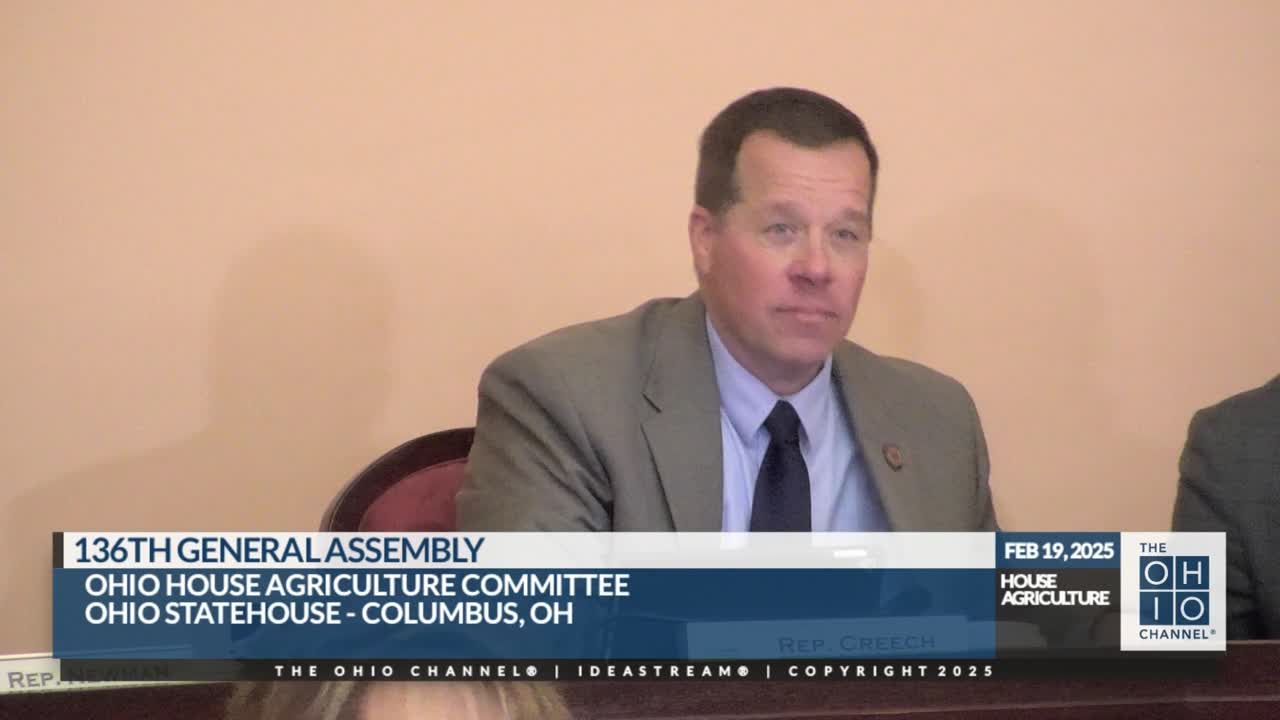
Jim Chiqueres, executive vice president of the Ohio Poultry Association, told the Ohio House Agriculture Committee that highly pathogenic avian influenza has “wreaked havoc on Ohio’s commercial poultry flocks” and that Ohio has lost “over 12,000,000 egg laying hens, pullets, turkeys, and ducks,” concentrated in Darke and Mercer counties. Chiqueres said the U.S. outbreak has required depopulation of more than 150,000,000 birds nationwide and noted a recent human fatality from the disease.
Why it matters: Committee members were shown the scale of agricultural, community and consumer impacts — from lost farm income and downstream effects on trucking and feed mills, to higher grocery prices and mental-health strain on farm workers and owners. Chiqueres urged the committee to fund the Ohio Department of Agriculture’s disease diagnostic capacity, press for clearer federal communication and indemnity payments, and support HPAI vaccine development and compartmentalization to protect export markets.
Chiqueres told lawmakers the state animal-disease laboratory is the “first line of detection” and is operating extended hours but lacks sufficient personnel; he said a new laboratory facility will open in 2026 but that the state needs more staff now to process samples and support restocking. He called current budget increases for animal health programs “not enough” and said the industry will provide specific laboratory staffing and funding figures to the legislature as the budget process continues.
On vaccines, Chiqueres said vaccines exist internationally and that a U.S. company has received provisional status to develop an H5N2 vaccine, but deployment in the United States is not yet approved and supply is limited. He warned that vaccinating commercial flocks raises trade issues: if the U.S. vaccinates broadly, some international trading partners may treat the disease as endemic, affecting exports. To address that, Chiqueres urged federal advocacy for compartmentalization to allow vaccinated premises to sell certain products while protecting other export lines.
Lawmakers pressed practical questions. Representative Heiner asked about availability and timeline for vaccines; Chiqueres said a vaccine developer has provisional status but that supply and approval remain constraints. Representatives Coughley and Cockley asked about restocking; Chiqueres explained restocking depends on lifting control areas and quarantines, and that pullets take about 21 days to hatch and about 18 weeks to reach laying age. He added that many flocks are planned two years in advance, so recovering full egg production will take months and possibly over a year.
On spread and prevention, Chiqueres said the virus is carried by wild migratory birds and can enter even highly biosecure farms, possibly through ventilation. He asked for more research support for vaccines, bird genetics, and advanced biosecurity and said Ohio farmers are practicing strict measures including truck washes and limiting personnel access.
Committee members and Chiqueres also discussed consumer messaging. Chiqueres said reduced supply and steady demand have driven egg prices up and that restoring supply will take time. He asked for patience from consumers and expressed appreciation for state and federal agency cooperation, including the Ohio Department of Agriculture, USDA and Ohio State University.
The committee did not take formal action during Chiqueres’s appearance; members requested further budget detail and said they would continue the conversation with ODA and other partners.