Get Full Government Meeting Transcripts, Videos, & Alerts Forever!
Get email alerts on the Liquor And Cannabis Board Appointment topic
No spam. Unsubscribe anytime.
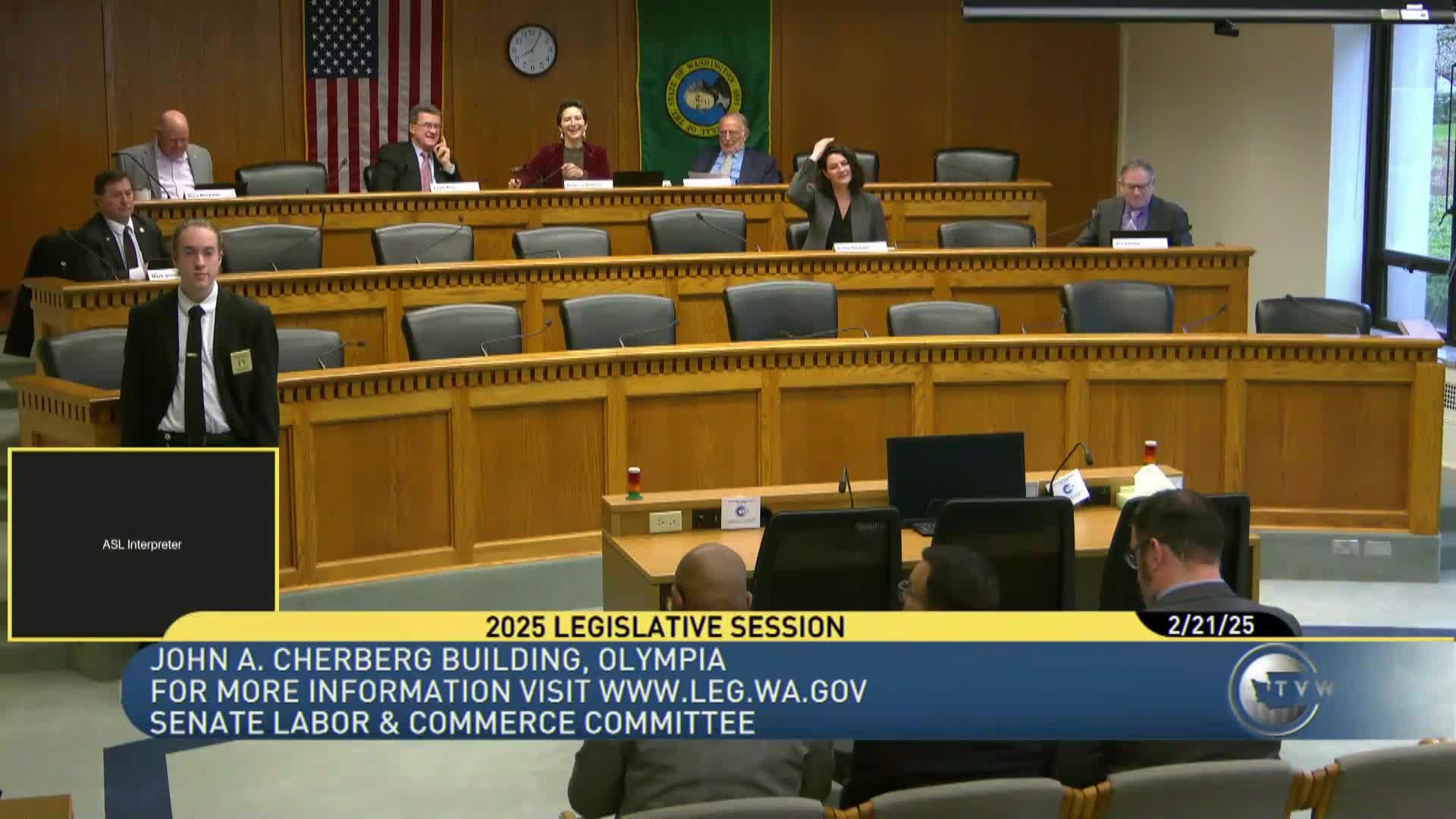
Senate committee hears James R. Volendroff on Liquor and Cannabis Board appointment
Summary
James R. Volendroff told the Senate Labor & Commerce policy committee his behavioral-health background and two-plus years on the Liquor and Cannabis Board inform his priorities including data use, regulation of high-THC products, and internal rule review; the committee signaled it will act on the appointment shortly.
At a public hearing before the Senate Labor & Commerce policy committee, James R. Volendroff testified in support of his appointment to the Washington State Liquor and Cannabis Board.
Volendroff described nearly 20 years at King County working in mental health and substance-abuse services, rising to director of the county division that he said employed more than 400 people and managed a “half a billion dollar budget.” He later helped launch the University of Washington’s Behavioral Health Institute at Harborview to bring clinicians, policymakers and clients together on best practices for co-occurring disorders.
“I’ve been in the field of behavioral health,” Volendroff said, and he told the committee that background is important because the board “regulate[s] and license[s] substances that are legal for adult use, but also have the potential for harm when ingested by people who are younger or people who maybe live with substance use or mental health issues.”
Nut graf: The Liquor and Cannabis Board enforces licensing and safety rules across two highly regulated industries in Washington. A chair or new board member’s approach to enforcement, rulemaking and data use can affect licensing timelines, product placement rules, youth access and how the agency balances business interests and public health.
Volendroff told senators he has served on the LCB for about “two and a half years as a general member” and that the board now includes counsel with legal and municipal backgrounds. When asked whether the three-member board is appropriately sized, he said he has “opinions” but that from his perspective the current structure “works” and that smaller membership offers advantages such as clear lines of responsibility.
When Senator Conway pressed him on whether LCB should modernize internal processes to reduce the need for legislative fixes, Volendroff said he would engage with members. “I absolutely will,” he said, describing an instance where a former lawmaker asked LCB to adopt a rule that was not implemented and ultimately required a bill to fix.
Volendroff said he is concerned about high-concentration THC products for people under age 25 and for those with mental-health conditions. He said he does not favor bans but supports conversations and targeted safety measures. He also said psilocybin has therapeutic potential under clinical supervision but that he has “significant concerns about recreational use.”
Volendroff described data as a tool for policy: the board has developed public dashboards and he supports expanding cross-agency data use to study impacts such as traffic safety and health outcomes.
The public hearing concluded without a formal vote on the appointment; committee members said they expected to take action soon.