Get Full Government Meeting Transcripts, Videos, & Alerts Forever!
Get email alerts on the Environmental Justice Sepa topic
No spam. Unsubscribe anytime.
Senate committee hears hours of testimony on bill to add cumulative environmental‑justice review to SEPA
Summary
Supporters say SB 5380 would force permitting to account for cumulative pollution burdens in overburdened communities; opponents and industry warn it would add delay and uncertainty to SEPA reviews and permitting for ports and industrial projects.
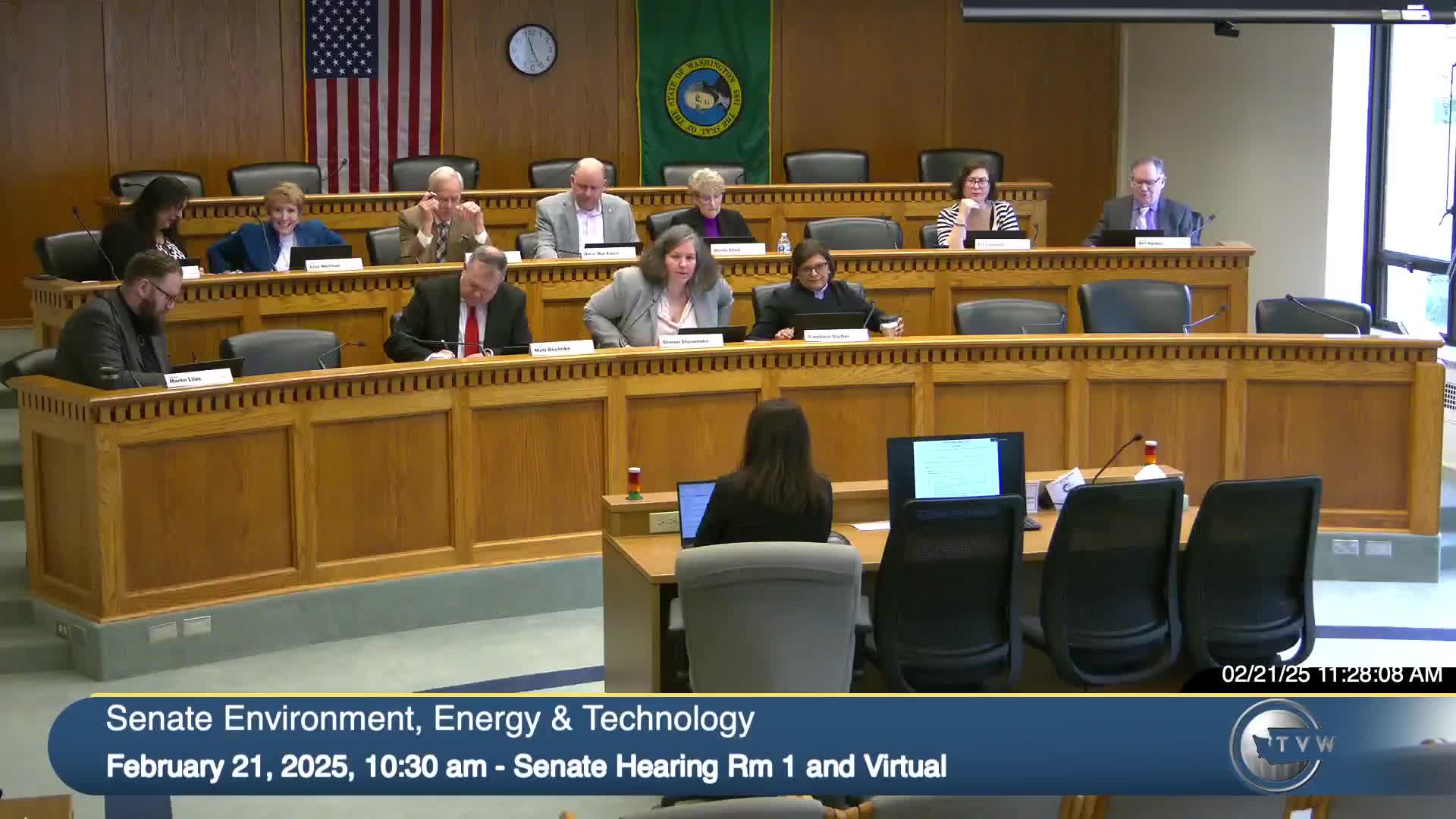
The Senate Environment, Energy & Technology Committee heard hours of oral testimony on Senate Bill 5,380, a proposal to add cumulative environmental‑justice analysis to the State Environmental Policy Act permitting process.
Sponsor Sen. Liz Lovelitt said the bill would require lead agencies to prepare an environmental justice impact statement — an EJIS — for certain potentially impactful projects in census tracts identified as pollution‑burdened, and to post that analysis publicly before a SEPA threshold determination or public hearing. "When you have that next to a freeway and another factory and an airport and all of these other cumulative factors, you make it so that people are... having negative impacts on health outcomes for these communities," Lovelitt said.
Proponents including Jamie Strobel, director of Climate Action and Resilience at The Nature Conservancy in Washington, and health and faith groups told the committee the bill fills a longstanding gap in Washington's environmental review by quantifying cumulative exposures that affect life expectancy and public health in overburdened neighborhoods. "By conducting a cumulative impact analysis on a site‑by‑site basis, this legislation gives us tools to address a long standing gap in our ability to protect communities," Strobel testified. Community advocates from Front and Centered, the Duwamish River Community Coalition and other organizations described high asthma rates and shorter lifespans in their neighborhoods and urged passage.
Industry representatives, ports, local governments and some labor and rural stakeholders urged changes or opposed the bill, saying the draft would create substantial permitting delays, broad geographic coverage on the state environmental disparities map and legal uncertainty for lead agencies. Drew Zabrowski, a local industrial developer, said the mapping currently encompasses "nearly every industrial submarket from Arlington to Chehalis," and warned that ambiguous definitions of "potentially impactful projects" could pull small projects into lengthy SEPA processes. "This bill creates negative economic impacts to our vital port based economy by reducing the supply of sufficient industrial facilities," he said.
Port and business witnesses asked for targeted revisions rather than the bill as written. John Flanagan of the Port of Seattle said the port supports the bill's goals but disagrees with the methods in the current draft, urging language to exempt agencies that already have an environmental‑justice framework. Carly Michaels of the Washington Public Ports Association said prohibiting consideration of economic benefit and adding new analyses could increase costs and slow projects that create jobs.
State staff and technical witnesses flagged statutory timing conflicts. Department of Ecology staff said the EJIS timeline in the bill could exceed the 90‑day limit for SEPA threshold determinations and noted the bill's prohibition on issuing certain air construction permits in census tracts ranked 9 or 10 could prevent needed upgrades and jeopardize federal delegation of permitting authority.
Supporters said those consequences can be addressed in drafting. Witnesses also made technical proposals, and several asked for clearer definitions and scope limits so residential development and routine projects would not be drawn in. The committee record for the hearing showed 932 pro registrations, 243 con and 3 "other." Testimony closed after a full panel of pro and con witnesses.
The committee did not take a vote at the hearing. The bill will remain in committee as sponsors and opposing parties continue to negotiate language on scope, timing and exemptions.