Get Full Government Meeting Transcripts, Videos, & Alerts Forever!
Get email alerts on the Cannabis Consumption Events topic
No spam. Unsubscribe anytime.
Public hearing held on bill to create cannabis consumption-event licenses; supporters cite safety and tourism, opponents raise impaired-driving concerns
Summary
House Bill 1932 would create a cannabis consumption event organizer license allowing licensed, regulated on-premises consumption at permitted events. Supporters said the bill would reduce illegal public use and create economic opportunities; public-safety groups warned of impaired driving risk and urged caution.
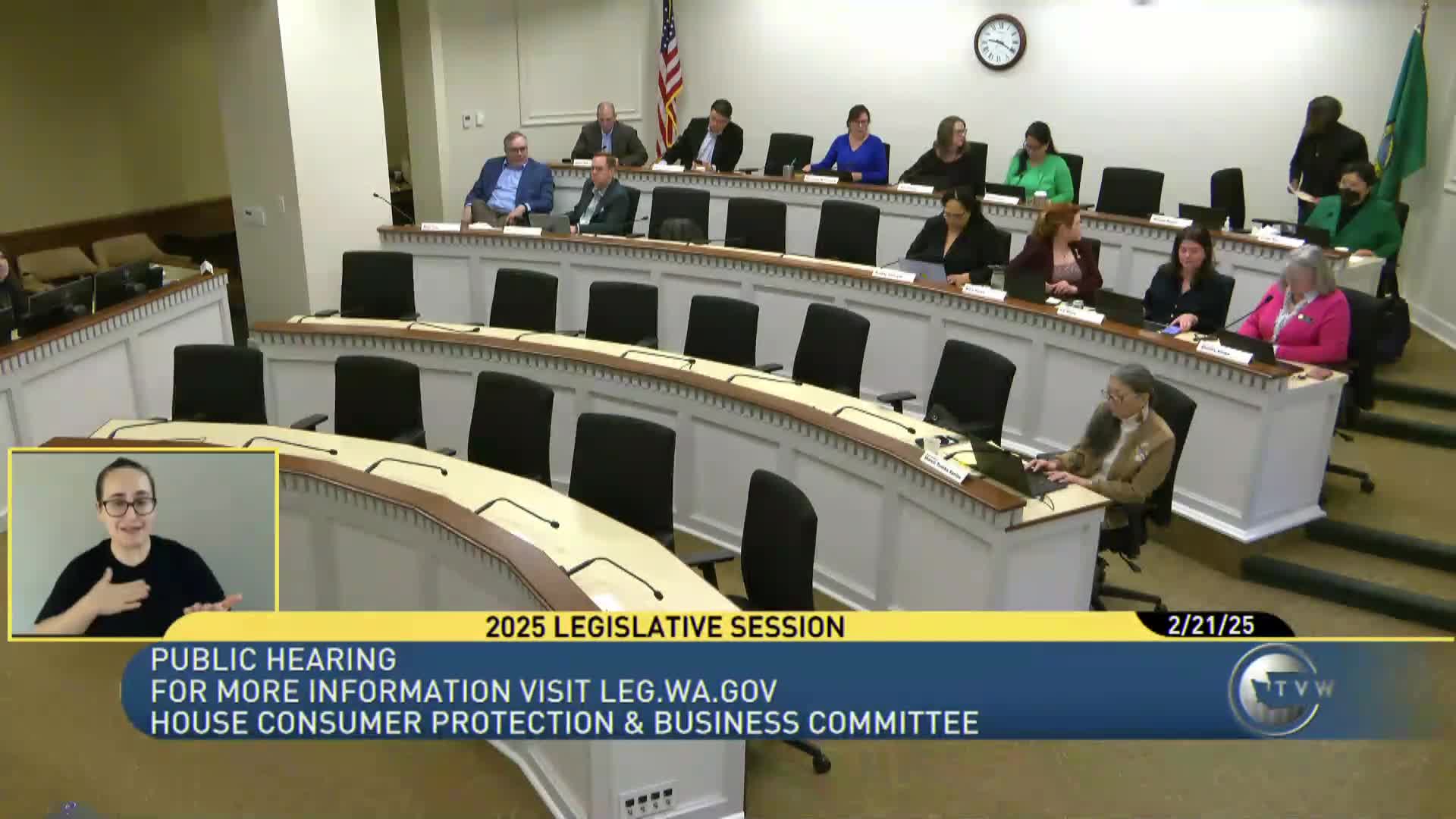
House Bill 1932, introduced Feb. 21 to the Consumer Protection & Business Committee, would create a cannabis consumption event organizer license to legalize and regulate on-site adult consumption at permitted events. The Liquor and Cannabis Board would oversee event permits and workers would be required to hold new budtender permits and training, staff said.
"Cannabis use has been legal in Washington for over a decade, yet we still lack safe regulated spaces for adults to consume it outside their homes," Representative Melanie Morgan said in opening testimony as prime sponsor. She said the bill would limit access to adults 21 and older, require state-approved training and contain measures to deter impaired driving. "I urge your support for House Bill 19 32," Morgan said.
Staff briefing and bill mechanics
Peter Klotfelter, staff to the committee, described the license as a new cannabis license type that would authorize an organizer to hold up to one covered event per month, with each event allowed up to three consecutive days and potential expansion by the LCB after two years. The license would permit on-site sales to adults 21 and over, require local permits and LCB approval for each event, prohibit sale/consumption of alcohol and tobacco at cannabis events and require plans to deter driving while impaired. Klotfelter noted proposed fees (a $500 application fee, $200 annual license fee and event permits up to $500) and a sponsor amendment to allocate fee revenue across the dedicated cannabis account, community reinvestment, youth cessation and tobacco-prevention accounts.
Supportive testimony
Industry and allied witnesses said regulated consumption spaces would reduce public use and provide economic and educational opportunities. "By providing designated consumption areas, we can reduce the public consumption in unauthorized places," Caitlin Ryan, executive director of the Cannabis Alliance, said in testimony. Ryan and other supporters pointed to event-based tourism (including an example of FIFA travel) and said regulated venues would help visitors and residents legally consume products purchased from licensed retailers.
Producers, processors and small-business representatives described event models ranging from tastings and infused dinners to educational sessions. "This bill gives us the opportunity to start learning how to deal with the public consumption of this product," Ezra Eichmeier of Producers Northwest said, adding that the state was already contending with public consumption in parks and markets.
Public-safety and public-health concerns
Representatives of law-enforcement and public-health groups urged caution. "Drivers on our roadways. Our officers see firsthand the impacts of impaired driving," James McMahon, policy director for the Washington Association of Sheriffs and Police Chiefs, testified, urging caution about expanding access at events that could increase impaired-driving risk. Scott Waller of the Washington Association for Substance Misuse and Violence Prevention said cannabis is the second-most-common substance found in blood draws of people who died in impaired-driving crashes and warned that events where people smoke and then drive home could raise fatalities.
Committee response and next steps
Committee members asked about insurance for events, how smoking areas would differ from tobacco rules and whether the bill anticipates permanent consumption lounges versus one-off events. Industry witnesses and some stakeholders said specialty event insurance products exist in other states and that event insurance is feasible. The bill received substantial public testimony: staff recorded 65 proponents, 6 opponents and 12 others signed in pro/con/other and many speakers supported the bill with caveats regarding impaired driving and local control.
The hearing closed after extended public testimony. Sponsors and members indicated openness to amendments, including the revenue-allocation amendment that directs portions of license and permit fees to community reinvestment and youth-prevention/cessation programs. No committee vote on HB 1932 took place at this hearing.