Get Full Government Meeting Transcripts, Videos, & Alerts Forever!
Get email alerts on the Consumer Protection topic
No spam. Unsubscribe anytime.
Consumer Protection & Business committee reports several bills out of committee, including online-minor protections and homegrow changes
Summary
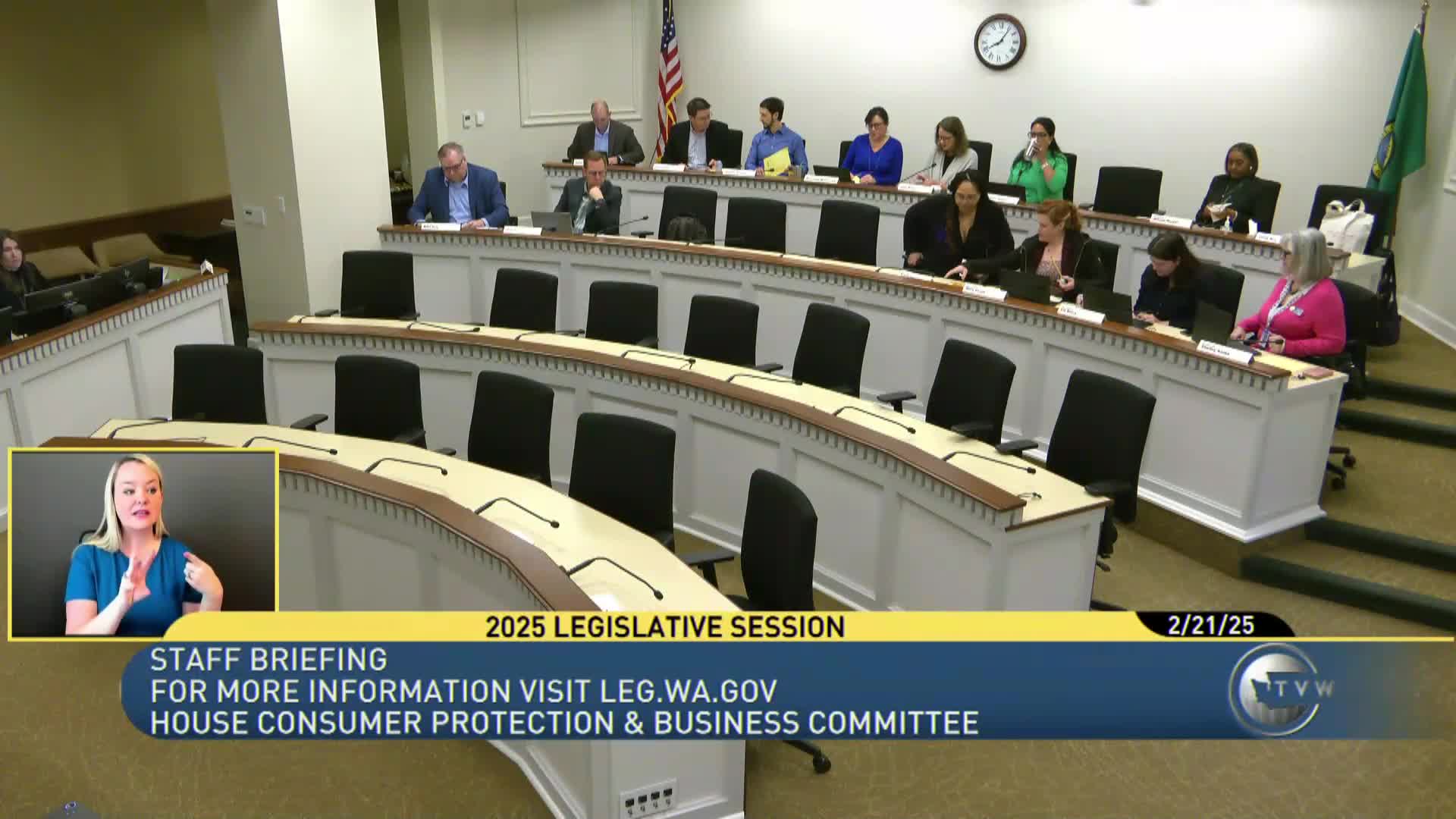
The Consumer Protection & Business Committee on Feb. 21 reported multiple bills out of committee with due-pass recommendations after staff briefings and debate.
The Consumer Protection & Business Committee on Feb. 21 reported multiple bills out of committee with due-pass recommendations after staff briefings and debate. The measures advanced include bills on online services and minors, a manufactured-home seller exemption, changes to cannabis-business ownership rules, a right-to-repair measure for mobility devices, and limited legal home cultivation of cannabis.
Committee members said the package addresses discrete consumer protections and industry issues, but several members emphasized the need for additional work on details before floor action. "We have some concerns that need to be worked through," Representative Reeves said after explaining the committee was advancing bills to allow further stakeholder conversations.
Votes at a glance
- House Bill 1760 (manufactured homes dealer-license exemption): reported out with a due-pass recommendation; committee announcement recorded 15 ayes. The bill would exempt certain entities from needing a vehicle dealer license if they sell 12 or fewer manufactured homes.
- House Bill 1834 (online services and minors; substitute reported): substitute reported out with a due-pass recommendation, roll-call: 9 ayes, 6 nays. The bill would establish requirements for online services likely to be used by minors, including age estimation, limits on profiling and certain limits on addictive feeds; the substitute incorporated two amendments clarifying the definition of business and exempting some interactive gaming platforms that comply with COPPA and do not use dark patterns.
- House Bill 1940 (cannabis industry residency/ownership and social-equity tax exemption): reported out with a due-pass recommendation, roll-call: 8 ayes, 7 nays. The bill would remove the six-month residency requirement for owning a cannabis business to allow out-of-state ownership, authorize additional investigative fees for nonresidents and exempt certain social-equity participants from business-and-occupation taxes for up to five years after surpassing a sales threshold.
- House Bill 1826 (right to repair for mobility devices): reported out with a due-pass recommendation, roll-call: 9 ayes, 6 nays. The bill would require manufacturers of mobility devices to make documentation, parts and embedded software available on fair and reasonable terms to independent repair providers or owners and treats violations as per se violations of the Consumer Protection Act.
- House Bill 1449 (home cultivation of cannabis): substitute reported out with a due-pass recommendation, roll-call: 9 ayes, 6 nays. The bill would allow adults 21 and older to grow up to six cannabis plants on the premises they occupy, create civil infractions for certain odor/visibility violations, preserve felony penalties for producing more than 16 plants and include provisions on summary destruction, traceability, waste disposal and law enforcement discretion in areas without licensed retailers. Adopted amendments added traceability requirements, liability-insurance requirements for premises, landlord/property-owner exceptions, and a warning-first enforcement provision in some jurisdictions.
- House Bill 1645 (auto-insurance appraisal clause): deferred for later action; staff briefed a proposed substitute that would require appraisal clauses in policies effective Jan. 1, 2026, and included changes to umpire selection timing, disclosure of conflicts, limits on storage fees and other procedural items. Committee deferred action for caucus and further consideration.
What members said
Representative Volz described a Spokane nonprofit that used manufactured home sales to create low-cost homeownership opportunities and urged passage of HB 1760 to raise the permitted sale threshold from four to 12 without triggering additional dealer regulation. "They were able to house two single moms, five kids, and a disabled vet," Volz said, urging support to remove a regulatory barrier.
Representative Reeves, who moved numerous bills forward in committee, repeatedly stressed willingness to continue stakeholder engagement: "We have a commitment from the prime sponsor to engage in some meaningful dialogue with all of those concerns in the coming week or two."
Context and next steps
Staff briefings were delivered by Megan Mulvihill and Peter Klotfelter. The committee used voice and roll-call votes and recorded adopted amendments before reporting substitute bills. Several members who voted to advance measures noted outstanding concerns and asked sponsors to pursue amendments before floor consideration.
By committee action, the bills listed above will be placed on the House calendar for further action; HB 1645 was deferred for additional consideration in caucus before any report.