Get Full Government Meeting Transcripts, Videos, & Alerts Forever!
Get email alerts on the Tenant Assistance topic
No spam. Unsubscribe anytime.
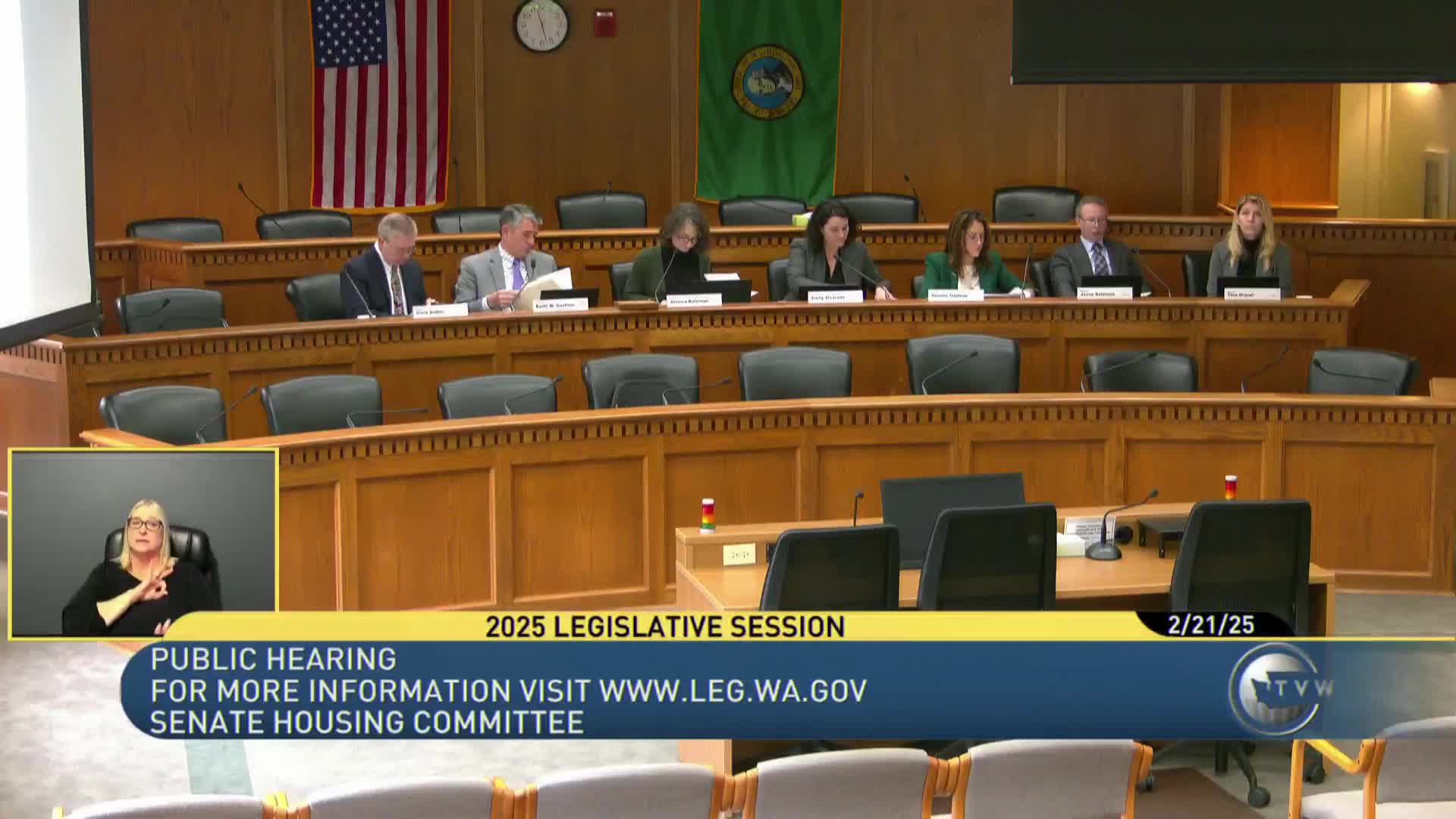
Senate committee hears bill to create short-term tenant assistance program funded by recording fees
Summary
Senate Bill 5,731 would create a Department of Commerce tenant assistance program that pays up to $400 per month for up to 12 months to bring a renter's housing costs to 30% of income; staff and advocates disagreed sharply over using document recording fee revenues to fund the program.
Senate Bill 5,731, presented to the Senate Housing Committee, would create a tenant assistance program in the Department of Commerce to provide short-term grants to public housing authorities for eligible renters. Under the bill, payments could not exceed the lesser of $400 or the amount needed to reduce a household's monthly housing costs to no more than 30% of income. Eligible renters could receive payments for up to 12 consecutive months and would be required to recertify income monthly; recipients who provide false documentation would be required to repay benefits and would become ineligible.
Melissa Van Gorkom, staff to the committee, told members Commerce would prioritize renters at or below 60% of area median income or those receiving Supplemental Security Income and that the program would be funded by redirecting document recording fee distributions from July 1, 2025, through June 30, 2032. Van Gorkom said Commerce anticipates additional staffing needs and JLARC was expected to audit the program, with an estimated JLARC cost of $440,000 for the 2029–31 biennium. Van Gorkom said a preliminary fiscal estimate shows a shift of about $25,500,000 each year from the Home Security Fund account and the Affordable Housing for All account to the new tenant assistance program.
The bill prompted sharply divided public testimony. Supporters from landlord and small-owner groups argued short-term rental assistance prevents evictions and stabilizes housing. Chester Baldwin, testifying for the Rental Housing Association Coalition and the Manufactured Housing Communities, said, “Rental assistance really puts everyone in the right positions because it has the housing provider able to continue to provide housing, it has the tenant who is paying rent when they can.” Gordon Hagerty, a small affordable housing provider, and others said short, targeted assistance is a cost-effective alternative to eviction and its downstream costs.
Tenant advocates, service providers and clinicians urged caution or opposed the proposal because it would divert existing homelessness-prevention funds. Carrie Burnside of the Bellingham Tenants Union told the committee the bill “allows landlords to continue excessive rent increases while shifting their financial burden to the state, the taxpayers.” Terry Anderson, interim executive director of the Tenants Union of Washington State, and Michelle Thomas of the Washington Low Income Housing Alliance warned the measure would deplete document recording fee dollars that currently fund homelessness prevention and legal representation programs; Ms. Thomas cited a DRF shortfall figure raised in testimony and warned that sweeping funds from existing programs would weaken the state’s broader homelessness response.
Senator Alvarado asked whether the bill would allow a landlord to raise rent after assistance was provided. Van Gorkom replied the bill does not regulate future rent increases or landlord-side rent-setting. Dr. Daniel Lo, a family medicine physician testifying on behalf of Washington Physicians for Social Responsibility, said he supported the bill's intent to prevent homelessness but opposed the revenue shift, arguing that taking funds from acute services would worsen health outcomes.
No committee vote occurred; the bill was heard in public testimony only. Senators and advocates repeatedly urged alternative funding sources and broader housing policy options — including rent stabilization — as complementary or alternative strategies.
The hearing record shows substantial division: providers and some housing owners framed the bill as a short-term, targeted measure that prevents evictions; tenant advocates and homelessness-service providers said the design and funding source risked hollowing out other prevention services and urged structural fixes to rent increases instead.
Looking ahead, Commerce would be responsible for program rules, eligibility verification and administration if the Legislature enacts the bill. JLARC review and an annual Commerce report to the Legislature are required under the bill's provisions.