Get Full Government Meeting Transcripts, Videos, & Alerts Forever!
Get email alerts on the Fishing Access Youth topic
No spam. Unsubscribe anytime.
Students and fishing groups testify for bill to raise youth fishing license exemption to age 18
Summary
High school students, fishing organizations and state staff testified Feb. 21 in favor of House Bill 19‑55, which would expand the youth fishing‑license exemption so licenses are required only for people aged 19 and older; the Department of Fish and Wildlife fiscal note is available to the committee.
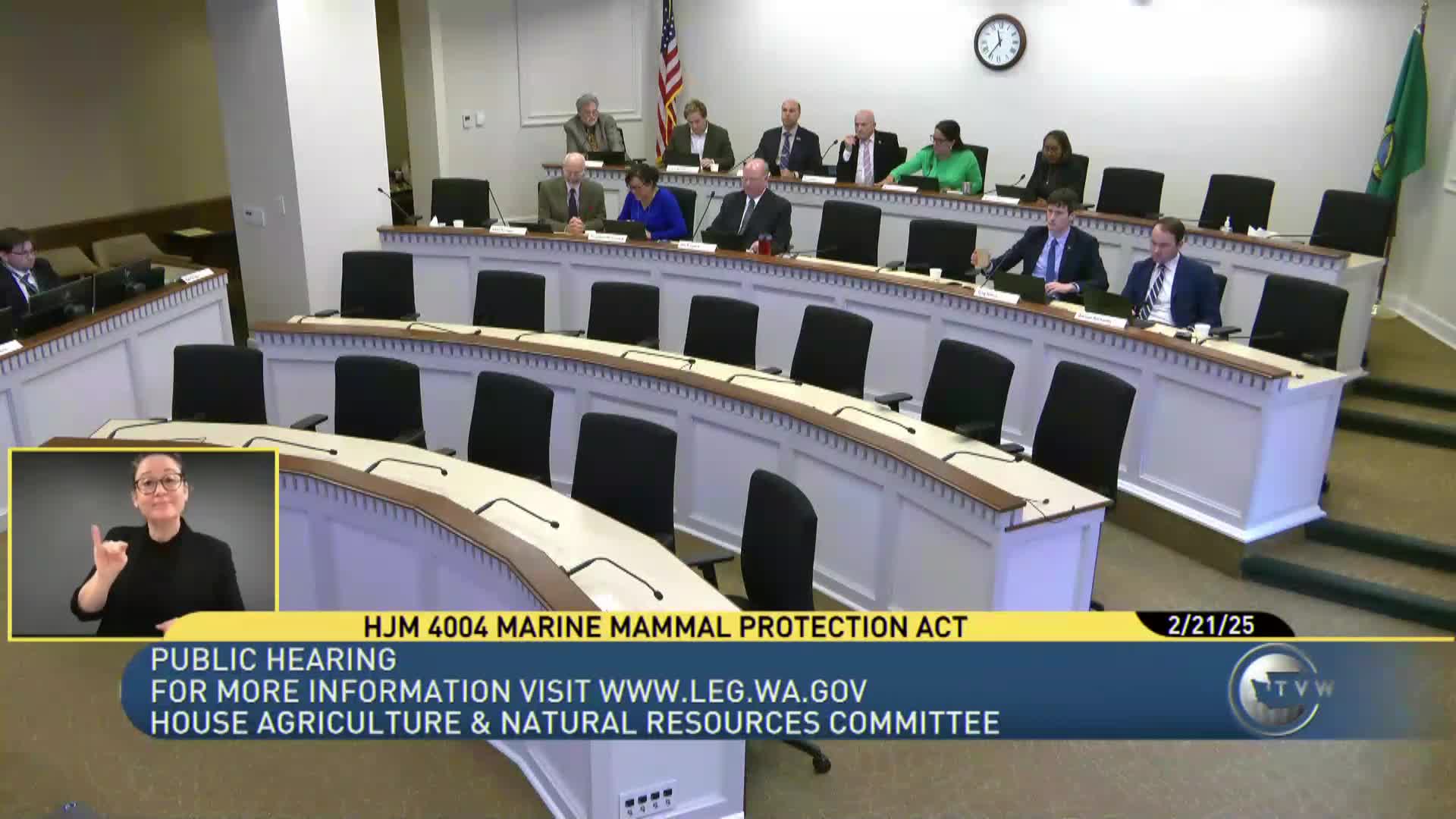
The House Agriculture and Natural Resources Committee on Feb. 21 held public testimony on House Bill 19‑55, which would expand Washington’s youth fishing license exemption by requiring licenses only for people 19 and older and moving the youth combination license eligibility to age 18.
Lily Smith, committee staff, explained the mechanics: currently a 15‑year‑old may obtain a youth combination license for $5 while general licenses begin at $45; the bill would change the threshold so only those 19 and older pay the general fee. Smith told the committee a fiscal note is available in the committee’s electronic bill binder.
A panel of high‑school seniors from Lake Washington High School drove to Olympia to testify in favor. Christopher Chan said fishing and shellfishing have been “a very large part of my upbringing” and argued the bill would make outdoor recreation affordable for youth regardless of family income. Jack Strathe said the cost of a license discouraged him and his friends during high‑school years and that lowering the cost barrier would keep more young people engaged in fishing, conservation and outdoor stewardship. Representative Larry Phillips of the American Sportfishing Association (testifying remotely) told the committee that early participation in fishing correlates with later environmental stewardship and urged the committee to expand youth access while noting potential funding impacts.
Phillips flagged two budget concerns: the immediate loss of license revenue from youth, and the federal Sport Fish Restoration and Boating Trust Fund allocation, which distributes funds to states in part based on the number of licenses sold. He told the committee stakeholders should collaborate to expand youth opportunities without harming conservation funding.
Committee members asked the student panel about personal experience and whether lowering the licensing age would increase participation; students said it would. Representative Schmick asked where testifiers kept phones while fishing; students broadly said they preferred leaving phones in cars or pockets to focus on the activity.
No final action on the bill was recorded during the hearing. Staff will continue to provide fiscal and implementation details as the bill moves through the process.