Get Full Government Meeting Transcripts, Videos, & Alerts Forever!
Get email alerts on the School Budget topic
No spam. Unsubscribe anytime.
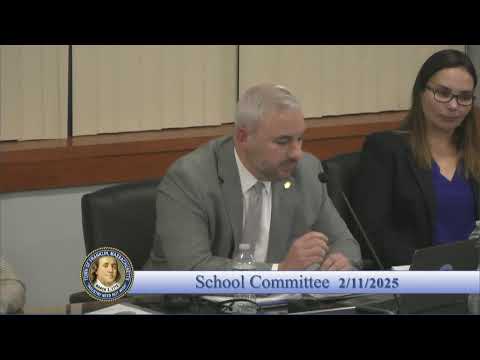
Franklin School Committee approves $80.4 million FY26 budget as educators warn of program losses
Summary
The Franklin School Committee voted to approve the superintendent's FY26 budget request of $80,395,338, a 3.78% increase over FY25, contingent on a town funding solution. Dozens of Franklin educators urged voters to support an override, describing program cuts, larger class rosters and eliminated language and arts offerings.
The Franklin School Committee voted Tuesday to approve the superintendent's recommended fiscal year 2026 operating budget of $80,395,338, a 3.78% increase over FY25 that district leaders said would require resolving a $3.6 million structural shortfall before the appropriation can be fully funded.
Committee members approved the measure by voice vote after a presentation from district staff and more than a dozen public comments from Franklin educators pressing the community to support the budget through an override. The committee’s approval moves the proposal forward to the town budget process, where final funding and any required adjustments will be determined.
District officials said the recommended budget restores several positions and preserves class-size targets while relying on a one-time consolidation benefit tied to the district’s redistricting. “The total budget request is for $80,395,338. That’s a 3.78% increase over FY ’25,” the superintendent said during the presentation, summarizing the district’s projections and the central role resolving the structural deficit will play in making the budget operable.
Why it matters: educators said the line items behind those figures reflect years of cuts and that the community will face tangible outcomes if voters do not approve the override that district leaders said is the pathway to fully implement the request. Public commenters described program reductions in world languages and arts, higher teacher workloads, lost support positions and fewer curricular resources.
Teachers and staff urged voters to view budget figures through the lens of students and classroom impact. Donna Grady, president of the Franklin Education Association, told the committee that every dollar is “attached to a student, to a child,” and warned the approved budget is only the beginning if the override does not pass. English teacher Catherine Kellett described changes in her AP English classes: “I have four AP English Language sections this year, each with 25 to 26 students. This class size is up from 18 to 21 students last year,” she said, noting she has reduced the number of timed essays because of grading limits.
World languages director Laura Evans detailed program cuts at the high school, including the phase-out of Latin, and said reduced contact hours at the middle school have weakened students’ preparation for high-school-level language study. “Moving forward, Franklin High School will only offer Spanish and French,” she said, adding that neighboring districts offer multiple language options that Franklin students will no longer access.
Music and arts staff described staff reductions and schedule changes that they said undermine arts access for elementary and middle school students. Elementary music teacher Brian Gustafson recounted staffing declines in the elementary music program, saying the department has dropped from five elementary music teachers to three in recent years even while service minutes remained similar. “If we’re teaching Monday through Friday, 40-minute classes, 93 K–5 classes next year, we’re doing it with three teachers,” he said.
Several speakers also highlighted special-education and inclusion concerns. A middle-school teacher said typical rosters could rise by nearly 50 percent for some content teachers under the new middle-school consolidation model, increasing the number of students for whom teachers are responsible and reducing time for collaboration with special-education staff, parents and providers.
District leaders said the recommended budget would reclassify 34 positions and that the district also recorded a net reduction of roughly 20 staff positions in recent years. The superintendent said the recommended budget restored some previously cut positions and sustained counseling services across schools; however, officials emphasized that the budget as presented is contingent on the town-level funding solution and noted that failure of an override would require the district to rework allocations and reduce or eliminate items currently included.
What’s next: committee members and the superintendent urged residents to participate in upcoming joint budget hearings and town budget meetings where the community can comment and the town will consider school funding. The district listed multiple forums and encouraged public testimony as the budget continues through the town process.
Votes at a glance: The committee approved the FY26 budget as presented. The motion and second were recorded by procedure but not named in the public record; the committee passed the motion by voice vote.
Ending: Committee leaders and staff thanked educators for attending and encouraged continued public engagement in the budget process as the proposal advances through town deliberations.