Get Full Government Meeting Transcripts, Videos, & Alerts Forever!
Get email alerts on the School Facilities And Grade Realignment topic
No spam. Unsubscribe anytime.
Octorara leaders propose grade realignment and repurposing of elementary school to avoid $10M renovation
Summary
District officials presented a feasibility study recommending repurposing the district’s oldest elementary school, shifting to a K–2, 3–5, 6–8, 9–12 configuration and pacing $46–$56 million in renovations over 10 years to address aging systems, enrollment and inequities in air conditioning.
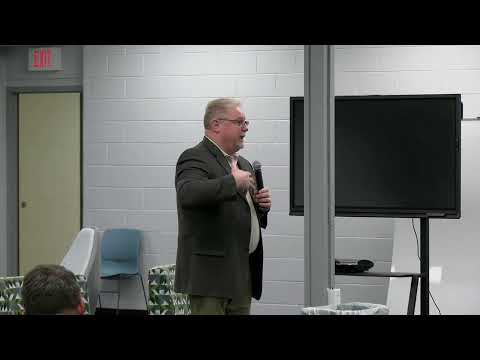
Octorara Area School District officials on a February town-hall presentation outlined a feasibility plan that would repurpose the district’s oldest elementary building and realign grade configurations to K–2, 3–5, 6–8 and 9–12, a change intended to avoid a roughly $10 million renovation of the existing elementary school and to spread $46–$56 million in district-wide upgrades over 10 years.
Superintendent Steve Lehi said the district’s consultants estimated $10 million to $15 million to renovate the older elementary building and about $20 million for a comparable new elementary building, and that the realignment would allow the district to redeploy those funds to fix systems across all buildings. He said the recommendation is for the board to consider repurposing the elementary school rather than funding a major renovation immediately.
Why it matters: the district faces uneven learning conditions and deferred maintenance, officials said. Two buildings lack full air conditioning; initial bids for cooling rose from about $4 million to as much as $7 million for the elementary building and an estimated $8 million to $9 million for the middle school. District leaders said repurposing avoids a concentrated large outlay on one older building while enabling upgrades across the campus.
The feasibility study, prepared with architectural and mechanical consultants, concluded the district has capacity in its four remaining buildings for projected enrollment, and estimated a 10-year renovation program of $46–$56 million if the elementary building is not fully renovated. Officials presented three enrollment projection methods: the Pennsylvania Department of Education projection (about 1,650 by 2034), a live-birth–based projection (about 1,775), and a housing-development model (about 2,138 if all planned housing is built). The district’s current counted enrollment for on-campus programs was cited at 1,938.
Curriculum and student-support leaders described program and instructional benefits of a three-year intermediate strand (grades 3–5) and a three-year middle-school strand (grades 6–8). Chris Schultz, director of curriculum, instruction and assessment, said, “Having 3 years, we’re able to build more consistency and time to build relationships with the students, with their families, [and] have more consistency with those student supports.”
Middle-school principal Dennis Perry said a three-year middle school supports age-appropriate scheduling, teaming, advisory time and extracurricular growth. “A middle level education should be age appropriate,” Perry said, adding that moving sixth grade into a middle-school structure would expand access to clubs, intramurals and other activities.
Officials described operational savings tied to other district projects such as a planned solar array and a recent $15 million bond issue. Lehi said the solar project is expected to cut electric spending and free up roughly $700,000 to $1 million a year that could be reinvested in maintenance, and that the district plans to pace renovation and financing to limit immediate tax impacts. “We’re setting up a plan and a financing structure that allows us to do this slowly and over time deliberately,” Lehi said.
Questions from parents and residents focused on long-term costs and the future of programs housed in the elementary building. Officials said the YMCA and CCIU programs are priorities to retain in some form in the repurposed space; a final decision about how much of the building would remain in use could take up to two years, they said. In response to a resident’s question about whether those programs are revenue-generating, a district official said they are not, and said parts of the building could eventually be phased out or converted to fields if retention proved infeasible.
District staff emphasized there were no planned immediate staff reductions tied to the configuration change. Lehi and other presenters said the proposal is not meant to reduce teacher headcount but to concentrate support services (mental-health staff, unified-arts teachers and English-language development staff) in fewer buildings for greater access. They noted logistical questions remain about packing, scheduling and transportation and that the board will weigh community feedback before any formal action.
The town-hall presentation materials and the full feasibility study were posted on the district website. District leaders said they will collect community questions, post answers online and present a recommendation to the school board for a future decision.
Ending: No formal vote was taken at the meeting; officials said the board will review the feasibility study and community feedback before deciding whether to adopt the realignment and repurposing plan or pursue other options.