Committee hears Uniform Public Expression Protection Act substitute; supporters urge protections against SLAPP suits
Summary
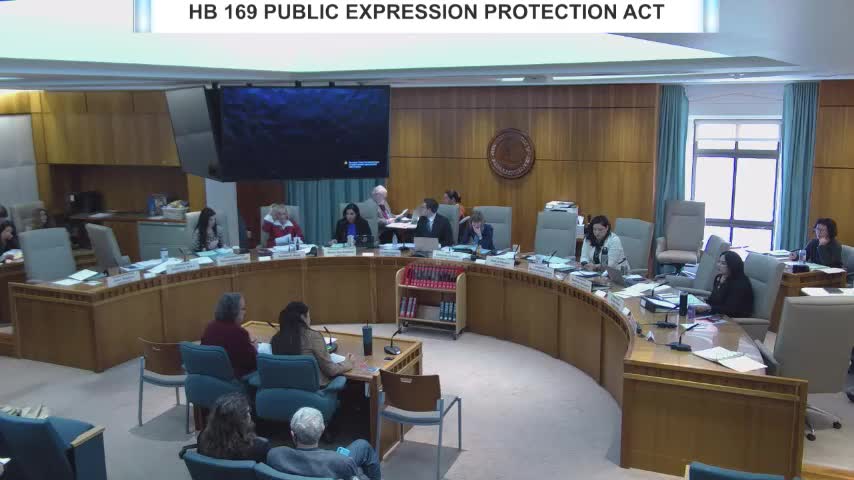
The committee heard a committee substitute for House Bill 169, modeled on a uniform Public Expression Protection Act to protect speakers from frivolous lawsuits. Public commenters and advocacy groups voiced support; the committee did not vote and scheduled further consideration.
The House Judiciary Committee heard a committee substitute for House Bill 169, the Uniform Public Expression Protection Act (an anti-SLAPP measure) intended to shield people exercising free-speech rights from meritless lawsuits aimed at silencing them.
Sponsor materials describe the bill as expanding the state’s narrow existing anti-SLAPP protections to cover speech about matters of public concern and to provide a quicker avenue to dismiss lawsuits that are filed primarily to intimidate or silence critics. The sponsor said adopting the uniform act would make New Mexico the 36th state to adopt a modern statute of this type.
Multiple advocates spoke in favor during the committee’s time-limited public comment period. Supporters included New Energy Economy, civil-rights attorney Jeffrey Haas, the Albuquerque Journal (represented by Brian Fanno), and community and youth organizers. Testimony described the bill as protecting individuals, journalists and neighborhood and advocacy groups from costly litigation intended to chill speech.
A lobbyist and nonprofit leader, Norm Gomm of New Mexico Water Advocates, told the committee his organization supports the bill to prevent lawsuits that would divert scarce nonprofit resources. Public commenters online and in the room emphasized the bill’s role in protecting youth and community organizers from strategic lawsuits against public participation.
The committee did not vote on the measure during the session. Staff and the sponsor indicated they would continue work on the substitute and return for further consideration; the committee set public comment limits and noted schedule constraints affecting next steps.
No formal amendments or roll-call votes occurred on HB 169 during the hearing.