Get Full Government Meeting Transcripts, Videos, & Alerts Forever!
Get email alerts on the Towing And Abandoned Vehicles topic
No spam. Unsubscribe anytime.
Committee approves broad rewrite of Idaho’s abandoned-vehicle law amid split testimony on predatory towing and enforcement
Summary
House Bill 174, a full rewrite of Idaho’s abandoned-vehicle and towing statutes, passed the House Transportation Committee with a do-pass recommendation after competing testimony on whether the measure modernizes notice and streamlines title work or enables predatory towing.
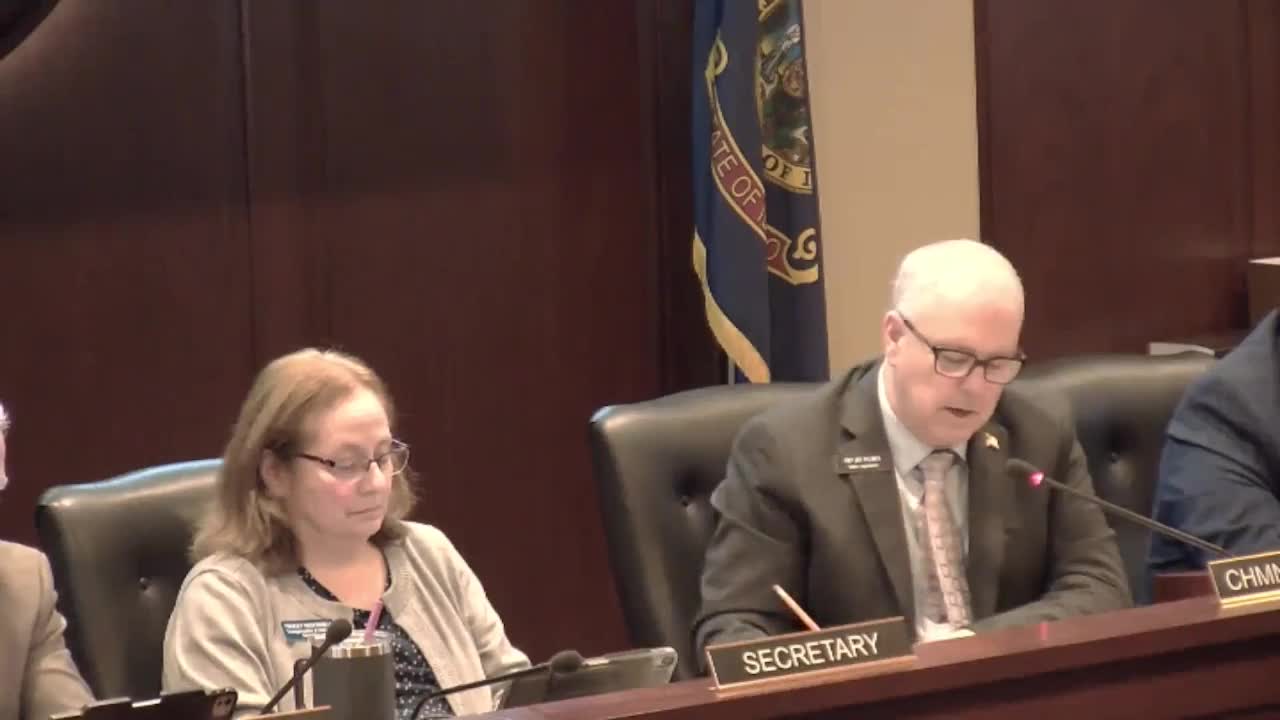
The Idaho House Transportation Committee voted to send House Bill 174 to the floor with a do-pass recommendation after lengthy public testimony and debate over how the bill would change towing, notice, and title procedures for abandoned or towed vehicles.
Representative Judy Boyle, the bill sponsor, described the measure as a “complete rewrite of the abandoned vehicles statute” that was developed over multiple years with sheriffs, law enforcement, tow companies, insurers and other stakeholders. Key provisions described in committee testimony include a new removal procedure, creation of an ITD-managed portal to enter tow information and automatically notify lienholders, a public list of authorized tows, posted towing rates for transparency, and a maximum storage limit of 60 days.
Sheriff Matt Clifford, representing the Idaho Sheriff’s Association, testified in support and said the rewrite “is a full repeal of old code” that modernizes and standardizes towing practices statewide. He told the committee the portal will send immediate notifications to lienholders and vehicle owners and will relieve deputies from administrative tasks such as mailing notices and attending repeated tow-yard inspections.
Opponents and concerned industry witnesses warned of gaps and potential predatory outcomes. Mark Boisvert (testifying as Idaho Towing Association) and owner-operators said predatory towing and booting are ongoing problems and raised concerns that the bill could make private-property tows easier without sufficient guardrails. TJ Biggers, a towing business owner, said, “There is nothing to protect the public from predatory actions in this bill,” and described being left out of some negotiations.
Commercial stakeholders raised specific technical concerns: Alan Hodges of the Idaho Trucking Association described high alleged predatory fees on commercial tows and asked for clearer definitions of “vehicle” and “lawfully entitled costs” so trailers and power units are not held together indefinitely; Rocky Mount Towing’s Randy Colson said ITD cannot perform stolen-vehicle checks and asked who will verify VINs in the portal; other tow operators questioned whether ITD can meet promised processing timelines and whether a 60-day storage cap is feasible given property costs.
Proponents said the rewrite eliminates outdated mailing and auction procedures that consumed law-enforcement time, will reduce fraud by improving notice and lien-holder contact, and will free deputies for public safety duties. Terry Dearden, the sheriff association’s legal advisor, said the portal and posted rates will provide consumer protections and an administrative hearing process for rate disputes.
Committee members pressed for clarification on multiple points, including whether the bill preserves protections for personal property inside vehicles and how the $150 abandoned-vehicle fine will be distributed. Testimony indicated the bill splits the current $150 fine to provide $75 each to the law-enforcement agency that directed the tow and the towing company, and that the restriction on law enforcement doing initial valuations and auctions is intentional to remove administrative burdens.
Representative Green moved to send House Bill 174 to the floor with a do-pass recommendation; the motion carried by voice vote. Representatives Harris and Clow asked to be recorded on the no side.
Why it matters: The bill introduces major procedural changes to tow and abandoned-vehicle handling across Idaho — from who may authorize private-property tows to notice, storage limits and the mechanics of title issuance. Supporters say it updates a decades-old system and reduces administrative burden on law enforcement; opponents warn the bill, as drafted, could enable predatory practices and leaves open questions about verification, timelines, and consumer protections.
The bill will move to the House floor for further consideration; committee members and stakeholders signaled the possibility of additional amendments as issues arise in implementation.