Get Full Government Meeting Transcripts, Videos, & Alerts Forever!
Get email alerts on the Hb98 Union Funding topic
No spam. Unsubscribe anytime.
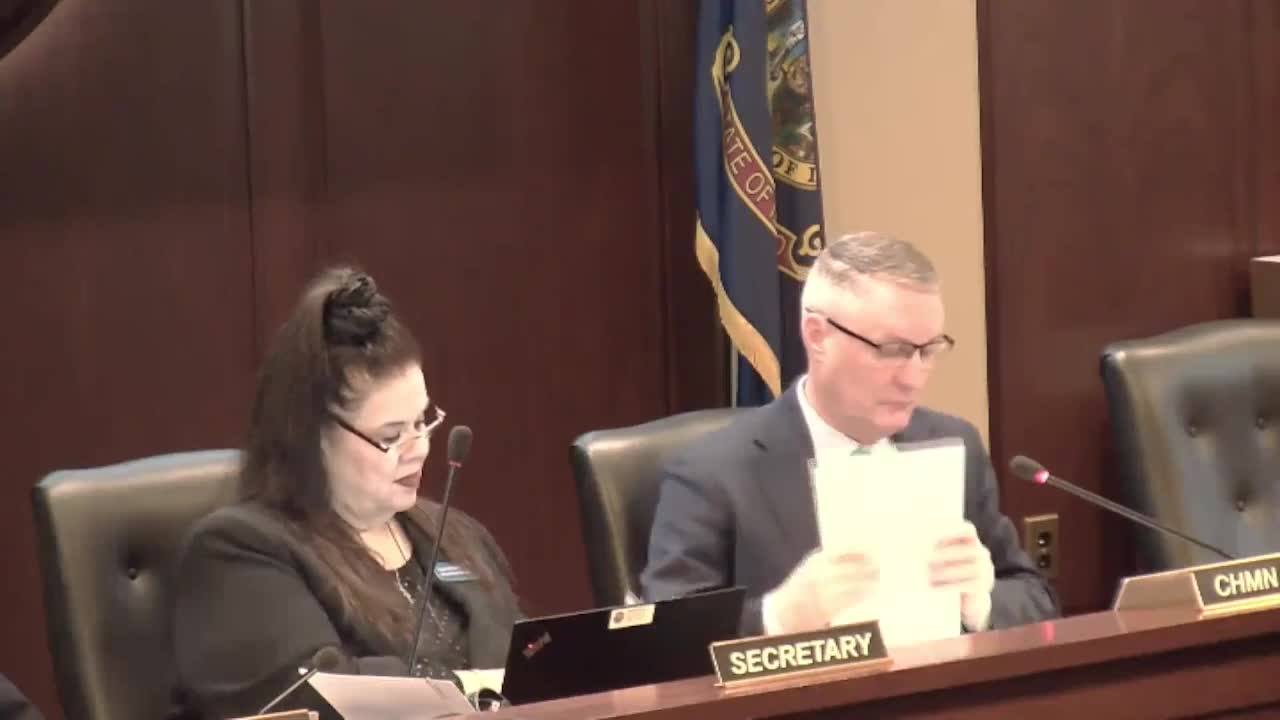
Committee forwards HB 98 to floor after heated hearing on use of taxpayer resources for teacher‑union activities
Summary
Representative Judy Boyle's House Bill 98, which would ban use of taxpayer funds for specified teacher‑union activities and restrict payroll deductions, drew extensive public testimony and debate over enforcement, local control, and constitutional concerns; the committee voted to send the bill to the floor with a do‑pass recommendation.
Representative Judy Boyle introduced House Bill 98 to the House State Affairs Committee, saying the bill ‘‘will just ensure that taxpayer dollars do not go to fund teacher unions.’’ Boyle presented the measure as a prohibition on districts using public resources — including payroll deductions and paid release time — to support union activities.
"There are exceptions," Boyle told the committee, listing negotiated unpaid leave, personal leave and district reimbursement by unions as allowed alternatives. She said the bill would bar districts from deducting union dues and from providing personal contact information to unions without consent; it would also impose civil penalties on districts that violate the section.
Supporters of the bill argued it draws a clear line between taxpayer resources and voluntary union activities. Witnesses who testified in favor included Maxford Nielson of the Freedom Foundation, Jason Mercier of the Non State Policy Center, Rachel Gresler of the Heritage Foundation and Jonathan Butcher of the Heritage Foundation. They said taxpayers should not underwrite union political activity or administrative functions and urged limits on paid release time and payroll deduction arrangements.
Opponents — including witnesses from the Idaho Education Association, the Idaho Association of School Administrators, the Idaho AFL‑CIO and the Professional Fire Fighters of Idaho — said the bill would undermine local control, create administrative burdens for districts, and could harm teacher recruitment and retention. Chris Perry of the Idaho Education Association told the committee, "This legislation has nothing to do with saving taxpayer funds. The IEA receives no taxpayer funds," and warned the bill would "attack educators' rights and workplaces".
Paul Stark, executive director of the Idaho Education Association, said the measure "singles out one Idaho business" and raised constitutional concerns about viewpoint discrimination; he asked the committee to reject the bill. John Hughes of the Idaho AFL‑CIO warned that the bill would add investigatory and prosecutorial burdens to the attorney general and county prosecutors, and he said the bill lacks clarity on who may file complaints.
Committee members pressed for details. Representative Barbieri asked whether districts currently allow union presidents to take full‑time paid leave for union work; Boyle cited examples she said appeared in some local contracts, including one district that permits a year‑long leave for an association president with salary paid by the district, and another that allows 25 days of paid release time. Representative Mickelson asked whether unions sometimes pay for substitutes; testimony from Maxford Nielson and others acknowledged that in some districts unions reimburse substitute costs, but that practice is not universal.
Several members raised questions about enforceability and administrative cost. Representative Dygert asked how the prohibitions could be enforced if data or arrangements are handled in the cloud or by third parties; other members and administrators warned the bill could create significant reporting and compliance work for districts. Andy Grover of the Idaho Association of School Administrators said some districts automate payroll deductions and that new reporting requirements would likely require staff time and add expense.
The committee also heard constitutional and policy arguments. Paul Stark and others cited U.S. Supreme Court precedent that limits compelled speech and government entanglement in union matters; witnesses and members referenced Janus (Janus v. AFSCME, 2018) and state election statutes in discussing political activity and public‑fund use. Opponents warned of potential First Amendment challenges and of the bill singling out one organization for disparate treatment.
After public testimony and committee discussion, Representative Scott moved to send House Bill 98 to the floor with a "do pass" recommendation. The committee approved the motion by voice vote; the chair announced the motion carried. Members later asked to be recorded as voting "no," including Representative Todd Achilles and Representative Schubin.
Why it matters: HB 98 would restrict how Idaho school districts interact with teacher unions and would prohibit several uses of public time, facilities or payroll services for union purposes. Backers say it protects taxpayers and clarifies boundaries; opponents say it interferes with local collective bargaining, creates administrative burdens, poses constitutional risk, and may worsen teacher workforce challenges.
Next steps: With the committee's do‑pass recommendation, the bill will move to the House floor for further consideration and possible amendment.