Get Full Government Meeting Transcripts, Videos, & Alerts Forever!
Get email alerts on the Initiative Process topic
No spam. Unsubscribe anytime.
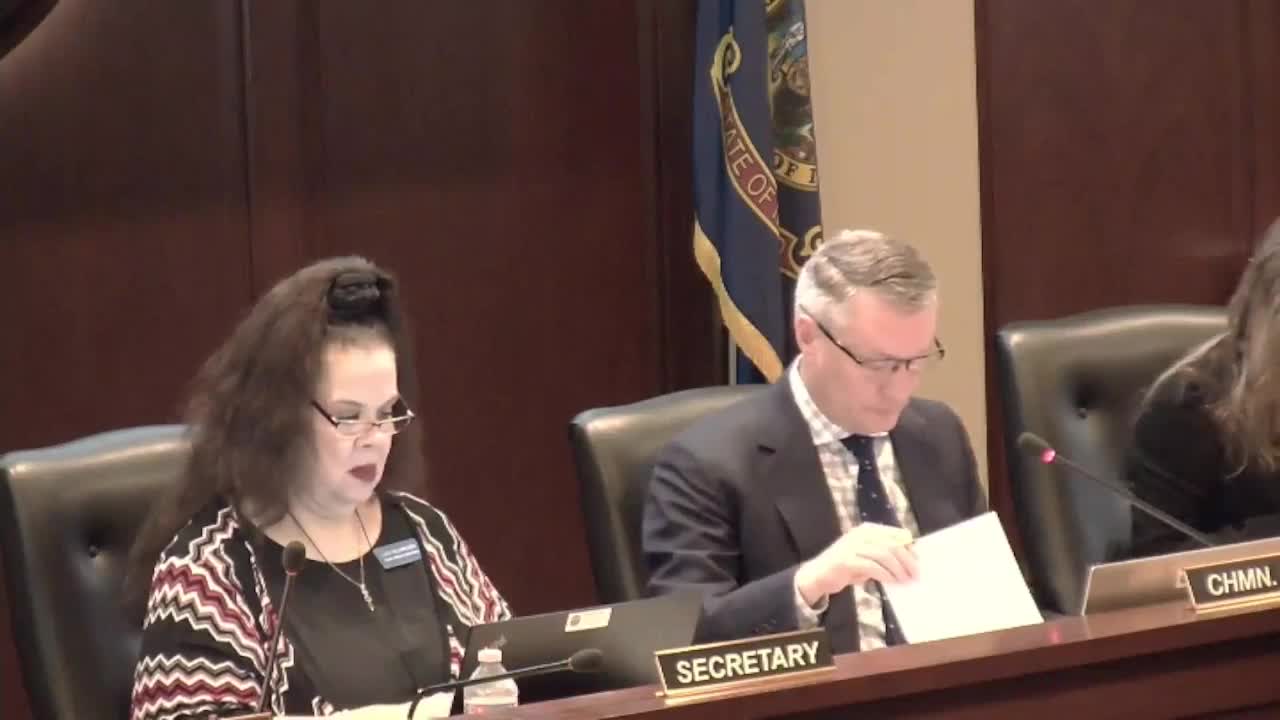
House State Affairs hearing on HB 85 draws extensive public testimony; motion to send bill to floor fails 7-7
Summary
House Bill 85 would change the initiative process to insert a gubernatorial presentment and a supermajority threshold in some cases; the committee heard extensive public testimony and debated before a tie vote (7-7) failed to send the bill to the floor with a due-pass recommendation.
Representative Bruce Skog presented House Bill 85 to the House State Affairs Committee, describing a proposal to modify Idaho's initiative process by allowing gubernatorial presentment and inserting a supermajority requirement in some cases.
Skog said the bill would make the initiative process "subject to the presentment to the governor for possible veto," arguing that the change would provide an additional check in cases where initiatives become effective while the legislature is out of session. He described the change as intended to prevent rapid enactment of laws without the governor's review, giving the legislature and executive a chance to respond.
The committee then received extensive public testimony. Doctor Jean Henscheid, co-president of the League of Women Voters of Idaho, testified in opposition and said the bill "is 1 of the tactics taken from a national playbook to block policies popular with citizens that partisans don't like." Russ Hendricks of the Idaho Farm Bureau testified in support and said the change would "provide a relief valve and protection for rural citizens who are often left out of the current process." Ryan McGoldrick of Conservation Voters for Idaho, Stefan Qui (a Boise resident), Kathy Dawes (remote), and Jeffrey Watkins (remote) all urged the committee to vote no, arguing the governor has no role in the initiative process under the state constitution and that giving a single elected official veto power over citizen initiatives would undermine direct democracy.
Committee members debated the balance between direct democracy and the representative republic. Representative Barbieri and others argued the change is a reasonable check; Representatives Achilles, Mickelson, and others warned the bill would erode citizens' constitutional rights. Representative Boyle said she feared the chamber would be reluctant to override a governor's approval in practice and that the legislature might be ceding political power.
Representative Barbieri moved to send House Bill 85 to the floor with a due-pass recommendation. The committee took a roll-call vote; the secretary recorded a tie, and the motion failed 7 to 7. No amendments were adopted and no further committee action occurred before adjournment.