Get Full Government Meeting Transcripts, Videos, & Alerts Forever!
Get email alerts on the Social Media Minors topic
No spam. Unsubscribe anytime.
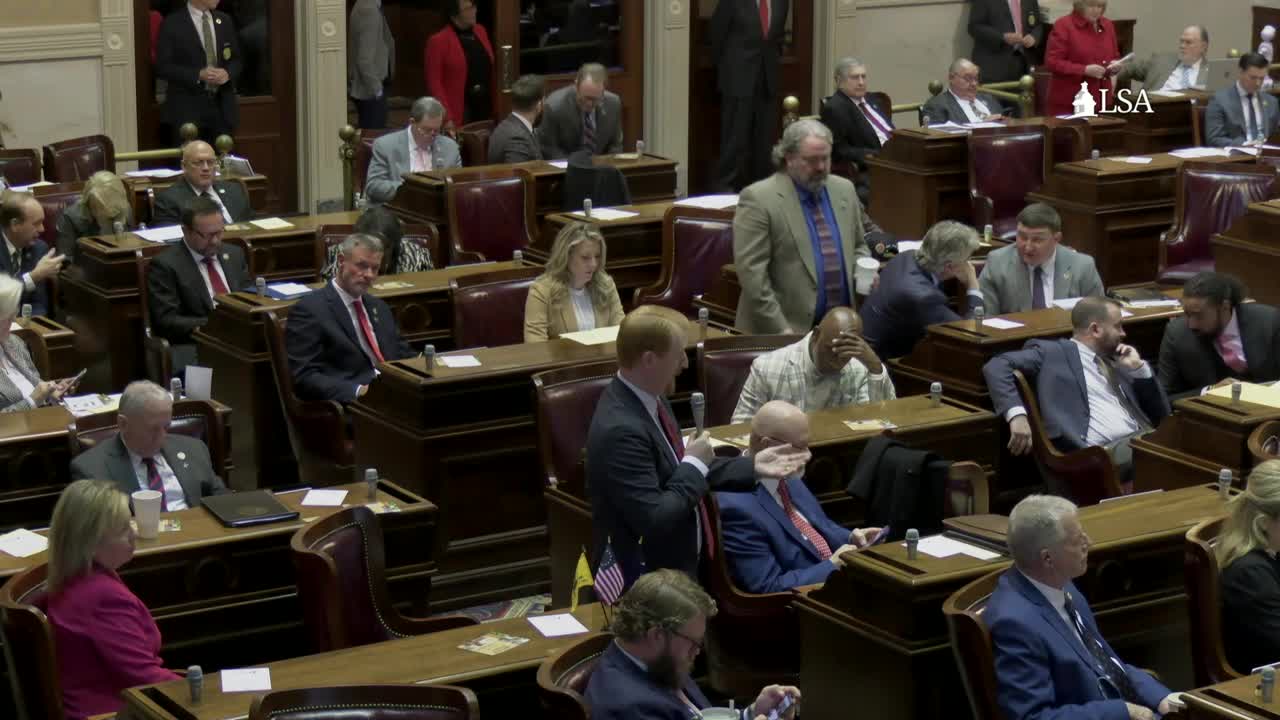
House debate intensifies over bill to restrict social media for minors; amendments approved and tabled
Summary
A long debate at the South Carolina House centered on House Bill 34-31, a measure that would require social media platforms and certain online services to verify account-holder ages, obtain parental consent for users under 18, limit collection of minors’ personal data, and ban targeted advertising to minors.
A long debate at the South Carolina House centered on House Bill 34-31, a measure that would require social media platforms and certain online services to verify account-holder ages, obtain parental consent for users under 18, limit collection of minors’ personal data, and ban targeted advertising to minors.
Supporters said the bill would give parents tools and create baseline safety requirements for services used by minors. Representative Travis Moore, who explained the bill on the floor, said platforms would have to “verify the age of account holders and require parental consent for minors” and described provisions that ban targeted advertising and limit data collection.
The measure’s supporters repeatedly framed the proposal as analogous to safety standards for physical products. ‘‘Just as lawmakers mandate safety standards for items like car seats, cribs, children’s toys, this bill ensures that online services meet similar safety standards when their products and services impact or affect the health or safety of our minors,’’ Moore told colleagues as he described the bill and the committee amendment.
Opponents pressed two recurring objections: that the bill intrudes on parental authority and that it would impose heavy compliance costs and data‑collection requirements that could worsen privacy risks. ‘‘Parents have to parent,’’ Representative Bamberg said during floor debate, echoing many colleagues who argued that families — not state mandates — should control children’s online access. Other lawmakers raised concerns that age verification would require parents or minors to supply sensitive identity data to private companies and questioned whether those companies would delete verification records when the statute requires them to do so.
Several specific technical points were raised in debate:
- The bill, as explained on the House floor, defines a “social media” platform in part by size: platforms with at least 5 million account holders worldwide are captured under the social-media provisions. Representatives also referenced financial or data thresholds (one exchange on the floor mentioned $25 million) used elsewhere in the draft to define when broader “online service” rules apply. - Enforcement is assigned to the state attorney general, and the bill would allow remedies under consumer-protection law (including private actions for unfair trade practices); earlier language referenced possible statutory damages for violations.
Floor action on amendments and procedure
- Amendment 1 (committee amendment adopting an explicit ban on targeted advertising to minors, age-appropriate design language, and other tweaks) was adopted by the House, 53–32. The amendment added enforcement and consumer-protection language and required companies to make ‘‘commercially reasonable efforts’’ to prevent circumvention by VPNs and similar tools.
- A subsequent effort to remove the bill’s education-related section (which would have the Department of Education develop a model curriculum on online safety) was proposed as Amendment 2. That amendment did not pass in the form offered: a motion to table Amendment 2 carried on a roll-call vote, 91–15 (Amendment 2 was therefore set aside).
- Amendment 3 (offered as an alternative compromise focusing on age-appropriate, separate platforms for minors similar in concept to Google’s ‘‘YouTube Kids’’) was also tabled on a roll call, 72–30.
- Amendment 4 (proposed to remove child psychologists from the list of stakeholders who would help develop the education materials) was tabled. Amendment 5 was ruled out of order as not germane to the bill.
What remained unresolved in the record
As of the end of the provided transcript, the House had completed lengthy debate and disposed of multiple amendments, but a final recorded passage or defeat of H.34-31 itself was not present in the supplied portion. The clerk ordered a roll call on the pending question of adoption of H.34-31 as amended, but the transcript ends before a final vote result for the bill itself appears.
Why it matters
Supporters say the bill would create consistent protections for minors statewide and give families and enforcement authorities new tools to limit practices lawmakers cited as harmful — including targeted ads and ‘‘dark patterns’’ designed to promote excessive or compulsive use. Opponents say the bill substitutes government mandates for parental choices, risks privacy by requiring identity-based verification, and could produce legal and enforcement challenges at the state or federal level.
Next steps
Because the transcript ends while the adoption question was pending, it is not possible from the provided record to report a final floor outcome for H.34-31. The measure had been amended on the floor and several amendments were tabled; any additional votes, conference changes, or judicial review would occur after the point where the transcript stops.