Get Full Government Meeting Transcripts, Videos, & Alerts Forever!
City departments outline how 1 Seattle comprehensive plan will guide services as city grows
Summary
City department leaders told the Seattle City Council select committee on Feb. 21 that the 1 Seattle comprehensive plan is meant to guide capital investments, operations and service standards so the city can serve projected growth over the next 20 years.
City department leaders told the Seattle City Council select committee on the comprehensive plan on Feb. 21 that the mayor’s proposed 1 Seattle plan is intended as an umbrella policy document to guide how the city plans and pays for transportation, parks, utilities, energy and public-safety services as Seattle grows.
Rico Kinindongo, director of the Office of Planning and Community Development, told the committee the comp plan is “a vision and policy document” that must be consistent with state and regional growth rules and with other plan elements so departments can use it to phase capital investments and work plans. He said subarea plans for growth centers and industrial areas will be brought to council separately.
The panel of six department presenters described how their work links to the comp plan and highlighted near‑term metrics and capital programs.
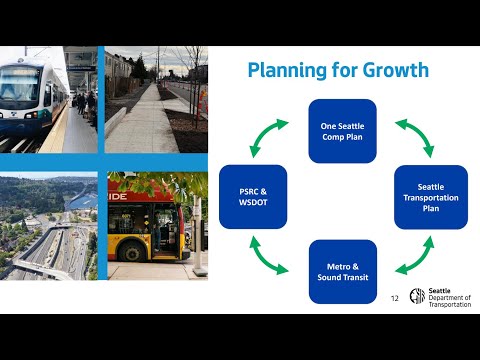
Transportation: Francisco Steffen, senior deputy director at the Seattle Department of Transportation, said the department coordinated closely with OPCD and updated its policy work in tandem with the recently adopted Seattle Transportation Plan. “We obviously have a city in which we have limited roadway width,” Steffen said, and the comp plan’s mode‑shift priorities aim to move more people in the same space by shifting trips to transit, walking, biking and carpools. SDOT described capital work funded by the voter‑approved levy, ongoing maintenance and programmatic efforts (Safe Routes to School, curb management, signal timing) and an appendix of performance metrics including Vision Zero safety measures, vehicle‑miles‑traveled and targets for the share of people within a given distance of frequent transit. Steffen said SDOT tracks baseline access…
Already have an account? Log in
Subscribe to keep reading
Unlock the rest of this article — and every article on Citizen Portal.
- Unlimited articles
- AI-powered breakdowns of topics, speakers, decisions, and budgets
- Instant alerts when your location has a new meeting
- Follow topics and more locations
- 1,000 AI Insights / month, plus AI Chat