Get Full Government Meeting Transcripts, Videos, & Alerts Forever!
Get email alerts on the Development Fairway Cliffs topic
No spam. Unsubscribe anytime.
Whitehall tables Fairway Cliffs development ordinances after crowded public hearing
Summary
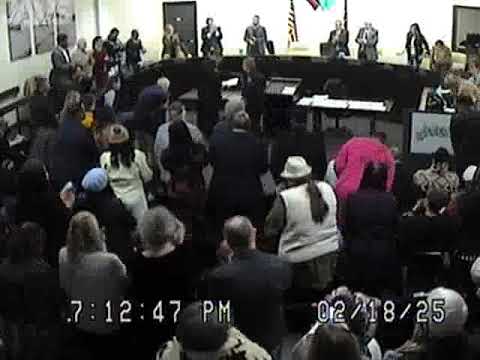
Whitehall City Council opened a public hearing Tuesday on a proposed Fairway Cliffs residential development and on related tax-incentive measures, heard public testimony and then voted to table three ordinances — creation of a community authority, a CRA tax exemption and a TIF district — until March 18.
Whitehall City Council opened a public hearing Tuesday on a proposed Fairway Cliffs residential development and on related tax-incentive measures, heard more than an hour of testimony from residents and proponents, and then voted to table three ordinances until March 18.
The measures the council tabled would create the Fairway Cliffs Community Authority (ordinance 9-20-25), approve a community reinvestment area (CRA) real property tax exemption application for Fairway Cliffs LLC (ordinance 10-20-25), and establish a Fairway Boulevard tax-increment financing (TIF) district (ordinance 11-20-25). Councilman Dixon moved to table each item; each tabling motion passed on unanimous roll calls of present members.
Why it matters: The measures together are the financing structure the developer is proposing to use to build roughly 50 townhomes and new parkland on about 11.5 acres around the Aetna and Fairway intersection. The ordinances would let city-collected property-tax revenue be redirected for a period to repay public infrastructure and to give the developer property-tax relief; opponents said the package shifts most of the expected incremental revenue to the developer and asked the council to require clearer, written commitments before any incentive is approved.
What council and the applicant said
Mike Shannon, attorney for the applicant, told the council the community authority is a statutory vehicle that would administer payments in lieu of taxes and related assessments and that the ordinance before the council only establishes that authority. Shannon said the TIF public hearing had to be delayed because notices to affected property owners were not sufficient and that the developer authorized bond counsel to prepare a draft development agreement to be shared with council and the public before a final vote.
"This is the next step in the procedure," Shannon said. "You're merely checking the box to make sure it complies with the statute as outlined in the proposed legislation."
A project representative identified in the record as "Joe" provided an overview of the site and incentives. He said the overall project covers about 11.5 acres, that the city would acquire about 3.8 acres, and that the combined plan includes 50 townhomes split across two parcels (about 38 on the east parcel and 12 on the west), with a proposed public park on the east side. He described the incentive structure as layered: a 30-year non-school TIF, a property-tax abatement that offsets the TIF for initial years, and a new community authority assessment collected as a special assessment on owner tax bills.
Public testimony and concerns
More than a dozen residents and local professionals spoke during the hearing. Common concerns included (1) the proposal’s changing unit counts across documents and emails; (2) the timing of votes before the council has a finalized, written development agreement; (3) perceived scale and density of the proposed townhomes next to existing Fairway Boulevard neighborhoods; and (4) the share of revenues that would go to the developer under the community authority structure.
Resident Ryan Traub said, "I don't understand why we're putting the cart before the horse. The developer...wants the money now," and urged council not to approve incentives without a complete plan. Tracy Heiss and Holly Stein, who said they reviewed project emails and exhibits, pointed to inconsistent unit counts in the record and asked why outside consultants and former city staff appeared to be involved rather than routing questions through the current development director.
Landscape architect and Fairway Boulevard resident Mark Scheber urged the council to require a fully detailed development plan — including tree surveys, grading, drainage and environmental protections for Big Walnut Creek — before approving financing incentives. Scheber said, "A TIF typically is not brought about...until you know exactly what that plan is."
Council action and next steps
After hearing testimony and discussion, Councilman Dixon moved to table ordinances 9-20-25, 10-20-25 and 11-20-25 to the March 18 meeting; each motion passed by unanimous roll call of present members (recorded as yes votes by Heck, Smith, Harcar/Harcourt, Dixon, Brown and Morrison). Council members and the applicant said the developer’s team will work with bond counsel and city staff to prepare a development agreement and supplemental information to be provided before the March 18 meeting.
Council members repeatedly told residents they expect additional documents and a more complete record before any incentive vote. Mike Shannon said the development agreement — normally prepared after incentive approval, he said — will be produced earlier in this case to address council and neighbor concerns.
Votes at a glance
- Ordinance 9-20-25 (Organize Fairway Cliffs Community Authority): Motion to table to 03/18/2025 — Mover: Councilman Dixon; Second: Councilman Brown; Recorded votes: Heck Yes; Smith Yes; Harcar/Har-court Yes; Dixon Yes; Brown Yes; Morrison Yes. Outcome: Tabled.
- Ordinance 10-20-25 (CRA tax exemption application / infrastructure agreement): Motion to table to 03/18/2025 — Mover: Councilman Dixon; Second: Councilman Brown; Recorded votes: unanimous (as above). Outcome: Tabled.
- Ordinance 11-20-25 (Create Fairway Boulevard TIF district): Motion to table to 03/18/2025 — Mover: Councilman Dixon; Second: Councilmember Smith; Recorded votes: unanimous (as above). Outcome: Tabled.
Related adopted items (same meeting)
- Resolution 5-20-25 (Ray Cunningham, firefighter/paramedic employee of the year) — Adopted by unanimous roll call. - Resolution 6-20-25 (Lee McKittrick, police employee of the year) — Adopted by unanimous roll call. - Resolution 7-20-25 (Corey Ali, administrative support employee of the year) — Adopted by unanimous roll call. - Resolution 8-20-25 (Ty Peterson, labor service employee of the year) — Adopted by unanimous roll call. - Ordinance 12-20-25 (fund transfer $100,000 to Community Development Trust Fund / home reinvestment appropriation): Introduced and adopted. - Ordinance 18-20-25 and Ordinance 19-20-25 (law enforcement trust fund transfers/appropriations): Introduced and adopted.
What remains uncertain
- Final unit count and site plan: presenters offered different unit totals in documents and emails (35–40 vs. 50 units appeared in different exhibits); the project presenter said the combined parcels total 50 units but several residents and records showed earlier counts of 36–40 or 38+12. - NCA revenue projection and allocation: the applicant’s materials project about "right under $280,000 in the waterfall" for the early years and said the school district would receive negotiated payments (Shannon said the authority would distribute to city and schools first, then reimburse developer costs). Exact annual figures and total developer reimbursement amounts were not finalized in the hearing record and were provided as estimates in the presentation. - Public notices and scheduling: bond counsel and staff will finalize required notices for the TIF hearing timeline; council set March 18 as the next date to take up the tabling items.
The council meeting record shows the package will return on March 18 with a development agreement and supplemental financial exhibits for council and public review.