Get Full Government Meeting Transcripts, Videos, & Alerts Forever!
Get email alerts on the Desegregation And School Safety topic
No spam. Unsubscribe anytime.
TUSD superintendent: Ninth Circuit affirms end of court supervision; district issues guidance on law enforcement access and student records
Summary
Superintendent Gabriel Trujillo told the governing board Jan. 28 that the Ninth Circuit upheld a 2022 U.S. District Court decision ending court supervision of Tucson Unified School District, and he announced formal district guidance requiring law‑enforcement identification and judicial warrants for campus access and requests for student records.
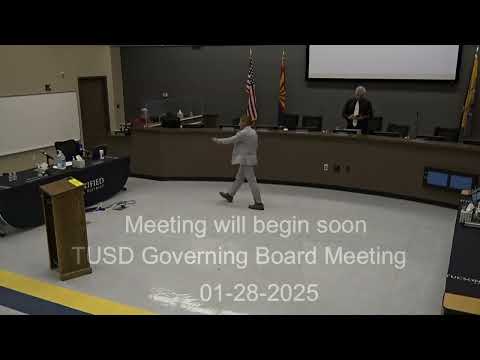
Superintendent Gabriel Trujillo told the Tucson Unified School District governing board on Jan. 28 that a Ninth Circuit Court of Appeals ruling recently upheld a U.S. District Court decision that ended court supervision of TUSD in 2022, returning full governance authority to the elected board.
Trujillo said the appeals court “rejected systematically every plaintiff argument” and found “an overwhelming and indisputable amount of evidence” that the district demonstrated good-faith implementation of the unitary status plan. He said the court concluded remaining disparities reflect factors outside the district’s control, such as voluntary residential patterns.
The superintendent said the district remains in a three-year post‑unitary reporting period through July 2025, and that the administration does not recommend major programmatic changes for the remainder of the 2024–25 school year. He said the board will have sole authority over future changes to desegregation programming, funding allocations and any desegregation levy after that reporting period.
Separately, Trujillo outlined new guidance for school staff responding to requests from law enforcement, including U.S. Immigration and Customs Enforcement (ICE). He said the district will require any law-enforcement officer to display appropriate identification and present a valid judicial warrant before being granted access to campus or before district staff release confidential student or family information from the student information system (Synergy). Trujillo said the guidance is reflected in board policies ACB (non‑discrimination and student enrollment) and JIH (student interviews, searches and arrests), and that principals would receive detailed briefings the following morning.
Trujillo emphasized that district policy also memorializes Plyler v. Doe (U.S. Supreme Court, 1982) protections and prohibits the collection of immigration status for enrollment decisions. He added the administration will neither instruct staff to break the law nor permit law-enforcement actions on campuses absent legal process.
Board members asked when principals would be briefed; Trujillo said administrators would receive guidance in meetings the next morning and that the district would post guidance on the website and social media.
The superintendent said TUSD continues to focus work on literacy and numeracy despite the legal victory and noted a $3.7 million deficit within desegregation-funded departments for 2025–26 that the administration is addressing in upcoming budget drafts.