Get Full Government Meeting Transcripts, Videos, & Alerts Forever!
Get email alerts on the Open Public Meetings Records topic
No spam. Unsubscribe anytime.
Commission orientation stresses Open Public Meetings Act, public records responsibilities and use of city email
Summary
Staff presented a 21-slide orientation covering the city organization chart, the Open Public Meetings Act (OPMA), and the Public Records Act; staff advised commissioners to use city email for commission business and described quorum, notice and public-records risks.
Staff provided a commission orientation presentation that covered the city’s organizational structure, contracting model, the Open Public Meetings Act and the Public Records Act, and practical guidance for commissioners on communications and records retention.
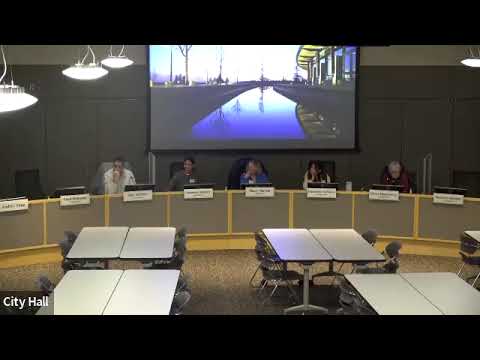
Staff said the commission is an advisory body to Sammamish City Council and reviewed the city’s contract-service model (police through King County Sheriff’s Office, fire through Eastside Fire & Rescue, solid waste via Republic Services, libraries via King County Library System). The orientation included guidance that the commission meets on the second Wednesday each month at City Hall and that hybrid or special meeting locations must be publicly noticed.
On the Open Public Meetings Act (OPMA), staff identified RCW 42.30 and said a meeting occurs when a quorum of a governing body discusses city business; for the seven-member commission a quorum is four members. Staff warned that discussions on group email threads or other serial communication can trigger OPMA concerns and recommended that commissioners respond to staff individually rather than “reply all” when staff solicits feedback.
Staff also reviewed the Public Records Act, explaining that most documents related to city business—including emails, notes, text messages and photos—are subject to disclosure. Staff advised commissioners to use their city email accounts for commission business because city accounts are retained on city servers and easier to locate during a public-records request. Staff noted there are limited exemptions but said the state’s laws are broad and that records should be treated as potentially public.
Staff described possible consequences of noncompliance with OPMA and the Public Records Act, including a civil penalty for OPMA violations and the risk that actions taken without proper notice could be declared void. Staff recommended commissioners consult the city clerk or public disclosure officer with questions and to forward personal notes or spreadsheets used in grant review to staff if requested or if commissioners want staff to retain them.
Commissioners asked about email procedures, how to avoid inadvertent serial meetings, how meeting notice is published (staff said the city code requires publication in a local-circulation newspaper and the city uses the Seattle Times, and also posts notices on the city website), and what to do if records are mixed with personal content. Staff described the city’s records retention vendor (Iron Mountain) for hard-copy storage and said the city maintains several terabytes of digital records.
Direct quotes taken at the presentation included staff explanations of OPMA and the records policy and commissioner questions about practical implications for communications and storage.
The orientation closed with a reminder that commissioners should ask questions when unclear about process and that staff will provide the orientation PowerPoint on request.