Get Full Government Meeting Transcripts, Videos, & Alerts Forever!
Get email alerts on the Utilities topic
No spam. Unsubscribe anytime.
Town staff outlines multi-stage plan to split Highlands electric grid into smaller circuits
Summary
Town electric staff briefed commissioners on a planned split of the town electric system into additional meter points to reduce loading and improve resilience; work on the first phase is out for bid and materials are on hand pending board approval.
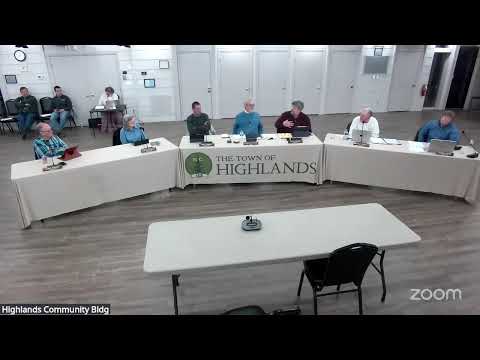
Lamar, a staff member from the Town of Highlands electric department, briefed the board on Feb. 5 on a multi-stage electrical upgrade to reduce overloads and improve resilience after recent weather events.
Lamar said engineering analysis recommended dividing the town’s single-source distribution into smaller metered circuits. "The correct answer to get us up to speed, we need to break it into fourths, the 4 meter points," Lamar said, describing the recommendation from Progressive Engineering and negotiations with Duke Energy.
Why it matters: Town staff said dividing the distribution will decrease load on vulnerable circuits, reduce outages and allow more targeted switching to restore power during storms. Commissioners asked whether the substation at Route 64 could support the plan and whether construction would disrupt customers.
What staff described: The plan is being implemented in phases. The first phase would create an additional metering point near Sherwood Forest on U.S. 64 (minimal construction on the town’s side, materials already on hand); that contract (labor and equipment) has been bid, and work could begin within weeks if the board approves to proceed. Duke Energy would keep the same substation capacity at the Mirror Lake Road/Route 64 site; distribution-side metering would be modified to split service into three and eventually four circuits. Lamar said the initial phase would, if approved, move the town from two meter points toward three, then four, reducing load where customers have seen blinking and service interruptions.
Board questions and technical limits: Commissioners asked whether the existing substation could carry the town’s needs and whether temporary outages would be required during work. Lamar said the existing substation has sufficient capacity for the proposed distribution split but noted some work requires shutting transmission or distribution lines temporarily. He said Duke had been cooperative with planning and that easements for parts of the work had been secured.
Next steps: Staff requested the board to approve the contractor award and bonding (the meeting packet included design and bids). If approved, town staff said installation of the first phase could finish in late spring or early summer. No formal vote on the project was recorded during the workshop; the board was briefed and questions were answered.