Get Full Government Meeting Transcripts, Videos, & Alerts Forever!
Get email alerts on the Healthcare topic
No spam. Unsubscribe anytime.
Highlands-Cashiers Hospital describes emergency response, staffing programs and housing plans after Hurricane Helene
Summary
Hospital leadership told the Town of Highlands board that Hurricane Helene forced sheltering of staff, exposed communication and fuel shortages, and accelerated planning for workforce housing, training and capital investments.
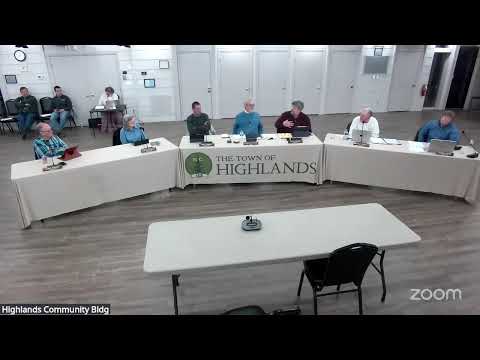
Tom Veil, a representative of Highlands-Cashiers Hospital (part of HCA Healthcare), told the Town of Highlands Board of Commissioners on Feb. 5 that the hospital sheltered staff, kept its emergency department open and relied on staged HCA resources after Hurricane Helene.
Veil said the hospital sheltered about 60 staff members during the storm and kept them onsite for roughly five days while the facility managed road closures and widespread damage. "Our mission at that point was to keep the patients inside of the hospital safe, to keep the emergency department open, and to make sure that all of our staff are safe," Veil said.
Why it matters: Veil framed the account as an example of local resilience and of how regional systems and corporate resources can affect rural hospitals during major weather events. Commissioners and staff pressed for follow-up on communications and redundancies after the storm.
Veil described key emergency-response supports HCA provided, including staged helicopters and fuel deliveries. He said HCA staged a heavy-lift helicopter to deliver food and supplies and noted the aircraft could carry 12 litter patients. HCA also parked a tanker on the hospital campus to top off generators and employee vehicles, and organized a "mini-mart" of free supplies for staff. Veil said HCA provided employee assistance through a company "hope fund," and that HCA directed donations into Western North Carolina in the wake of the storm.
Veil identified specific operational and workforce actions the hospital is pursuing: expanding a "grow-your-own" certified nursing assistant (CNA) program (the hospital is starting its ninth class after about 80 graduates and said roughly 11% have progressed to nursing school), expanding primary care and surgical services, and recruiting clinicians through residency and partnership programs such as MAHEC and Galen College of Nursing. He said roughly 80% of CNA graduates remain employed in the hospital system or local facilities.
On workforce housing, Veil said the hospital and a nonprofit developer have discussed a planned housing project that would start at 60 units and could expand to 80 units, with land provided by the hospital and an eligibility restriction prioritizing health care workers. He said costs and final financing were still being worked out and that Helene had increased estimated construction costs.
Financial and capital details Veil provided: HCA has invested about $60 million in capital in Highlands-Cashiers since he arrived, including a roughly $5 million imaging/therapy project that will replace the MRI and CAT scanner and add a therapy gym; the hospital reported paying about $1.9 million in sales tax to Macon County last year and cited about $20 million in charity care delivered across Western North Carolina. Veil also said HCA made "close to $100,000,000" in donations to Western North Carolina agencies (as stated in his remarks).
Veil noted clinical achievements, including a decade without certain hospital-acquired infections for central lines and Foley catheters and recognition for emergency department performance (Press Ganey top 5%, he said). He highlighted a stroke case in which thrombolytics were given in 28 minutes and the patient later had no symptoms.
Board response and next steps: Commissioners thanked Veil and asked follow-up questions about communications and emergency redundancy after Helene, and about the hospital's workforce housing timeline. Veil said the hospital will likely reach out to the community in spring for possible support on housing and that it is pursuing partnerships to expand clinical training and residency rotations.
Ending: The board heard the hospital presentation as part of a workshop session on community resilience, workforce and capital planning and did not take formal action on the hospital’s proposals during the meeting.