Get Full Government Meeting Transcripts, Videos, & Alerts Forever!
Get email alerts on the Public Finance topic
No spam. Unsubscribe anytime.
Coffee County trustees, commissioners debate investment policy after $3.8 million yield in 2024
Summary
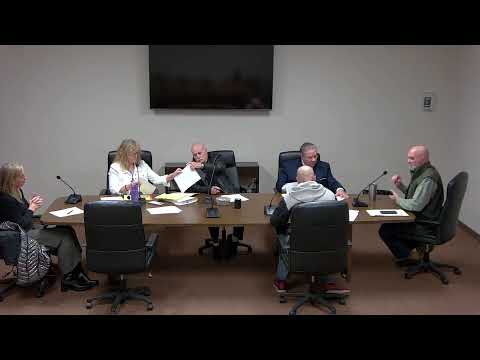
Coffee County Investment Committee, Feb. 18 — Trustee John H. Marchesoni defended investments the trustee’s office made that produced about $3,835,832 in interest in fiscal 2024 while committee members debated language in a draft investment policy and who may direct restricted funds.
Coffee County Investment Committee, Feb. 18 — Trustee John H. Marchesoni defended investments the trustee’s office made that produced about $3,835,832 in interest in fiscal 2024 while committee members debated language in a draft investment policy and who may direct restricted funds.
The committee did not adopt a new policy at the meeting but voted to circulate a March 2024 draft and reconvene to review it. Commissioners raised questions about whether parts of the draft conflict with the county’s tax levy and asked for clearer procedures on designated investment authority and signature requirements.
The meeting opened with routine votes to approve the agenda and previous minutes. The agenda was approved on a motion by Commissioner Smith, seconded by Commissioner Miller. Minutes from the March 11, 2024 meeting were approved on a motion by Commissioner Hollingsworth, seconded by Commissioner Smith, with a 5-1 vote; Trustee John H. Marchesoni recorded the lone vote in opposition.
Marchesoni asked the committee to accept clarifying language in the minutes concerning a Dec. 14, 2022 multi‑bank securities resolution that he said authorized purchases of U.S. Treasury bills. He cited Tennessee Code Annotated §5‑8‑301 as the statutory authority that defines what counties may invest in and which investments require approval by the county legislative body.
"I have a responsibility to invest out of funds at the maximum amount, and that's exactly what I did," Marchesoni said, describing a period beginning Dec. 2022 when the trustee’s office moved a portion of county funds into Treasury bills and related instruments. He told the committee roughly 60% of the county's investable cash — about $25,000,000 — had at one point been placed into those investments and that Treasury bill rates at the time reached roughly the mid‑5 percent range compared with roughly 3.5 percent at some local banks.
Marchesoni and other participants outlined yields over recent years that they said show the effect of those investment decisions: interest earnings of about $426,000 in 2019, roughly $972,000 in 2023 and $3,835,832 in 2024 (figures provided by the trustee during the meeting).
The committee’s discussion centered on three recurring points: - Authority and overlap with the tax levy: Several commissioners said language in the draft policy that prescribes how interest on restricted funds is allocated could conflict with the county's tax levy, which they said already designates how some restricted‑fund interest should be returned to specific accounts. Committee members asked that language be clarified or removed from the investment policy so it does not create an apparent conflict with the tax levy. - Designated investment officer and process timing: Marchesoni recommended explicitly naming a designated investment officer in the policy (he offered that role for continuity). He cautioned that requiring the full committee or legislative body to approve routine investments could create timing problems; Tennessee Code Annotated §5‑8‑301 was cited during the meeting as the legal guide for allowable investments and a 24‑month recommended maximum maturity window. - Signature and internal controls: Members discussed the current practice of the chief deputy trustee co‑signing certain investments and CDs. Some commissioners said they favored spreading signatory responsibility to ease the burden on the trustee’s office; Marchesoni warned that requiring a committee member to be present for routine transactions could create a hardship.
No formal policy change or adoption occurred. The committee agreed to circulate March 2024 draft language prepared by the trustee’s office and to meet again Monday, Feb. 24, at 8:30 a.m. to review the document and discuss specific edits, including the two‑signature question and clarifications about restricted funds. The trustee said he will provide supporting documentation of past investments and monthly reports that show receipts and disbursements to aid the committee’s review.
Committee members also raised other administrative items: the trustee noted the county accepts competitive bids from local banks (First Bank, First Vision Bank, Coffee County Bank, People’s Bank, SmartBank and others were mentioned), and several members said they wanted separate interest‑bearing accounts established for upcoming county construction projects (animal shelter, health department construction and wastewater authority work).
The meeting concluded without the adoption of the investment policy; the committee scheduled the follow‑up review and asked that the March 2024 draft be circulated to members beforehand.