
Santa Rita Union Elementary reports midyear academic, English‑learner and student‑support data; outlines mental‑health and attendance steps
Get AI-powered insights, summaries, and transcripts
Subscribe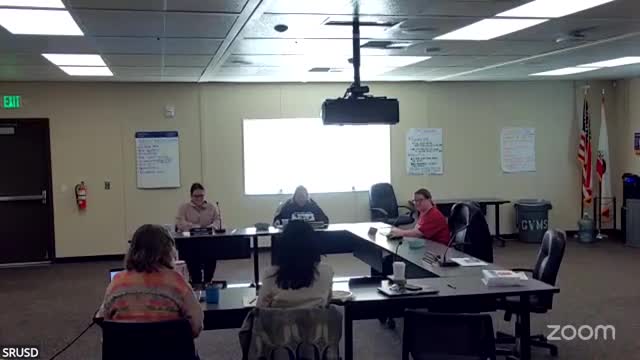
Summary
Santa Rita Union Elementary School District staff presented a midyear review showing modest diagnostic gains at some sites but persistent math gaps, described a set of instructional supplements and targeted interventions, and outlined mental‑health screening and trauma‑informed partnerships with CSUMB and an external team.
Santa Rita Union Elementary School District staff presented a midyear review of student performance and support work at a board workshop, reporting modest winter diagnostic gains at some sites while noting continued gaps in math and among students multiple years behind grade level.
Becky Moore, assistant superintendent of educational services, told trustees the presentation was a “midyear check” ahead of spring summative assessments and that some of the instructional interventions being used this year only started this fall. Moore said last spring’s statewide dashboard showed 26 percent of district students met or exceeded standards in English language arts and 15 percent met or exceeded standards in math. She emphasized that the dashboard figures are prior‑year summative results and that the district is tracking i‑Ready local diagnostics to measure current year progress.
Moore described school‑level variation: McKinnon and New Republic each have multiple special day class (SDC) placements and lower percentages meeting standard; JGMS showed gains in math; and Santa Rita Elementary had relatively low midyear placement but notable growth from fall to winter on the district i‑Ready winter diagnostic. “I think that shows that the work that Santa Rita is doing this year is having an impact on student growth,” Moore said.
District staff explained how i‑Ready measures both “midpoint” progress (typical growth toward grade‑level benchmarks) and the distance from standard (how far a student is behind grade level). Moore and a trustee noted that a student who makes “typical growth” may still be multiple grade levels behind, and the district uses stretch‑growth targets for students who need to make more than one year’s growth in a year.
English learners and reclassification
The district reported 1,315 English learners currently enrolled. Moore said 219 English learners also have Individualized Education Programs (IEPs), 55 are newcomers, 49 are long‑term ELs (LTELs) who have not yet reclassified, and about 328 are “at risk” of becoming LTELs. Santa Rita Elementary has the highest concentration of English learners in the district, with “over 450,” Moore said.
Staff described ELPAC (English Language Proficiency Assessments for California) administration in progress and said reclassification procedures include accommodations or alternative assessments for students with disabilities. Stephanie Mullenhoppe, the district’s special education program manager, was identified as leading alternative‑assessment work with the EL specialist and special education staff.
Instructional supplements and interventions
The district has implemented several new or expanded instructional materials this year: i‑Ready diagnostics and instruction; UFLY and Heggerty (phonemic‑awareness/phonics) as elementary supplements; “Phonics for Reading” for targeted intervention; and Eureka Math Squared (Eureka Math²) support and learning walks with a Great Minds representative. Moore said kindergarten began i‑Ready earlier this year (first assessment in October), and schools ran site math nights and parent workshops.
Mental health, trauma‑informed supports and screening
Moore and other staff described district mental‑health work and partnerships. The district is using the Second Step social‑emotional learning curriculum in classrooms (a 20‑minute daily block at the elementary level) and said the program’s usage reporting initially undercounted use because teachers had not marked units complete in the system.
The district has a partnership with California State University, Monterey Bay (CSUMB) and an external program described in the presentation as “Safe First Steps” and a Project Reach collaboration. Staff said an external team from Chicago conducted two days of trauma‑informed‑school training and site walks at Gavilan View and Santa Rita — the two sites selected as highest priority — and CSUMB is supporting continued implementation. Moore said the Chicago team will “fade out” after training and CSUMB personnel will continue local support. Staff said seven school psychologists will support Gavilan View and eight will support Santa Rita as part of that effort.
For universal screening, the district used a tool referred to in the presentation as Check Yourself at John Gutierrez Middle School (JGMS) and will screen additional sites (Gavilan View planned for late February). Staff described a tiered flag system (green/no flags; yellow/tier‑2 needs; red/tier‑3 needs), immediate screening procedures for red flags using the Columbia suicide‑risk screener, and coordination with Monterey County Behavioral Health and mobile crisis teams for high‑risk students. Moore said one student at a recent screening required transport for further care. Staff emphasized that parents are notified when a student receives an individual evaluation and that mobile crisis or law enforcement are the only services that can authorize transport to a medical facility.
Attendance and chronic absenteeism
The board heard an attendance action plan produced by Dr. Katice (position described as overseeing ELOP and attendance). Staff said chronic absenteeism is calculated as missing more than 10 percent of the school year regardless of whether absences are excused or unexcused and that pandemic quarantine requirements contributed to elevated chronic absenteeism figures in earlier years. The district described early outreach and home visits (e.g., contacting families at three absences), partnerships with community organizations and the district attorney, and targeted work with families of Spanish‑speaking Misteco parents.
Staff noted special education students account for a disproportionate share of chronic absenteeism because of illness and medical appointments; the district plans to target social‑work and mental‑health supports to that population and redeploy the district social worker to focus on special education‑related needs.
Discipline and restorative practices
The presentation included monthly suspension counts and non‑suspension discipline entries logged in the student information system. Staff said referrals and non‑suspension entries generate automatic notifications to the restorative‑practices TOSA and the alternative‑to‑suspension teacher so those teams can case‑manage students and prevent recidivism. The district reported eight students out of 84 suspensions were repeat suspensions in the reported period.
Staff and trustees discussed that a large share of middle‑school discipline incidents occur during passing periods and lunch, and that students requested alternative activities (quiet reading, games, art, music) during those times. The district is exploring options including compensated open classrooms, external partners (music or local artists) and schedule redesigns, though staff said scheduling and campus‑layout constraints make a full staggered lunch more difficult.
Board discussion and next steps
Trustees asked for clarifications about specific data displays and local definitions. Moore said she will recheck a question about an unexplained “zero” in one data table with the district data analyst and follow up by email. Staff said they will continue site‑level data chats, targeted lists of students to support stretch growth, a counseling scope and sequence to make counselor activities more visible, additional universal screeners at targeted grade levels, and ongoing evaluation of supplemental programs after this school year.
Formal action
The meeting closed on a motion to adjourn that the board approved by voice vote; the motion and the recorded “Aye” votes closed the workshop.
Ending note
District staff provided handouts and links to supporting documents (data tables, program descriptions and usage reports) and asked trustees to review those materials; staff said more detailed growth and reclassification results will be available after spring summative assessments.