Get Full Government Meeting Transcripts, Videos, & Alerts Forever!
Get email alerts on the Internal Audit topic
No spam. Unsubscribe anytime.
Internal audit flags HR onboarding and procurement gaps at Marion County schools; board hears $415K–$693K in missed tax savings
Summary
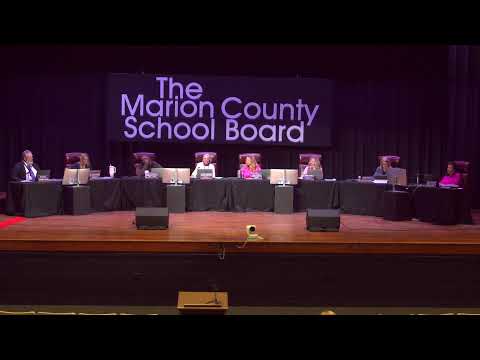
On Feb. 20, 2025, the Marion County School Board received a presentation from RSM, the district's contracted internal auditor, that identified weaknesses in human-resources onboarding documentation and in purchasing and procurement controls and recommended prioritized remediation and automation.
On Feb. 20, 2025, the Marion County School Board received a presentation from RSM, the district's contracted internal auditor, that identified weaknesses in human-resources onboarding documentation and in purchasing and procurement controls and recommended prioritized remediation and automation.
RSM auditors told the board their work tested the district's recruiting and onboarding and procurement processes for the April 2023–March 2024 audit period. Clara Ewing of RSM said the firm’s role was to “assess and improve the effectiveness of an organization's internal controls” and described RSM as an outsourced internal-audit provider working with multiple Florida districts.
The auditors reported several specific findings. In HR onboarding, RSM tested a sample that included 50 employee files and found eight instances of missing or incomplete onboarding documentation (6 of those were present at school or department sites but were not available to HR during testing). The firm recommended greater centralized oversight so HR has visibility into site-level records. Auditors also flagged limited differentiation of role-based permissions in Skyward, the district’s administrative system, and identified nine user-permission instances that exceeded job needs; those nine permissions were obsolete and reportedly removed by TIS.
RSM said job-description approvals were not consistently documented, recommended adding detail to standard operating procedures and urged a formal secondary review of compensation calculations. "Their overall processes within the HR onboarding are well developed," Michelle Coppola of RSM told the board, but she urged documented SOP detail and annual reviews to reduce future risk.
On procurement, auditors again pointed to Skyward permissions and said responsibilities for the vendor master file and vendor payments sit in the same department, a configuration that can create segregation-of-duties risk if turnover leads to reassignment of permissions. RSM also identified limited periodic spend analysis across the district and several examples in internal (school-level) accounts where procedures did not match district procurement requirements: two instances where purchase thresholds exceeded a state-statutory threshold without the required vendor application and one instance where a principal signed contract terms that had not been reviewed by legal. RSM recommended a consolidated procurement manual, periodic enterprise-level spend analysis (quarterly or at least biannually), formal legal review for nonstandard contracts and consideration of contract-management software to reduce manual processes.
As options for follow-up audits, RSM proposed three high-risk focus areas for the next internal-audit cycle: implementation and transparency around the new half‑cent sales tax (referred to in the presentation as HAPSAINT), construction oversight (including procurement and pay applications), and a targeted program to address segregation-of-duties risks across antiquated systems. RSM said follow-up procedures on previously issued observations would also be included.
Board members broadly welcomed the report and the recommendations. Board member Dr. Campbell and Board member Thoreau urged adding higher-level procurement leadership and more automation; Dr. Campbell reviewed a comparison showing peer districts with director-level purchasing supervision and said Marion’s purchasing function appeared to lack that senior position. Several board members, including Dr. Kim, emphasized the value of auditing follow-up and early work on the new sales-tax program.
During board comments, Dr. James raised a separate, specific procurement concern: owner direct purchase (ODP) processing on construction projects. He told the board the facilities team’s records showed that, over a four‑year period with limited new construction, the district “failed to save somewhere between $415,478.65 to $692,631.09 in tax dollars due to failure to process ODP.” He asked the board to watch savings closely going forward and to consider clarifying staff authority limits in policy to prevent future lapses.
Superintendent Dr. Gullett and district staff were repeatedly commended by auditors and board members for cooperation during the review. RSM and staff noted many findings were lower risk relative to other districts the auditors serve, and some obsolete permissions had already been removed. The auditors and staff described their recommendations as prioritizing high‑risk, actionable items first.
Next steps discussed during the meeting included board review of the proposed internal‑audit plan (RSM said the plan was built on the budget allocation the firm had been given), targeted follow-up audits on earlier findings, and staff work to implement procedural and system changes in HR and procurement. No formal board vote was recorded on the report or plan; RSM’s presentation was taken under advisement for further action and scheduling of follow-up work.