
Kannapolis City Schools warns of rising special‑education costs, staffing gaps and facility needs
Get AI-powered insights, summaries, and transcripts
Subscribe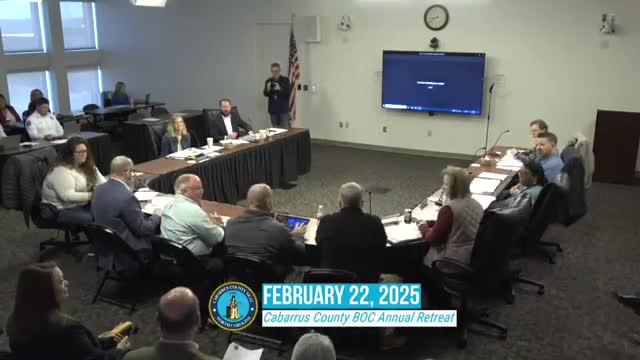
Summary
District leaders told Cabarrus County commissioners the school system is under financial pressure from growth in special‑education costs, rising benefits, and aging facilities while proposing capital projects and legislative priorities to address gaps.
Kannapolis City Schools officials told the Cabarrus County Board of Commissioners that the district is managing enrollment growth and facilities projects while confronting rising costs for special‑education services, employee benefits and deferred maintenance.
Why it matters: District leaders said federally and state‑mandated services for students with disabilities and growing benefits costs are creating budget pressure that threatens locally funded programs, staff supplements and planned capital work unless additional funding or policy changes occur.
Kannapolis leaders reported 5,336 students in the January enrollment report and said about 75% of the district’s students qualify as economically disadvantaged. The district said 17% of students are multilingual learners and about 14% receive special‑education services—above the state “cap” the presenters cited (13.4% referenced as a benchmarking figure). Officials said the district has at times been over 15% for special‑education enrollment and that the overage is consuming fund balance.
Local funding and project details presented to commissioners included $11.2 million in Cabarrus County local operating support and about $20 million in capital receipts that the district said reflect recent building work (the $20 million figure includes the Fred L. Wilson project, the presentation said). Kannapolis officials described a $14,000,000 addition and renovation at Fred L. Wilson that will add 18 classrooms and a larger media center, work already in progress.
Facility needs: Other large projects cited were HVAC replacement at Forest Park, a roof replacement at North Kannapolis, a Shady Brook front parking lot project and a chiller replacement at G.W. Carver. Kannapolis said those projects are in design or bidding and that the district relies on county maintenance expertise for large capital work.
Student supports and staff ratios: District presenters listed counselor, psychologist and social‑worker ratios that they say fall short of recommended levels. The district reported counselor ratios around 1 per 410 students (recommended 1 per 250), psychologists at roughly 1 per 1,400 in secondary and 1 per 800 in elementary (recommended 1 per 500), and social‑worker ratios also well above recommended levels. Leaders said these staffing shortfalls are being addressed partly through contract providers, which increases costs.
Special‑education costs and contract services: Kannapolis officials said contract services for special education (for example, school psychologists and specialized teachers) are costly, have driven an estimated increase in local expenditures and are eating into fund balance. The presentation reported that district benefit costs (pension and health care contributions) rose about 70% between 2018 and 2024; presenters said that rising employer benefit shares are a major pressure on local funds.
Budget adjustments and efficiencies: The district described a soft hiring freeze for non‑student‑facing central‑office roles, other personnel reductions and a cost‑savings goal in the $2.25 million range (about $1.7 million of reductions already identified). Officials said they are reviewing grant submissions, reducing nonessential purchases and seeking efficiencies in operations such as waste management and phone bills.
Legislative priorities and asks: Kannapolis leaders asked commissioners to support several state‑level policy priorities including: recognition of industry credentials and career‑and‑college success on the state report card, lifting or revising the special‑education cap and associated funding, and revisiting retired‑teacher return‑to‑work rules to increase available certified staff. The presenters characterized some of these as unfunded mandates that shift cost burdens to local taxpayers.
School safety and staffing notes: The district said its high school (about 1,700 students across multiple buildings) currently has two SROs and that the district has SROs assigned at middle schools and two SROs covering elementary schools; district leaders said they would like an SRO in every building.
Next steps: District officials said they are continuing a superintendent search (hope to name a superintendent in May) and will continue to brief county leaders on budget status and capital projects. District leaders also said they are working with county staff and other districts on possible regional approaches to specialty contract services.
Ending: Commissioners praised the district’s fiscal stewardship and asked staff to continue working with Kannapolis leaders on facility, staffing and special‑education cost pressures.