
USI and county HR outline FY‑26 health plan forecast and cost‑control strategies
Get AI-powered insights, summaries, and transcripts
Subscribe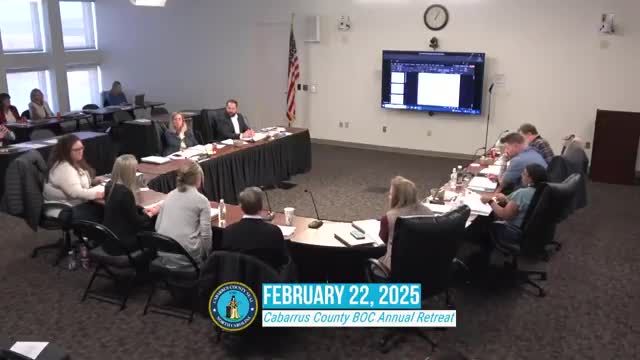
Summary
County benefits broker USI presented the county’s self‑funded health plan status, a FY‑26 forecast of a 7.5–9.5% trend driven largely by large claimants and pharmacy, and recommended continued use of the on‑site clinic, virtual care, specialty pharmacy strategies and other cost‑management programs.
Cabarrus County’s benefits broker and HR staff on Saturday reviewed the county’s self‑funded health plans, projected next‑year cost trends and a set of strategies to curb medical and pharmacy spending.
Joanna Ray, the county’s health and wellness manager, introduced a presentation from USI Insurance Services. USI representatives Larry Reese and Linda Klein said the county is a self‑funded plan sponsor that pays claims through a third‑party administrator and reinsurance (stop‑loss). The county offers two medical plans: an open‑access (PPO) plan and a high‑deductible health plan (HDHP). About 70% of employees are enrolled in the HDHP and 30% in the PPO, USI said.
Forecast and drivers USI presented a forecast for fiscal year 2026 showing an expected increase in claim costs of roughly $1.66 million (a 7.5–9.5% trend estimate). USI attributed most of the increase to larger claimants (defined in the presentation as claimants with more than about $75,000 in annual claims), specialty medications delivered via infusion, and musculoskeletal procedures (surgeries for hips, knees, back). Pharmacy accounts for about 29% of total plan spend, USI said, and specialty pharmacy is a sizable driver.
Cost‑management recommendations USI recommended continuing and expanding existing programs the county already uses, including strong utilization of the county’s on‑site clinic and virtual care, increased enrollment in chronic‑condition management programs, targeted musculoskeletal digital therapy/physical‑therapy alternatives, specialty‑pharmacy management and manufacturer assistance programs where appropriate, and ongoing promotion of preventive care and generic drug utilization.
Other points - USI said Cigna is the county’s current medical TPA and network partner and that pharmacy rebates and retrospective reconciliation affect forecasts (rebates may appear with a lag of roughly 180 days). USI also recommended marketing the medical and pharmacy contracts at renewal to ensure competitive pricing. - Dental utilization has risen since the pandemic; USI recommended Delta Dental for network and projected a roughly 20–26% rate increase driven by rescheduled dental care, suggesting the increase be passed to employees because the dental plan is voluntary and employee‑paid. - USI noted a common nationwide trend of annual health‑care inflation of roughly 7% and encouraged multi‑year, programmatic approaches to reduce trend by modest amounts rather than expecting a one‑year reversal.
Why it matters: the county’s self‑funded status makes it directly responsible for paid claims and exposed to large, unpredictable claim events; plan design, clinic usage and pharmacy strategies materially affect near‑term costs and the budget forecast.
Provenance: USI presentation began at 00:29:36.835 and concluded at 00:55:46.350 (transcript excerpts referenced).