
Woodbridge leaders say Colonial High School tests found no radiation; PCBs in caulk prompt planned remediation
Get AI-powered insights, summaries, and transcripts
Subscribe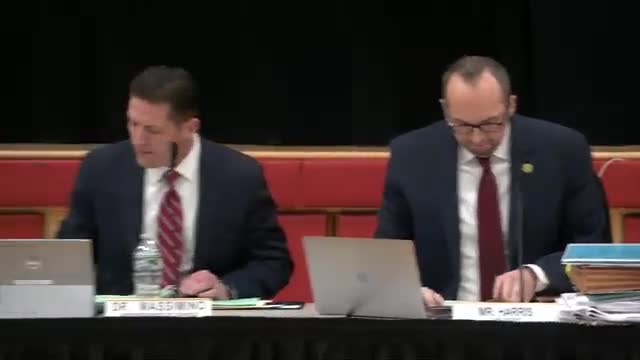
Summary
Superintendent said tests found no ionizing radiation linked to brain tumors, while parent-collected samples later showed PCBs and historic pesticides in caulk and soil; district hired LSRP, is working with DEP and EPA on a remediation plan expected this summer or fall pending agency sign-off.
The Woodbridge Township School District said testing at Colonia’s Colonial High School found no ionizing radiation linked to primary brain tumors, but subsequent analyses of parent-collected samples showed polychlorinated biphenyls (PCBs) and historic pesticides in caulk and soil, prompting the district to prepare a remediation plan with state and federal agencies.
Superintendent Dr. Massimino told the board on Feb. 20 that the district hired environmental consultant T&M Associates and an LSRP, Dr. Kozak, to conduct a “complete canvas” of the school grounds after initial concerns surfaced on social media. “They then brought in a company that specifically had equipment looking for radiation,” Massimino said. “The test came back with no sign of ionizing radiation.”
The finding that no ionizing radiation was detected led the Department of Environmental Protection (DEP) and the Department of Health (DOH) to conclude that an environmental cause of primary brain tumors tied to radiation was not supported by the test results, Massimino said. He added that the district also worked with epidemiologists, including one at Rutgers, and a neurosurgeon who reviewed population-level case counts and found the reported numbers were consistent with a naturally occurring sample.
The district’s testing and the agencies’ guidance changed after a parent — acting without the district’s involvement, Massimino said — submitted samples of caulk and soil that laboratory results showed contained PCBs and historic pesticides. Because that produced an open file, the district retained Dr. Kozak as its licensed site remediation professional (LSRP) and began delineation work to define the extent of contamination. Massimino said T&M has completed delineation and is preparing a remediation plan that must be approved by the DEP and the U.S. Environmental Protection Agency before work begins.
Massimino said the district hopes to begin remediation this summer or in the fall once state and federal sign-off is obtained. “Once they sign off on the plan, then we’ll execute said plan, which should close the case,” he said. He also said the district has published testing results and communications on the superintendent notifications page of the district website.
On Feb. 20 a DOH letter was described by administrators as an eight-page review concluding that PCB levels in the school were below EPA health-based guidelines for schools and that “harmful health effects are not likely for students and staff…from indoor air exposures to PCBs and pesticides,” language the superintendent summarized for the board. Massimino said the DEP and DOH would not allow the school to remain open if the agencies believed indoor exposures were harmful.
Public commenters pressed the district for more investigation and urged broader testing and transparency. Michael Han, who identified himself as a longtime resident, said he was concerned by the number of brain-cancer cases in people connected to local schools; Massimino answered at length, describing the sequence of tests, the agencies consulted and the district’s plan to remediate where contamination was confirmed. Other speakers asked whether the district had checked historical land uses and whether more external experts should be consulted; Massimino said historical records were part of the investigation and that the district relied on specialists, including a neurosurgeon and an epidemiologist, during its review.
The district also emphasized the limits of the available evidence: the superintendent said investigators looked specifically for ionizing radiation as the plausible environmental cause of primary brain tumors and found none. He added that PCBs and some historical pesticides were expected in building materials of the era and that finding them in caulk or soil is not unusual in older construction but does trigger remediation procedures when disturbed or detected above applicable thresholds.
No formal board vote on policy or closure was recorded at the meeting; the board reviewed reports and public comments and received the administration’s account of testing and the planned next steps. The superintendent and district staff said they will move forward with the remediation plan after receiving DEP and EPA approvals and will keep the community informed via the district website.
The Colonial High School testing and planned cleanup were a focal point of a lengthy public-comment period that also included questions about school security, audits and district staffing. District leaders reiterated that they have consulted state agencies and outside experts, and they said remediation is contingent on agency approvals and will be executed under the oversight of the LSRP and the DEP/EPA.
The district posted testing results and public letters on its website under superintendent notifications, Massimino said, and urged residents to consult that page for the full data and communications archive.