
Board debates polling locations, considers iPad sign‑in for next budget vote
Get AI-powered insights, summaries, and transcripts
Subscribe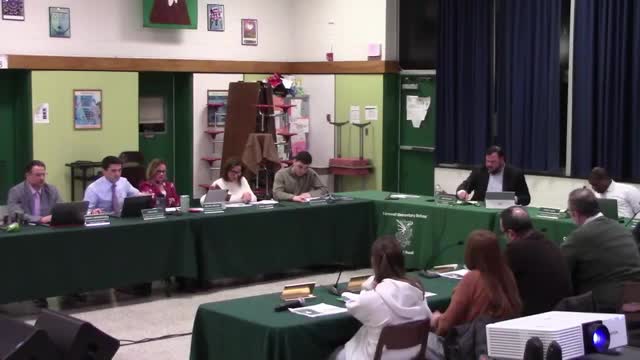
Summary
Board members debated whether to add a second polling site for budget votes or to use rented iPads at the existing middle‑school location for electronic sign‑in.
Board members spent substantial time discussing how residents vote in annual budget elections and whether the district should add a second polling location or introduce electronic sign‑in (iPads) for the budget vote.
Mr. Fink (staff member working with the Orange County Board of Elections) presented cost estimates: continuing the current single‑site, poll‑book approach was estimated at about $17,300; an iPad sign‑in solution at one site would cost about $47,800 in the first year with a BOCES reimbursement that reduces the net cost in year two to roughly $25,000; a two‑location iPad setup raised year‑two reimbursable costs above $34,000. Fink reported that the vendor NTS recommended a four‑iPad configuration would likely be sufficient for the district’s typical turnout, with a six‑iPad option adding only modest extra rental cost.
Board members split on the best path. Proponents of a second site said geographic access — particularly for residents living on the west side of the district — favored adding a polling place. Opponents noted the extra cost and potential operational and security challenges, including traffic flow and the effect on school schedules. Christian, a board member, highlighted legal and procedural distinctions between school district elections and general elections and outlined options for splitting the district into voting precincts or using provisional ballots; he said some of those approaches are used by other districts.
Several trustees observed the district lacks easy, reliable data on where voters live relative to where they vote and that staff must manually consult poll books to produce that analysis. Brendan and others proposed a compromise: rent iPads for the existing single polling location this year to capture sign‑in data and voter geography, then use that evidence to inform any change to the number or location of polling sites in subsequent years. Tiffany and others objected that the additional cost is not a fiscal priority now and preferred to keep the status quo.
No final board motion was adopted to change locations this year. A straw count at the table showed a majority favored exploring a second‑site solution in general, but several of those who supported the concept said they did not support implementing two sites this year. The administration said logistics and timing make a two‑site switch difficult this year. The board agreed to pursue either staff analysis of past poll‑book records or, if the board chooses, a single‑site iPad rental this year to gather data.