Get Full Government Meeting Transcripts, Videos, & Alerts Forever!
Get email alerts on the Enrollment And Budget Projections topic
No spam. Unsubscribe anytime.
Prosser School District projects falling enrollment, warns of budget shortfalls and staffing impacts
Summary
District staff presented an OSPI apportionment worksheet and third‑party enrollment projections showing declines in student FTE and head count that would reduce state funding; staff said local levy and reserves currently cover gaps but projected insurance and MSOC costs increase budget pressure.
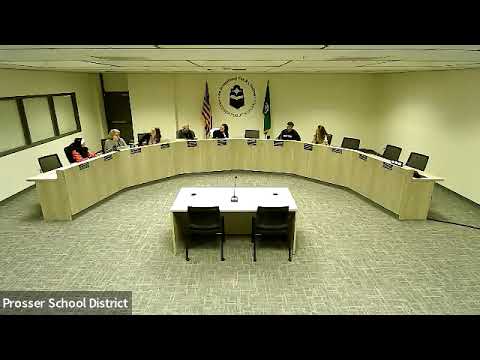
Prosser School District leaders reviewed state apportionment figures and outside enrollment projections at a Feb. 19 study session, warning that declining student counts and rising costs could force spending reductions over the next several years.
District presenters said the Office of Superintendent of Public Instruction (OSPI) funds basic education positions by a formula that this year yields funding for about 103.9 full‑time equivalent basic‑education teachers. The district told the board that the state allocation does not match the actual configuration of staff the district employs — for example, the district reported it employs more nurses, library staff and paraprofessionals than the OSPI basic‑ed formula funds, and that those positions are paid from a mix of program dollars, local levy revenue and other funds.
Officials also reported current enrollment figures of about 2,300 full‑time equivalent (FTE) students and a head count of roughly 2,394. Using a conservative budgeting approach informed by a private enrollment‑projection service, staff said the district’s likely enrollment for the coming budget cycle will be lower than the numbers used in this year’s budget and that the district could be several dozen students below the budgeted count — a shortfall that translates, by the district’s rule‑of‑thumb, to roughly $10,000 per student in general‑fund revenue.
Why it matters: Washington school funding is FTE‑based, and even modest declines in FTE reduce state apportionment and MSOC (materials, supplies, operations and custodial) funding. At the same time the district expects a sizable increase in insurance costs — staff cited an estimate of about a 30 percent rise — and said the Legislature’s pending discussions over state MSOC allocations may not fully cover those increases.
Key budget and staffing details presented
- OSPI apportionment: the district uses the OSPI apportionment worksheet for budgeting; the worksheet reflects December apportionment data the district enters each year. - State funding vs. local staffing: OSPI funds, for example, 0.43 of one security position and 3.1 nursing positions for the district’s enrollment level; the district said it must staff five security personnel and multiple full‑time and part‑time nursing and health‑room staff, with the difference funded from local or program sources. District leaders said OSPI funding also lists fewer librarians and paraprofessionals than the district currently employs (the district reported about 70 paraprofessionals total, many paid from categorical programs). - Salary and benefits: the OSPI base amount per teacher cited in the worksheet was shown around $78,209 for the state base column; district staff said their local average base salary was near $77,000 and that benefits are budgeted at about 36 percent of salary. - Enrollment projections: the district contracted with a private K‑12 enrollment projection firm (two principals in Washington state) for about $1,500 per year; that firm uses cohort, birth‑rate and construction data and presents several scenarios (conservative, best, lower). Staff said the district’s chosen model sits between the lower and best estimates and indicates multi‑year declines in enrollment. - Count day timing and FTE volatility: staff emphasized that funding is based on the fourth day of school count and FTE, not head count, and that families’ enrollment timing (late summer moves, running start, part‑time schedules) creates volatility. The district noted it will open kindergarten registration March 10 and that late enrollments historically shift the fall FTE.
Board discussion and next steps
Board members asked for and staff agreed to produce longer‑range estimates and planning scenarios. A staff member offered to prepare a five‑year estimate of possible budget reductions tied to projected enrollment declines. Board members and staff discussed nonstaff cost savings the district is already exploring, including a request for qualifications related to selling or disposing of underused property, and noted the district has used federal ESSER funds for some one‑time expenditures (for example, curriculum and certain construction offsets) rather than ongoing staff salaries.
District leaders stressed that the district’s financial position remains stronger than some peers — staff noted districts statewide are showing declines and that 14 districts had entered “binding conditions” (negative fund balances) in recent reporting — but they urged proactive, long‑range budgeting to avoid midyear crises. Staff also said they are monitoring the Legislature’s action on MSOC and special‑education and transportation funding but cautioned that any increase in state allocations may not fully cover local cost increases.
What was not decided
No formal motions or votes were taken at the study session. The meeting focused on information sharing and direction to staff to produce further budgeting scenarios; no specific staffing reductions, school closures, or levy proposals were adopted at the session.
Ending
District staff said they will continue to update the board as projection models are refined and as the district finalizes budget assumptions later this spring. The board scheduled its regular meeting for Feb. 26 in the boardroom.